Peace for the World World ! Your War Our Lives

The Dalai Lama
A Brief Colonial History Of Ceylon(SriLanka)
Sri Lanka: One Island Two Nations
A Brief Colonial History Of Ceylon(SriLanka)
Sri Lanka: One Island Two Nations
(Full Story)
Back to 500BC.

Wednesday, February 3, 2016
Yahapalanaya at 1: Is Transitional Justice in Crisis? – Niran Anketell
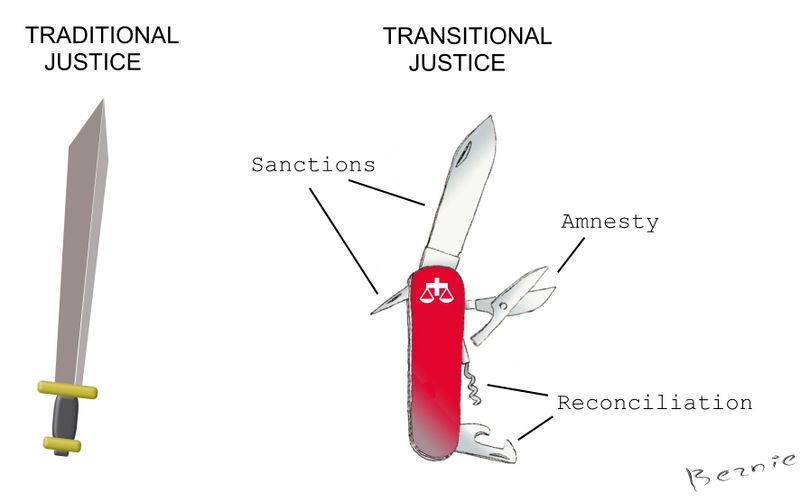
Transitional Justice

 In
October 2015, the Sri Lankan government took a giant stride towards
reconciliation when it co-sponsored a historic resolution at the Human
Rights Council. Despite howls of protest from fringe elements within the
Sinhala and Tamil community who opposed it, the Resolution was defended
stoutly by mainstream members of both ruling parties, the SLMC and the
TNA at a two-day Parliamentary debate also in October. However, as I
noted in an article published last year, the Government’s attempt to
fudge the question of international participation in trials was, to put
it mildly, asking for trouble. My concern was that:
In
October 2015, the Sri Lankan government took a giant stride towards
reconciliation when it co-sponsored a historic resolution at the Human
Rights Council. Despite howls of protest from fringe elements within the
Sinhala and Tamil community who opposed it, the Resolution was defended
stoutly by mainstream members of both ruling parties, the SLMC and the
TNA at a two-day Parliamentary debate also in October. However, as I
noted in an article published last year, the Government’s attempt to
fudge the question of international participation in trials was, to put
it mildly, asking for trouble. My concern was that:
…instead of patiently doing the work of explaining the importance of a
substantial international component in trials relating to serious
crimes, the government has chosen instead to play word games, proudly
claiming that it has averted the dreaded hybrid court.
At that time, as I pointed out, it was clear that:
..the current trajectory is a dangerous one. If the government is
eventually forced to deliver on its unequivocal promises, it risks
allegations of betrayal from within its constituency. If however it
reneges on its commitments, it risks international censure from without
and will inflame Tamil opinion from within.
Just four months after it signed off on
the Geneva resolution, the government’s fudge has come home to roost.
President Sirisena’s blunt rejection of any international participation
in trials has triggered domestic and international concern over the
sincerity of the Yahapalanaya government. Even as the Prime Minister and
others scramble to repair the damage, their approach is nonetheless
characterized by incoherence because they are unwilling to explicitly
commit to any degree of international participation. The reason for this
unwillingness is clear: delivering a special court to try international
crimes with substantial international participation will involve some
political cost. However, this cost will continue to rise if the
government does not speedily create an enabling political atmosphere
within which that cost is managed. By continuing to fudge the question,
the government isn’t merely delaying the inevitable; it is also making
things more difficult.
Read More
