Peace for the World World ! Your War Our Lives

The Dalai Lama
A Brief Colonial History Of Ceylon(SriLanka)
Sri Lanka: One Island Two Nations
A Brief Colonial History Of Ceylon(SriLanka)
Sri Lanka: One Island Two Nations
(Full Story)
Back to 500BC.

Tuesday, April 5, 2016
Dilemma in monetary policy: Monetary Board being caught in ‘The Devil’s Alternative’?
 Monday, 4 April 2016

 Disappointing the market’s predictions
When the Monetary Board of the Central Bank was due to announce its monetary policy decision in March 2016, the market had expected it to tighten the policy by increasing interest rates (available at: http://www.ft.lk/article/533621/CB-expected-to-hike-key-policy-rates).
The market’s predictions had been based on the logical economic choice which the Board would have made to lift the economy out of the prevailing foreign exchange crisis. But the policy review statement announced (available at: http://www.cbsl.gov.lk/pics_n_docs/latest_news/press_20160329eb.pdf) had proven the market wrong. Instead of tightening the monetary policy, it had announced the Board’s choice to maintain the status quo. Thus, the prevailing loose monetary policy with low interest rates, despite the high money and credit growth, was to be continued by the Board for another month. It would be reviewed only when the Board would meet in April to discuss what it would do with monetary policy again.
Monetary Board’s responsibility is to conduct monetary policy
The most important function which the Monetary Board conducts in the country is the management of the country’s monetary policy. The architect of the Central Bank and its founder Governor, John Exter, articulated this function in his report on the establishment of a central bank in Ceylon, known as the Exter Report, as follows: “The overall responsibility for the management, operations and administration of the Central Bank will rest with a Monetary Board. The word ‘monetary’ in its name emphasises again that the Board is intended to be very much more than simply the board of directors of another bank. It is a Governmental agency responsible for the determination of a particular kind of policy and the regulation of a particular kind of economic activity – money, banking and credit,” (p 11).
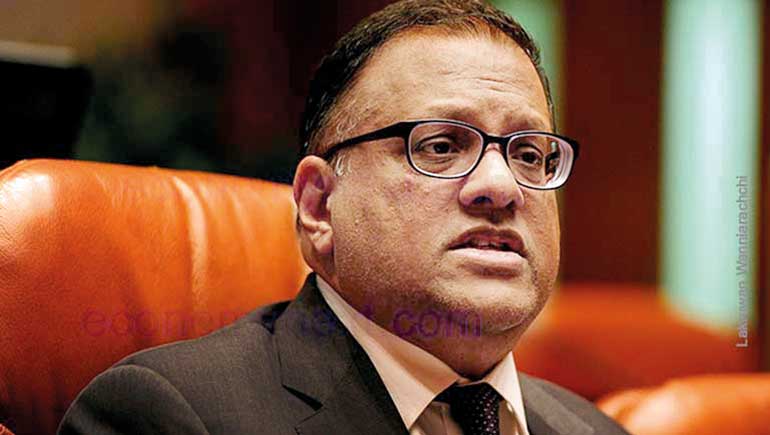
Central Bank Governor Arjuna Mahendran
Monday, 4 April 2016Disappointing the market’s predictionsWhen the Monetary Board of the Central Bank was due to announce its monetary policy decision in March 2016, the market had expected it to tighten the policy by increasing interest rates (available at: http://www.ft.lk/article/533621/CB-expected-to-hike-key-policy-rates).
The market’s predictions had been based on the logical economic choice which the Board would have made to lift the economy out of the prevailing foreign exchange crisis. But the policy review statement announced (available at: http://www.cbsl.gov.lk/pics_n_docs/latest_news/press_20160329eb.pdf) had proven the market wrong. Instead of tightening the monetary policy, it had announced the Board’s choice to maintain the status quo. Thus, the prevailing loose monetary policy with low interest rates, despite the high money and credit growth, was to be continued by the Board for another month. It would be reviewed only when the Board would meet in April to discuss what it would do with monetary policy again.
Monetary Board’s responsibility is to conduct monetary policy
The most important function which the Monetary Board conducts in the country is the management of the country’s monetary policy. The architect of the Central Bank and its founder Governor, John Exter, articulated this function in his report on the establishment of a central bank in Ceylon, known as the Exter Report, as follows: “The overall responsibility for the management, operations and administration of the Central Bank will rest with a Monetary Board. The word ‘monetary’ in its name emphasises again that the Board is intended to be very much more than simply the board of directors of another bank. It is a Governmental agency responsible for the determination of a particular kind of policy and the regulation of a particular kind of economic activity – money, banking and credit,” (p 11).
