Peace for the World World ! Your War Our Lives

The Dalai Lama
A Brief Colonial History Of Ceylon(SriLanka)
Sri Lanka: One Island Two Nations
A Brief Colonial History Of Ceylon(SriLanka)
Sri Lanka: One Island Two Nations
(Full Story)
Back to 500BC.

Thursday, April 7, 2016
WHITHER THE JVP...-IS IT A POLITICAL CARCASS?

 2016-04-06
2016-04-06
“Our
greatest glory is not in never falling, but in rising every time we
fall.”-Confucius April 5 marks the 45th Anniversary of the famous 1971
insurrection. It claimed many thousands of lives; destroyed an untold
number of families, small businesses and aspirations of a whole
generation. It was led by the Janatha Vimukthi Peramuna (JVP). JVP has a
storied history. Ever since its beginnings in the late Nineteen
Sixties, first as a revolutionary movement and then as a recognised
political party, it has been amongst the leaders in the following five
categories:
- A Marxist-Socialist political entity with no tolerance for the capitalist system
- Draws its mainstay from the youth of the country n An ostensible appeal to the downtrodden classes and castes in Sri Lanka
- Sustaining an aura of authenticity and sincerity in commitment to the cause
- Led by a demagoguery populist leader It is not the intention of the writer to pen a historical narrative of the development of the JVP. Many books and essays have been written and orations delivered by many pundits and luminaries on the saga of a movement that progressed from a ‘cellish’ political organisation into a full-blown party.
It was instrumental in not only triggering two violent uprisings on two
different occasions, but lending leadership and then spearheading both
revolts. Those two revolts led to the death and destruction of many Sri
Lankan youth, families and properties. All hallmarks of an unorganised
uprising, an insurrection whose fundamentals were at best, childishly
clumsy and organisationally juvenile and at worst, brutally phoney and
blatantly insincere. The youth of any country, the late Tyrone Fernando,
a former Minister described as far back as 1975, as the ‘barometer of
change’.
By the time Tyrone wrote this piece in the then published Weekend
newspaper, the 1971 insurrection had already had its day and failed;
many thousands of our youth were in Police custody or in rehabilitation
camps. A countless number of them were killed, tortured and maimed- the
most infamous among them was the murder of Premawathi Manamperi in
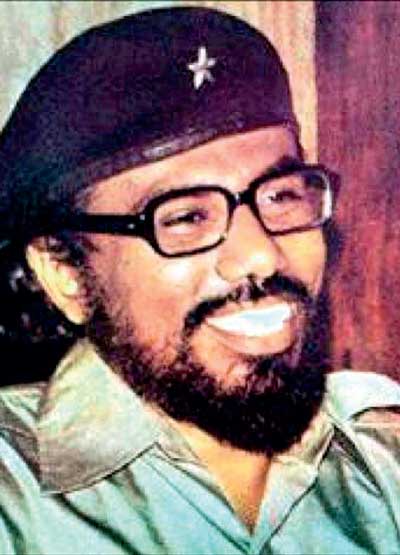
Kataragama. The youth who were roused by the then JVP leader Rohana
Wijeweera to work incessantly for the election campaign of the then
coalition United Left Front (ULF) led by Sirima Bandaranaike took up
arms against the very regime that they helped put in power. It all
happened within one year of the ULF assuming office. The conversion from
loyalty and reverence to armed confrontation and violent outbreak was
visceral.
See more >>>