Peace for the World World ! Your War Our Lives

The Dalai Lama
A Brief Colonial History Of Ceylon(SriLanka)
Sri Lanka: One Island Two Nations
A Brief Colonial History Of Ceylon(SriLanka)
Sri Lanka: One Island Two Nations
(Full Story)
Back to 500BC.

Monday, May 30, 2016
Family of driver killed in US strike on Taliban leader file criminal case
Relatives of Mohammad Azam, killed while driving Mullah Mansoor across Pakistan, lodge a first investigation report for murder
The
family of Mohammad Azam, the taxi driver killed in US drone strike on
Mullah Mansoor, say no one from the government has contacted them about
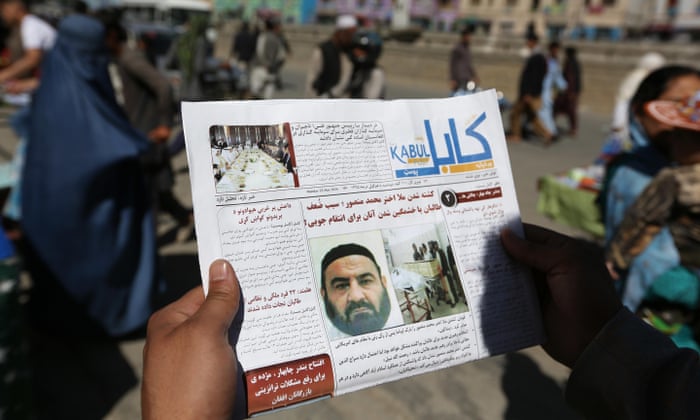
compensation. Photograph: Jon Boone for the Guardian--- A local newspaper report of the killing of Mullah Akhtar Mansoor in a US drone strike. Photograph: Rahmat Gul/AP
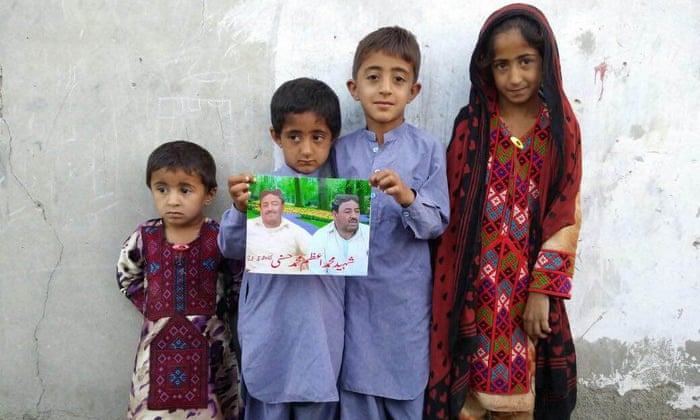
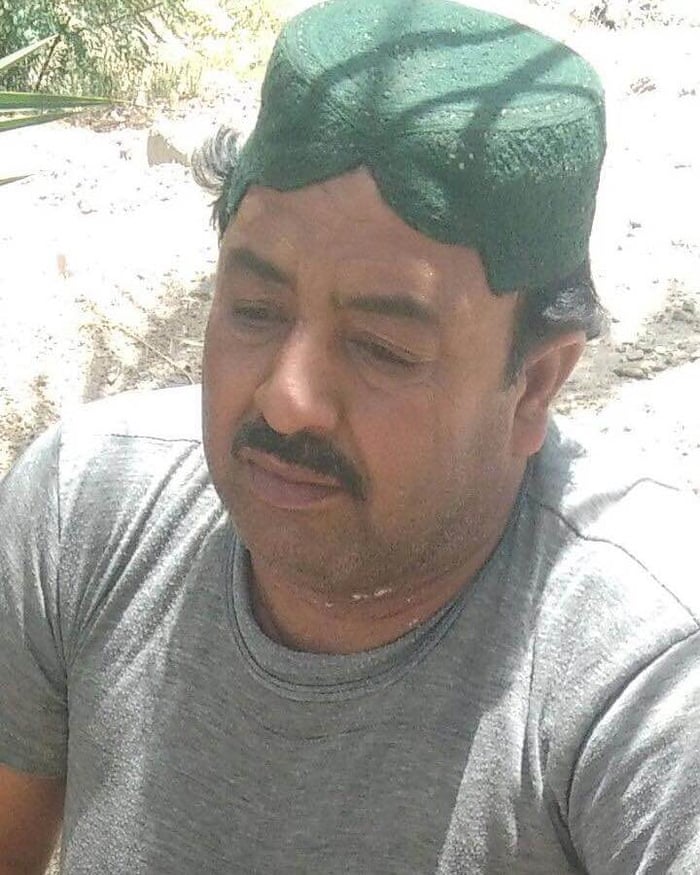
Mohammad Azam, the taxi driver killed in US drone strike on Mullah Mansoor. Photograph: Jon Boone for the Guardian
 Kiyya Baloch and Jon Boonein Islamabad-Sunday 29 May 2016
The family of a taxi driver who was killed in a drone strike while driving the leader of the Afghan Taliban across Pakistan have lodged a criminal case against the US government.
Mohammad Azam was killed on 21 May while unwittingly taking Taliban leader Mullah Akhtar Mansoor from the Iranian border to Quetta, the capital of Balochistan.
The unprecedented attack has thrown into uncertainty possible peace talks with the Taliban as well as US-Pakistan relations.
It has also devastated the family of Azam, who had been working for more
than eight years as a driver in Taftan, a tiny desert town next to an
important border crossing with Iran.
“He was the sole breadwinner of our large joint family, this was an
attack on our family that hardly earns enough for two meals a day,” said
Mohammad Qasim, Azam’s older brother.
Azam supported his wife, four children, and a disabled brother called Yar Muhammad.
A week after his death his children remain distraught and tearful. They describe their father as a “martyr”.
“Who will feed them now?” asked Qasim. “I appeal to the civilised world,
including all those human rights bodies, to investigate the brutal
murder of my brother and compensate his children.”
He has filed a “first investigation report” for murder, naming the “US
authorities” who claimed responsibility for the attack. The police are
now obliged to investigate the matter. “I want justice and demand action
against the US authorities,” the document reads.
It was a series of chance occurrences that led to Azam finding one of
the US’s most wanted men sitting in his white Toyota Corolla.
Azam got much of his work though a small local transport company owned
by Habib Saoli, which has its office near the exit of the
Iranian-Pakistani border facility that straddles the border.
Mansoor emerged from that building shortly after 9am on 21 May, returning to Pakistan after a long visit to Iran which, it has been reported, was for both medical attention and to visit members of his family.
He was passing himself off as a Pakistani citizen using a passport and national ID card with the false name Muhammad Wali.
He immediately began looking for a ride for the 600km journey to the city of Quetta.
Said Ahmed Jan, an employee of a bus company, was trying to fill up the
final seats of his Quetta-bound minibus but Mansoor wasn’t interested.
“He said, ‘I want to go in a car’, so I called Habib and asked him to
provide a car,” said Jan. “Habib took a little commission and gave the
job to Azam.”
Saoli said he could not remember whether Mansoor, who initially tried to
haggle down the 14,000 rupees (£90) charge, had ever used one of his
cars before.
Mansoor was likely to have thought himself safe given the US is not
known to have carried out any operations inside Balochistan despite the
vast province being home to many of the Taliban commanders with which
the US has been at war for 15 years.
The situation is unlike Waziristan, a tribal region hundreds of miles to
the north, where militant commanders operate in constant fear of the
CIA’s extensive drone programme.
In Waziristan the targets are usually groups affiliated with al-Qaida or
the Haqqani Network, a Taliban ally. It is almost unheard of for senior
members of the core Afghan Taliban, often known as the Quetta Shura, to
be attacked inside Pakistan.
However the US had already decided if it got the chance to kill Mansoor,
who the Pentagon described as an “obstacle to peace” who was actively
preventing Taliban commanders from holding talks with representatives of
the Afghan government.
Attempting to foster such a reconciliation process is now a key part of
US strategy in the region, with the country having backed a Pakistan-led
effort to bring the two sides together.
But Mansoor had been responsible for soaring violence in Afghanistan, forcing the Kabul government to abandon some territory to the insurgents.
It is not known why the US waited to strike until Mansoor had completed
more than two-thirds of his journey, having been on the road for almost
six hours.
Mullah Akhtar Mansoor threat to peace, says Kerry after drone strike
Mullah Akhtar Mansoor threat to peace, says Kerry after drone strike
But the car was finally destroyed by missile strikes in the
mid-afternoon, shortly after the pair had taken a rest stop near the
town of Ahmad Wal, roughly 35km from Afghan airspace.
Qasim said he could not believe the news of his brother’s death when he
received it, or understand how the leader of the Taliban could have been
able to travel so freely.
“Why didn’t the hundreds of paramilitary troops stop him like they do with the common passengers?” he asked.
“Why did the Americans kill him just for driving a car?” he asked. “It
was not written on [Mansoor’s] forehead that he is a Taliban leader. He
was travelling with valid documents.”
Mureed Shah, a local government official for the area, said Azam had “no links with any militant group”.
“I know Azam personally. He was working on a low-paid job to support his
poor family,” Shah said. “I have written to the government in Quetta to
pay compensation to the family.”
Qasim said no one from the government had as yet contacted him about compensation.
The US army has made payments to civilian victims of military
operations, including drone strikes, just over the border in
Afghanistan, but not in Pakistan.
Mustafa Qadri, a drones expert from Amnesty International, said the family had a right to bring a claim and demand damages.
“The US has itself said very openly that it seeks to minimise civilian
casualties and provide compensation and other damages to civilians who
die,” he said.
“So if this is justified as a spill over from the Afghan conflict why
has the US not said anything about the unintended victim of this
strike?”
