Peace for the World World ! Your War Our Lives

The Dalai Lama
A Brief Colonial History Of Ceylon(SriLanka)
Sri Lanka: One Island Two Nations
A Brief Colonial History Of Ceylon(SriLanka)
Sri Lanka: One Island Two Nations
(Full Story)
Back to 500BC.

Monday, May 2, 2016
HUMAN RIGHTS COUNCIL AT 10: CIVIL SOCIETY OUTLINES PLAN FOR HRC

 28.04.2016,
(Geneva) – At 10 years, the UN’s peak human rights body should move to
become more accessible to rights holders, more protective for victims of
human rights violations, and more effective in holding States and
non-State actors to account.
In a joint civil society paper published
on the occasion of the anniversary of the Human Rights Council, 20
leading national, regional and international human rights NGOs outline a
series of concrete steps and proposals that would strengthen the impact
of the Council’s work.
‘While the 10th anniversary is an opportunity to take stock of progress,
it is first and foremost a critical moment for States to commit to a
body that protects and promotes fundemental human rights more
effectively,’ said Michael Ineichen, ISHR’s Human Rights Council
Advocacy Director.
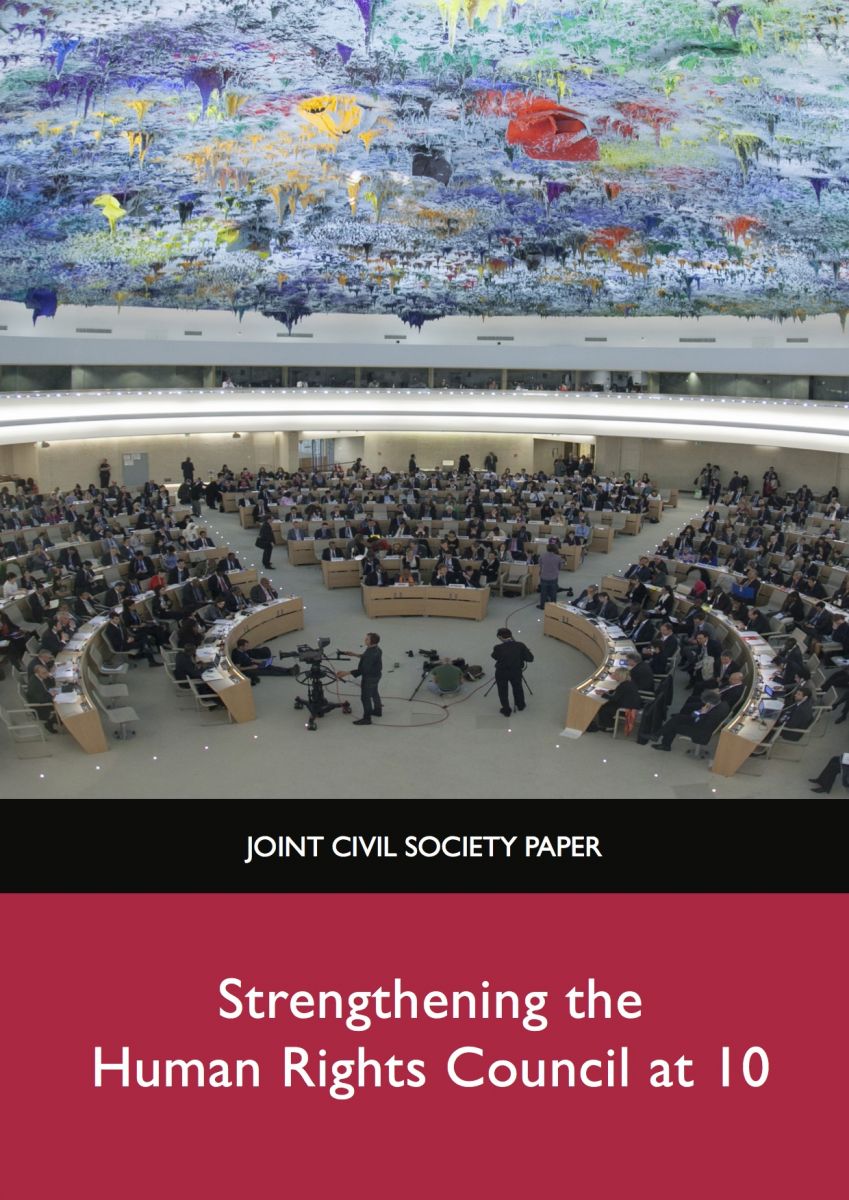
Human Rights Council at 10: Civil society outlines plan for HRC to become more protective, effective and accessible
‘This joint civil society paper provides concrete ideas and steps that
States and UN officials can take today, to lay the foundations for a
better Human Rights Council for all in the future,’ Mr Ineichen said.
Key points
- 20 leading human rights groups set out steps towards a more accessible, effective and protective Human Rights Council.
- Membership in the Council must be tied to concrete contributions to protecting rights at home and internationally.
- Human Rights Council decisions must move from paper to implementation.
- Chronic and urgent situations of human rights violations must be addressed swiftly and robustly.
- Human rights defenders and civil society must be protected and supported in addressing the UN.
- Institutional tweaks to the Council could increase its impact, strengthen the role of the President, and raise the Status of human rights within the UN.
The civil society paper outlines a broad vision of a Council that
directly guides the actions of State and non-state actors, addresses
serious rights violations head on, provides space for civil society, and
demands better adherence to basic membership standards.
The paper was coordinated by ISHR with the input of leading
organisations from all regions, including the Asian Forum for Human
Rights and Development (FORUM-ASIA), Conectas, CELS, the East and Horn
of Africa Human Rights Defenders Project, and international groups such
as Amnesty International and Human Rights Watch.
‘The joint civil society paper provides important elements to begin a
conversation towards a more effective Human Rights Council.’ said R.
Iniyan Ilango, UN Advocacy Programme Manager at FORUM-ASIA.
‘To succeed such conversations will have to genuinely focus on
strengthening the human rights pillar of the UN and equally include
voices of diverse actors from both the global South and North,’ Mr
Ilango said.
Putting a price on Council membership
Among the proposals to increase the body’s effectiveness are a range of
steps to enhance the membership of the Council, such as a pledge by
electing States to genuinely consider factors such as a candidates
State’s progress in protecting human rights, decisively implementing
international recommendations, and cooperating fully and in good faith
with the Council and its expert mechanisms.
Recent elections to the Human Rights Council in 2015 were
criticised by human rights groups on the basis that they were not
sufficiently open and competitive and that political considerations
trumped human rights concerns for many states in exercising their votes.
Enhancing civil society input and impact on the Council
Ending threats and attacks against human rights defenders in retaliation
for their cooperation with the Council is among the key recommendations
contained in the paper, as is increasing both physical space and remote
participation opportunities for national level civil society.
‘The distance between the Council and local societies in different
countries is worrying, and is also a consequence of the
limited dissemination of what States are discussing in Geneva,’ said
Camila Asano, Foreign Policy Coordinator of Conectas Human Rights in
Brazil.
‘Sadly, many national civil society groups struggle to find out their
own country’s position at the Council. States must commit themselves to
increase the accountability on foreign policy and create mechanisms for
access to information and social participation while building the
positions to be taken in Geneva.’ Ms Asano said.
Stepping up implementation of Council decisions
A weakness in the Council’s work is the lack of implementation of its
decisions by States, the paper says. An increase in financial resources
for the Office of the High Commissioner for Human Rights and the
Council’s human rights experts, along with the consistent use
of benchmarks in Human Rights Council resolutions to measure progress
towards implementation, are highlighted in the paper as key steps
to remedy weaknesses.
‘The Council should serve as a catalyst for the struggles of local
social actors,’ said Gabriela Kletzel, Director of the International
Team at the Centro de Estudios Legales y Sociales (CELS) in Argentina.
‘Shortening the distance between on-the-ground realities and discussions
in Geneva would not only strengthen implementation, but also enable the
Council to address human rights violations in a more timely way,’ Ms
Kletzel said.
Addressing urgent human rights situations and preventing human rights crises
Among the longstanding critiques of the Human Rights Council is the lack
of swift and decisive responses in situations of chronic or emerging
human rights violations.
‘The Council must act to address human rights situations, including
gross and systematic violations, impartially, objectively and without
selectivity. While the Council has brought global attention to a number
of significant human rights violations, and put in place mechanisms to
ensure continued scrutiny, challenges remain, many situations are
unaddressed, and all too often politics trump human rights,’ said John
Fisher, Geneva Director with Human Rights Watch.
To this end, the civil society paper calls on principled States to come
together to develop and implement a joint pledge to request a special
session of the Council, or to commence work on a situation- or
country-specific initiative, in situations that meet a certain
threshold, or are referred to the Council by independent actors. Such
triggers could include, for example:
- the High Commissioner for Human Rights suggesting Council action;
- a group of four or more Special Procedures mandate holders suggesting Council action;
- relevant regional mechanisms flagging a situation as requiring the Council’s attention;
- the General Assembly or the Security Council flagging a situation as requiring the Council’s attention; or
- a group comprising a State’s A-status NHRI, together with three or more ECOSOC-accredited NGOs, suggesting Council action.
Implemented effectively, such an initiative could substantially
strengthen the Council’s ability and track record when it comes to
fulfilling its own mandate to contribute to the ‘prevention of human
rights violations and respond promptly to human rights emergencies,’ Mr
Ineichen said.
The civil society paper will be formally launched at forthcoming high-level events in Geneva and New York.
Contacts:
- Michael Ineichen, International Service for Human Rights, on m.ineichen@ishr.ch
- Iniyan Ilango, Asian Forum for Human Rights and Development (FORUM-ASIA), on iniyan@forum-asia.org
- Camila Asano, Conectas, on camila.asano@conectas.org
- Gabriela Kletzel, CELS, on gkletzel@cels.org.ar
- John Fisher, Human Rights Watch, on fisherj@hrw.org
