Peace for the World World ! Your War Our Lives

The Dalai Lama
A Brief Colonial History Of Ceylon(SriLanka)
Sri Lanka: One Island Two Nations
A Brief Colonial History Of Ceylon(SriLanka)
Sri Lanka: One Island Two Nations
(Full Story)
Back to 500BC.

Monday, May 2, 2016
Strangling A Democracy – Collectively

By Suren Rāghavan –May 1, 2016
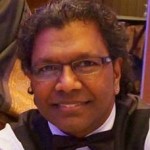
Dr. Suren Rāghavan
All states have nations. However, all nations may not have a state. A
bitter political reality the Tamil separatists should get into their
political psyche and come to live with. This is not to deny the
Rowlinian justice to a ‘minority’ nation that has lived and struggled
for their political freedom with huge historical human and cultural
cost: but to negotiate with the global, regional and contemporary
national strategic/security realities within the Lankan context. In the
same breath one must reiterate to the extreme Sinhala nationalists and
their often violent ethnoreligious politics- that oppressing and
continuing to deny the fundamental political freedom and the inalienable
rights of a nation within their majoritarian ethnic state with such
historicized centripetal interpretation and mobilization of
‘superiority’ political power, will not only work as a barrier to the
stability of their own ‘Dhammadīpa’ but in fact will be a
self-constructed destroyer within a postwar context even with the new
found limited opportunities for the recovery of a working democracy.
There are two popular, often asked questions aiming to analyze the
bi-polar positions that leads to the structural crisis within the state
of Lanka. 1) Why is the nation of Sinhalas, which claims to be the
bearers of the pristine Buddhist doctrine cannot construct harmony but
take violent paths in their political conflict resolution? 2) Why are
the ‘moderate’ Tamil intellectuals silent and disengaged in the face and
history of the separatist discourse? The answers vary based on who is
asked of, because the questions are raised on false or lopsided
conceptual notions of important terms here.
One needs to ask which ‘Buddhism’
are you comparing to conclude that Sinhalas live in contrary and does
your ‘moderate intellectuals’ mean those who deny the rights of the
Tamils for their self-determination even
leading to a separation if such is possible (non-violently)? Because
searching for a historical pure Buddhism and come to conclude that it is
‘betrayed’ in Lanka is a ‘Tambiahian’ paradigm constructed and
propagated well within a Western/ Protestant understanding of Buddhism.
Sinhala Buddhism had never been what is termed as Pāli Buddhism. Instead
it arrived, established and continues as a political process of
redefining the past, present and future of the Sinhala ethnic nation and
their structural power aspirations. For this reason Buddhism is the
means not the end within the Sinhala political hegemony against the
‘Asinhalas’ sharing the island. Similarly if a Tamil is considered a
moderate because s/he openly stand to oppose the idea of an independent
sovereign state for the Tamils carved from the territorial boundaries of
present Lanka, then you are not only dismissing the fundamental aspects
of modern democracy but also contemporary understanding of collective
Human Rights guaranteed by the International Convention on Civil and
Political Rights. This makes an a paradigmatic approach to the
intellectual discourse of the ethnoreligious and ethnolinguistic
nationalisms of Sinhalas and the Tamils respectively – a sociopolitical
funambulism. Yet one cannot be silent far too long in the face of the
abysmally decomposing democratic nuances even under a so called ‘Rule of
Good Governance’
