Scientists at Instituto D'Or are researching the effects of Zika on brain tissue-Dr Patricia Garcez says her team was astonished by the speed of cell death
 BBC News, Rio de Janeiro-By Wyre Davies-2 May 2016
The mosquito-borne Zika virus may be even more dangerous than previously thought, scientists in Brazil say.
They told the BBC that Zika could be behind more damaging neurological
conditions, affecting the babies of up to a fifth of infected pregnant
women.
Rates of increase in Zika infection in some parts of Brazil have slowed,
thanks to better information about preventing the disease.
But the search for a vaccine is still in the early stages.
And Zika continues to spread across the region.
Most doctors and medical researchers now agree that there is a link
between the Zika virus and microcephaly, where babies are born with
abnormally small heads because of restricted brain development.
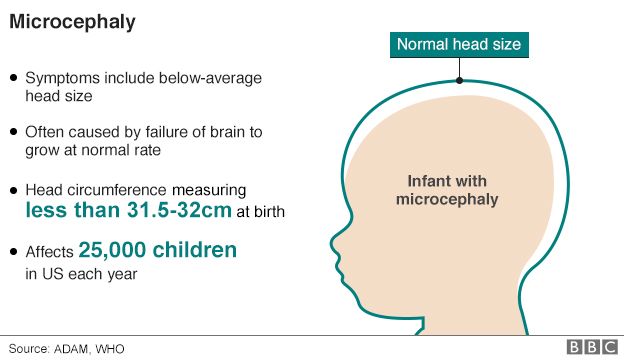
While
it is estimated that 1% of women who have had Zika during pregnancy
will have a child with microcephaly, leading doctors in Brazil have told
the BBC that as many as 20% of Zika-affected pregnancies will result in
a range of other forms of brain damage to the baby in the womb.
A separate study, reported in the New England Journal of Medicine, said
that "29% of scans showed abnormalities in babies in the womb, including
growth restrictions, in women infected with Zika".
"Our findings are worrisome because 29% of ultrasonograms showed
abnormalities, including intrauterine growth restrictions and foetal
death, in women with positive Zika infection," the study said.
Zika: What are the symptoms?
Deaths are rare and only one in five people infected is thought to develop symptoms.
These include:
- mild fever
- conjunctivitis (red, sore eyes)
- headache
- joint pain
- a rash
A rare nervous system disorder, Guillain-Barre syndrome, that can cause temporary paralysis has been linked to the infection.
There is no vaccine or drug treatment so patients are advised to rest and drink plenty of fluids.
But the biggest concern is the impact it could have on babies developing in the womb.
Zika virus: Special report
Many of the conditions that Brazilian doctors are noticing in babies
born to mothers who had Zika are not as obvious to the untrained eye as
microcephaly.
They may not have the same impact on the child's development either but the frequency with which they are occurring is alarming.
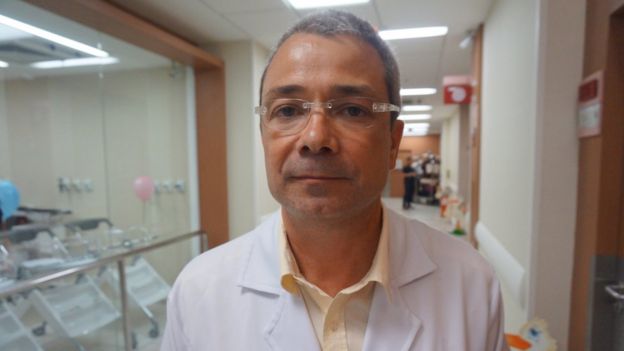
Doctor Renato Sa is a senior obstetrician who works in both public and private hospitals in Rio de Janeiro.
"There are cerebral calcifications, an increase in the number of
dilation of cerebral ventricles and the destruction or malformation of
the posterior part of the brain," he says.
In my notebook he makes a list of the conditions that they are now
witnessing with increasing regularity; ventriculomegaly, damage of the
posterior fossa, craniocynostosis and cerebral calcification.
He says that an added concern is that often there is no obvious sign or
symptom of the neurological damage until later observations of the
child's development, "perhaps convulsions or other tell-tale signs".
'Shocked'
There is an obvious urgency to understand more about Zika and develop a vaccine.
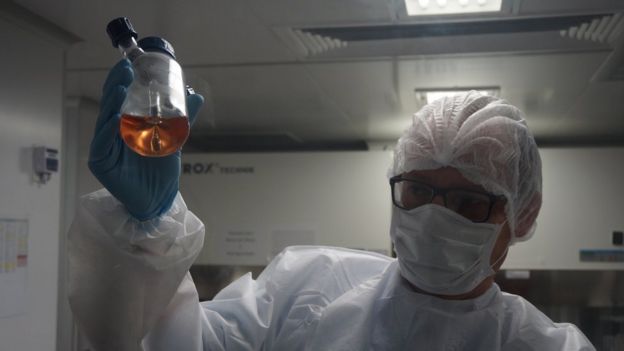
At the Instituto D'Or laboratories in Rio de Janeiro they are using
stem-cell technology to create new cells that develop like human brains.
They call them "mini brains" and infect them with Zika.
"What we observed is that the Zika virus is able to kill cells, is able
to affect the growth of cells," says Dr Stevens Rehen, the unit's senior
neuroscientist.
Dr Rehen has noted, as have others, that there is something particularly
virulent about the strain of Zika that arrived in Brazil and is
presently spreading across the continent.
"There is something in the Zika virus that makes it more prone to kill
neurocells during development. Now we need to search and understand what
makes that virus more aggressive to the brain under development."
The team was shocked by what it discovered - a huge reduction in growth
of the cerebral cortex, the critical outer layer of the brain.
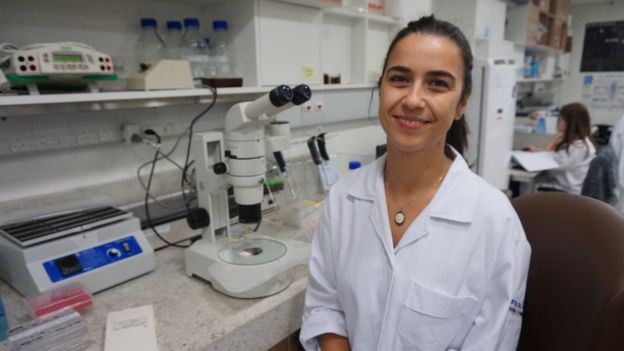
"The effect of the Zika virus was very impressive," says Dr Patricia Garcez.
"We were all astonished by the fast effect. We saw cell death in three
days, a massive cell death. In six days, the neurospheres were
completely gone."
In a change to earlier patterns, the areas of greatest infection for
Zika are now in the south of the country, particularly in Rio de
Janeiro.
Among some sectors of society, public information campaigns about the
need for using anti-mosquito repellent and taking other precautions
appear to be having a positive impact.
Dr Sa says that the number of Zika cases among middle-class pregnant
women has fallen sharply, as have cases of microcephaly and other
related conditions.
But he says that the disappointing reality is that such progress is not
apparent in the city's many poor working-class neighbourhoods, such as
Duque de Caxias in the north of Rio de Janeiro.
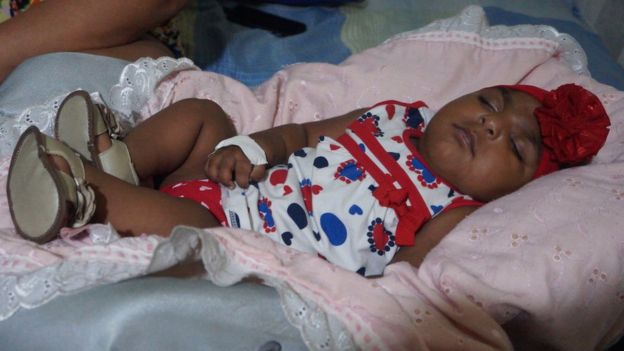
I met Fabiane Lopes, a single mother of four children whose partner
abandoned her when he found out the youngest child was going to be born
with microcephaly.
Given her plight - living in a tiny single-room house and dependant on government welfare - Ms Lopes is stoical.
She has to be. Four-month old Valentina needs all the love, attention and therapy she can get.
"We've seen no anti-Zika campaigns around here," says Ms Lopes,
illustrating that government messages about Zika control are not getting
through to everyone.
She admits never having used anti-mosquito repellent and not being particularly careful about covering up when she was pregnant.
Ms Lopez clearly loves her little girl, despite the tough start in life
that she has been dealt. Her other children help with the chores that an
absent father has abrogated.
This is a family and a country is still learning how damaging the Zika virus and its consequences can be.