Peace for the World World ! Your War Our Lives

The Dalai Lama
A Brief Colonial History Of Ceylon(SriLanka)
Sri Lanka: One Island Two Nations
A Brief Colonial History Of Ceylon(SriLanka)
Sri Lanka: One Island Two Nations
(Full Story)
Back to 500BC.

Tuesday, June 7, 2016
At least 75,000 families affected, 91 missing in Sri Lanka’s worst floods last month
Sunday, June 05, 2016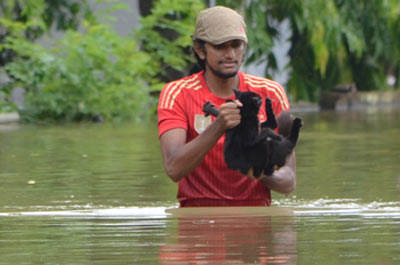
File picture of a cat being carried to safety.
 Around
302,000 people in 22 districts in Sri Lanka have been affected due to
the torrential rain and floods, according to the latest situation report
from the Disaster Management Centre of Sri Lanka. The number of
families affected is close to 75,000 with 104 deaths, 31 injured, 99
missing and damage to property totalling over 5,000. There are 210 safe
locations housing over 6,000 individuals and 21,484 families. Key
findings in an assessment by the Ministry of Disaster Management in the
Colombo, Gampaha and Kegalla districts said the May 2016 floods and
landslides have caused the highest displacements, widespread damage to
productive assets, loss to livelihoods and agricultural and livestock
production.
Around
302,000 people in 22 districts in Sri Lanka have been affected due to
the torrential rain and floods, according to the latest situation report
from the Disaster Management Centre of Sri Lanka. The number of
families affected is close to 75,000 with 104 deaths, 31 injured, 99
missing and damage to property totalling over 5,000. There are 210 safe
locations housing over 6,000 individuals and 21,484 families. Key
findings in an assessment by the Ministry of Disaster Management in the
Colombo, Gampaha and Kegalla districts said the May 2016 floods and
landslides have caused the highest displacements, widespread damage to
productive assets, loss to livelihoods and agricultural and livestock
production.
he frequent natural disasters in the same regions had undermined
household resilience and the affected populations had built up
unsustainable levels of debts. Food security of the affected populations
will be challenging due to displacements, lack of livelihood and income
sources. Immediate coordinated relief inputs specifically targeting the
vulnerable households in Colombo, Gampaha and Kegalle districts are
recommended to prevent a further collapse in household resilience.
Markets were operational in all the flood affected regions.
Impact on drinking water availability
In the Colombo district, access to pure drinking water was reported as better and 33 per cent of the displaced households were using bottled water. Out of 34 Internally Displacement Persons (IDP) camps, 23 had reported to have enough access to drinking water. Out of the assessed locations, the main source of water for communal cooking were taps, water wells and water bowsers. In the Gampaha district, access to pure drinking water was reported at over 90 per cent among the welfare centres visited.
In the Colombo district, access to pure drinking water was reported as better and 33 per cent of the displaced households were using bottled water. Out of 34 Internally Displacement Persons (IDP) camps, 23 had reported to have enough access to drinking water. Out of the assessed locations, the main source of water for communal cooking were taps, water wells and water bowsers. In the Gampaha district, access to pure drinking water was reported at over 90 per cent among the welfare centres visited.
Out of the 22 assessed locations, the main sources of water for communal
cooking were water taps and water bowsers. Contamination to the
drinking water wells are widely reported. In the Kegalle district,
access to pure drinking water was available at over 92 per cent of the
welfare centres visited. The main sources of drinking water for the
camps were tap water, wells, (16 per cent) and plastic tanks (21 per
cent), the report said.
Sanitation and health
In the Colombo district, more than 50 per cent of the welfare centres reported that the facilities for bathing are limited, particularly in the Kolonnawa DS division. Around 20 per cent of the camps reported that toilet facilities were not available. Most of the welfare centres did not meet SPHERE standards. Diseases were reported among the flood victims but the health centres were functional (over 75 per cent). In the Gampaha district, over 40 per cent of the camps reported that toilet facilities were not satisfactory or not functional.
In the Colombo district, more than 50 per cent of the welfare centres reported that the facilities for bathing are limited, particularly in the Kolonnawa DS division. Around 20 per cent of the camps reported that toilet facilities were not available. Most of the welfare centres did not meet SPHERE standards. Diseases were reported among the flood victims but the health centres were functional (over 75 per cent). In the Gampaha district, over 40 per cent of the camps reported that toilet facilities were not satisfactory or not functional.
Water and sanitation did not meet SPHERE standards. Skin diseases and
allergies were reported among women and young children. Only 40 per cent
camps reported having enough water supply for communal cooking. In the
Kegalle district, access to toilet facilities were available in all the
22 locations visited. Only 5 per cent of the locations were not
accessible to proper health facilities. Approximately, one tenth of
camps reported having access to water for bathing and washing purposes.
Hygiene kits, clean clothing, especially women clothing were not
accessible.
Impact on Food Security and Livelihood
In the Colombo district, 60 per cent of the welfare centres reported having full access to cooked meals and dry rations. However after returning home, the food security situation is expected to deteriorate among households having an income below the poverty line (Rs. 4,099 person/month) and have lost their productive livelihood. In the Gampaha district, over 90 per cent of flood victims in the visited camps have received food packs or communal cooked meals. However only 20 per cent of the welfare centres visited reported to have full access to communal cooked meals.
In the Colombo district, 60 per cent of the welfare centres reported having full access to cooked meals and dry rations. However after returning home, the food security situation is expected to deteriorate among households having an income below the poverty line (Rs. 4,099 person/month) and have lost their productive livelihood. In the Gampaha district, over 90 per cent of flood victims in the visited camps have received food packs or communal cooked meals. However only 20 per cent of the welfare centres visited reported to have full access to communal cooked meals.
The food security situation is expected to deteriorate among the
households who have a household income below the poverty line and have
lost their livelihoods and productive assets. In the Kegalle district,
access to immediate dietary needs for adults were reported as 100 per
cent but limited access to children’s food were reported. Needs of dry
rations for the next seven days (as at May 30) were reported in most
welfare locations. However, immediate donations were accessible through
private donors.
Medium term needs in the Colombo District
- Conduct a technical survey to assess the damage/loss to shelter and provide housing assistance/insurance claims
- Conduct post disaster needs assessment and implement recovery activities
- Support livelihood recovery for the households who lost productive assets (i.e. rented cars, three-wheelers)
- Conduct 190 health camps covering all flood affected Grama Niladhari Divisions in Colombo
- Continue food assistance for 14,000 most vulnerable persons for a three-month period
- Conduct well-cleaning, drainage clearance and debris removal in 190 affected GN divisions
- Improve the access to financial facilities including soft-loans, private sector salary advances to recover flood damage
- Increased priority for waste management and cleaning the debris
Medium terms needs in the Gampaha District
- Conduct a technical survey to assess the damage/loss to the shelter and housing assistance/insurance claims
- Conduct post disaster needs assessment to design the recovery strategy
- Support livelihood recovery for the households who lost cultivations, productive assets (i.e. rented cars, three-wheelers)
- Conduct 169 health camps covering all flood affected Grama Niladhari Divisions in Gampaha
- Continue the food assistance for 13,000 most vulnerable persons for a three-month period
- Conduct well-cleaning, drainage clearance and debris removal in 190 affected GN divisions
- Improve the access to financial facilities including soft-loans, private sector salary advances to recover flood damage
Medium terms needs in the Kegalle District
- Conduct a technical survey to assess the damage/loss to shelter/land housing assistance/insurance claims
- Conduct post disaster needs assessment to design the recovery strategy
- Support livelihood recovery, relocations for the households who lost cultivations, productive assets and lands
- Conduct 204 health camps covering all flood affected Grama Niladhari Divisions in Kegalle
- Continue the food assistance for 9,000 most vulnerable persons for a three-month period
- Conduct well-cleaning, drainage clearance and debris removal in 204 affected GN divisions
The Ministry of Disaster Management jointly with the Disaster Management
Centre and National Disaster Relief Services Centre, deployed rapid
field verification teams in five districts with the support of the Sri
Lanka Red Cross, World Food Programme and Sri Lanka Family Planning
Association. Additionally, Child Fund, World Vision and Oxfam supported
for the exercise in various districts. -(NG)
