Peace for the World World ! Your War Our Lives

The Dalai Lama
A Brief Colonial History Of Ceylon(SriLanka)
Sri Lanka: One Island Two Nations
A Brief Colonial History Of Ceylon(SriLanka)
Sri Lanka: One Island Two Nations
(Full Story)
Back to 500BC.

Tuesday, June 21, 2016
Little Doubt This Acne Bacteria Plays A Role In Prostate Cancer
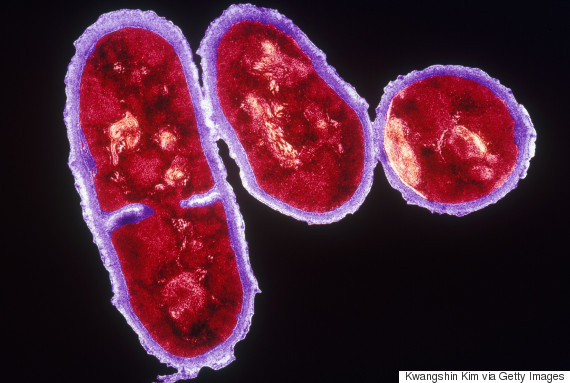
Propionibacterium acnes, anaerobic gram-positive bacilli responsible for inflammatory acne.

When someone mentions cancer in men, most will immediately think of the prostate. This gland is primarily responsible for male urogenital health.
It also may be vulnerable to the onset of tumours, both benign and
malignant. As a result, some 24,000 Canadian men are afflicted each year
and sadly some 4,000 will die.
-Advertisement-
The cause of prostate cancer has been intensely studied for decades.
Researchers have found about five to ten per cent of cases are due to inherited genes.
However, the vast majority of cases occur spontaneously over the course
of a lifetime. Risk factors such as age and dietary choices have been identified,
and tests do exist to identify biological warning signs. Yet, there is
still one particular piece of the puzzle missing. Something has to
trigger the process.
What causes this spontaneous change has been the focus of many studies,
and several biological molecules have been identified as playing a role.
The most common are testosterone and prostate-specific antigen (PSA),
although in recent years others have surfaced, including prostate cancer
antigen 3 (PCA3) and insulin growth factor 1 (IGF-1). While higher levels may indicate a higher risk for disease, they do not, however, indicate a possible trigger.
One route to identify the trigger involves understanding the body's
response to an infection. When an unwelcome bacterium or virus enters a
restricted area such as the prostate, the cells may respond by trying to
kill the intruder. To accomplish this, they rely on inflammation as well as the generation of a number of toxic molecules known as reactive oxygen species.
These are quite effective at harming the microbes, yet there is a cost
to the cell itself: if these chemicals are continually produced, they
may end up interfering with the genetic copying process. If mutations
occur in those oncogenes, the result could be the initiation of a
tumour.
The concept appears to be valid as bacteria have
been found in the prostate, particularly in men suffering from
prostate-related pain. Many of the species happen to come from the skin,
although for the most part they are not considered to be pathogenic as
they are normal members of the skin microbial population.
But in 2005, the discovery of one particular bacterial species in the
prostate sounded the alarm that infection may indeed be the cause. It
was Propionibacterium acnes. For researchers trying to find the prostate cancer trigger, this bacterium became a potential suspect.
There was little doubt of a strong association between the species and cancer.
The reason comes from the troubles P. acnes causes. As the name
implies, the bacterium is involved in the formation of acne on the
skin. As anyone who has suffered from this ailment knows, inflammation
is a constant problem and leads to damage to the skin and underlying
tissue.
Though the theory was valid, it wasn't entirely accepted even as P. acnes was found to live in
prostate cancers. Yet, researchers continued to find some route to show
at least an association between the bacterium and the disease. Last
week, even more evidence linking the bacterium and prostate cancer was
shown by a Swedish team of researchers. They revealed the
results of a six-year study trying to determine if this acne-causer was
also involved in the onset of cancer. Based on their results, the
presence of this bacterium may offer at the least another risk factor,
if not a possible trigger.
The team examined prostate tissue sections collected from 2009 to 2015.
They were able to acquire biopsies from both men suffering from cancer
and healthy controls. The samples were incubated for seven days to give
the bacteria time to adapt to the new environment and then grow. After
the week was over, the team looked for colonies and then used genetic
techniques to identify any that showed up.
When the results came back, the bacterium was found in 60 per cent of
the prostate cancer cases, as opposed to 26 per cent of the controls.
Although the team had hoped to see 100 per cent presence in tumours and
zero in the controls, the results were still significant. There was
little doubt of a strong association between the species and cancer.
While this study does imply a role of P. acnes in the
development of prostate cancer, this was not a smoking gun. As a result,
the authors had to admit the study only added more evidence in the case
against the bacterium. They did show, however, the bacterial isolate
had the capability of causing inflammation and as such could indeed
initiate the formation of tumours.
Although this study didn't offer a conclusive role for P. acnes,
the results do suggest the presence of this bacterium in biopsy samples
may be another risk factor to consider. If combined as a screen in
combination with other easier-to-collect biomarkers, there may be a
possible route for prevention through treating the bacterial infection
before it has the chance to at least contribute -- if not actually cause
-- cancer.
