Peace for the World World ! Your War Our Lives

The Dalai Lama
A Brief Colonial History Of Ceylon(SriLanka)
Sri Lanka: One Island Two Nations
A Brief Colonial History Of Ceylon(SriLanka)
Sri Lanka: One Island Two Nations
(Full Story)
Back to 500BC.

Saturday, June 11, 2016
The Constitution We Need

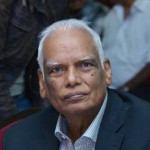
Veluppillai Thangavelu
Sri Lanka is in the process of framing a new constitution. A resolution
submitted by Prime Minister Ranil Wickremesinghe seeking parliamentary
approval for the appointment of a constitutional assembly was adopted
unanimously on March 10, 2016.
The original resolution underwent significant amendments proposed by the
Sri Lanka Freedom Party (SLFP), the Joint Opposition and the Janata
Vimukti Peramuna (JVP). This is the third attempt at constitution making
since independence in 1948. The last Constitution which gave birth to a
Presidential system of government was introduced by J.R. Jayewardene.
It came into effect on February 4, 1978 and since then has undergone 19
amendments during the last 38 years.
The new constitution, inter-alia, is aimed mainly at (a) Reforming the
electoral system, (b) Abolishing the Executive Presidency, and (c)
Finding a solution to the ethnic problem through various forms of
devolution.
The Government appointed a Public Representation Committee (PRC)
to obtain the views of civil society, institutions and individuals
outside the elected parliament. The PRC has since submitted its report
to the government in all three languages.
Constitutional making is not going to be easy as evidenced by the
inadequacy of the 1972 and 1978 constitutions. These constitutions
reflected the narrow political philosophy of the then leaders of the
SLFP and the United National Party. Mrs. Srimavo Bandaranaike wanted to
vest power in the hands of the majority Sinhala – Buddhists at the
expense of other national minorities. J.R. Jayewardene who was an ardent
admirer of American President Dwight Eisenhower and French Charles De
Gaulle always dreamt of introducing an executive presidency in Sri
Lanka.
In 1971, he moved a resolution in the Constituent Assembly in support of
an executive presidency. The resolution was rejected, but when his
chance came in 1977, he ditched the 1972 constitution in favour of an
executive Presidential style government. J.R. Jayewardene became
a constitutional dictator under his 1978 constitution. He boasted that
he can do anything except making a man a woman or vice versa.
His successors made full use of the executive powers of the President to
the extent of subverting parliament and undermining the independence
and powers of the judiciary. Ironically, Mahinda Rajapaksa who came to
power promising to abolish executive presidential system made full use
of the same system. He became an authoritarian ruler, especially after
the 18th Amendment.
In short, both the Republican Constitution of 1972 and 1978 were
fundamentally flawed concentrating power in the hands of single
individuals and failed to protect and safeguard fundamental democratic
values and principles. The 1972 Republican constitution ditched the
Soulbury constitution by conferring constitutional status to the
Sinhala Only Act, giving the religion of the majority foremost place and
declaring Sri Lanka a unitary state. These provisions were
almost reproduced verbatim in the 1978 constitution by J.R. Jayewardene.
