Peace for the World World ! Your War Our Lives

The Dalai Lama
A Brief Colonial History Of Ceylon(SriLanka)
Sri Lanka: One Island Two Nations
A Brief Colonial History Of Ceylon(SriLanka)
Sri Lanka: One Island Two Nations
(Full Story)
Back to 500BC.

Tuesday, August 23, 2016
Black activists owe no apology for charging Israel with genocide
19 August 2016
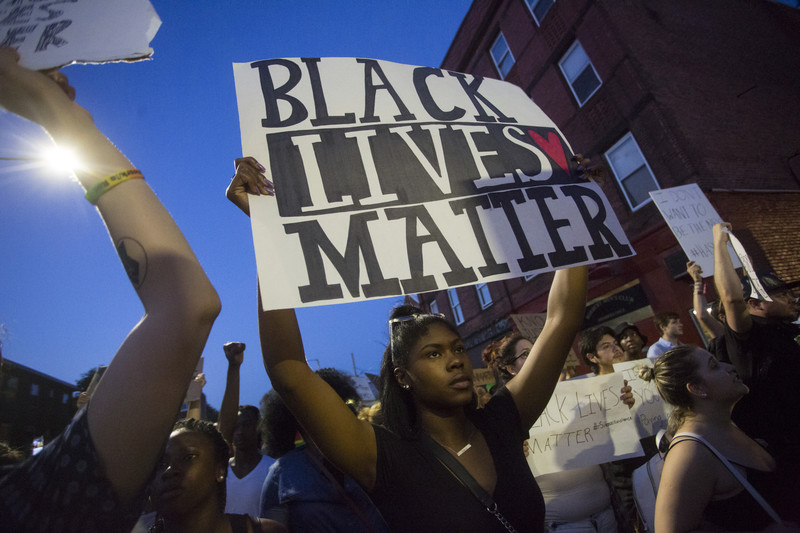
 August opened with a major development in the struggle against anti-Black racism in the US and beyond.
Activists from more than 50 organizations came together in the Movement for Black Lives and published theVision for Black Lives,
which identifies key aspects of the oppression of Black people and puts
forth solutions to the systemic violence and oppression that target
Black people in the United States. This statement proposes a set of
demands for activists to advance that address racialized poverty, police
violence, environmental racism and myriad other issues that plague
Black communities in the United States.
While the vision inspired activists in the US and around the world, not
everyone was excited. The Vision for Black Lives statement was
immediately met with a slew of criticism from Zionist organizations and
publications.
The criticism focused on how the statement declares solidarity with the movement for Palestinian liberation. It is unsurprising that organizations such as the Jewish Community Relations Council — in this case, the Boston Chapter — reacted with hostility to the vision for its solidarity with Palestinians. The organization states that
it is committed to building support for Israel. What is a little
striking is the JCRC’s rejection of the entirety of the Movement for
Black Lives because of its stance on Palestine.
Since the state-sanctioned murder of Trayvon Martin in 2012, the 2014 Ferguson uprising in response to the police murder of Michael Brown and
the countless other Black lives lost to police violence, a movement has
coalesced around a rallying cry that should be uncontroversial: Black
lives matter. This latest stage in the struggle for Black freedom has
transformed the conversation around racism in the US and is forcing
people to take a stand on what the Vision for Black Lives accurately
names a war on Black America.
In its response to the vision statement, the JCRC has virtually nothing
to say about the main issues that the statement addresses: rampant
police violence, economic devastation and other realities of the racist
nightmare for Black people. Instead, it focuses on a small, though
important, portion of the statement.
Tepid
The JCRC’s response does say that “we recommit ourselves unequivocally
to the pursuit of justice for all Americans and to working together with
our friends and neighbors in the African-American community, whose
experience of the criminal justice system is, far too often, determined
by race.” This, the one line in JCRC’s statement that addresses
anti-Black racism in the US, is tepid at best.
It is also a lie. A previous line says that JCRC “cannot and will not
align ourselves with organizations” that use the word “genocide” to
characterize Israel’s violence, indicating that the organization’s
“commitment” to anti-racism is actually highly equivocal.
An anti-racism based on the premise that its proponents agree with JCRC’s embrace of Zionism is not anti-racism at all.
That Zionist organizations are willing to reject the current battle for
Black lives raging in the United States when its activists find common
ground and solidarity with Palestinians simply reaffirms what we already
knew: Zionism is racism. Because the very principle of Zionism dictates
that Jewish people be granted greater privileges by the State of Israel
than its non-Jewish subjects, the result is necessarily a system of apartheid and inequality.
This comes at the expense of other groups, particularly Palestine’s
non-Jewish indigenous inhabitants. Systematic dispossession and ethnic cleansing of
Palestinians, along with other forms of brutal violence by Israeli
police and military, are the daily practices of the Israeli state. This
is only possible through the racist dehumanization of the Palestinian
people.
It follows, then, that US organizations committed to Zionism as a core
principle will only make a limited commitment to anti-racism here.
JCRC’s statement accuses the Vision for Black Lives of seeking “to
isolate and demonize Israel singularly amongst the nations of the
world.” This is simply false; the Vision for Black Lives statement
identifies a number of oppressive regimes backed by the US and projects
carried out directly by the US military to oppress people abroad.
There are, however, many Israeli practices that are extraordinary — even among the world’s imperial states. These include its systematic arrests and “trials” of children in military courts and
its use of 19th century practices and language regarding the
colonization of Palestinian land. After all, where else in the world
today does a government talk openly of “settlements” and “settlers”?
Israel also maintains an apartheid regime with distinct laws and
services that only apply to Jewish people. While we have no illusions
that the US or South Africa are countries of equality, at least similar
white supremacist laws in these places were defeated by freedom
struggles decades ago.
Superficial?
The Vision for Black Lives’ characterization of Israel was a basis for
other organizations and publications to disagree with the document. The Anti-Defamation League, which characterizes the Palestinian call for boycott, divestment and sanctions against Israel as anti-Semitic, issued a response to
the vision that, unlike the JCRC, acknowledges the existence of mass
incarceration and other oppressive realities for Black people in the US.
But the ADL opposes the document for referring to Israel as an
apartheid state, which it calls a “gross mischaracterization.”
The head of the ADL, Jonathan Greenblatt, also argues that “it’s repellent and completely inaccurate to label Israel’s policy as ‘genocide.’”
Similarly, writers with +972 Magazine took issue with the language that the vision uses to describe Israel’s violence toward the Palestinians.
The progressive English-language news site based in Israel, which
features writers who advocate for the human rights of Palestinians,
greeted the vision warmly, with writer Amjad Iraqi explaining that
“Black activists have delivered a powerful message to the Palestinian
people: you are not alone in your struggle.” +972, however, has
published three separate posts (including Iraqi’s) that argue that the
vision is wrong for characterizing Israel’s treatment of the
Palestinians as genocide.
In the most extensive article on the subject, Dahlia Scheindlin argues —
with incredible condescension — that the authors of the Vision for
Black Lives should retract their use of the word. Unable to believe that
Black activists looking at the same facts as her could rationally draw
different conclusions, Scheindlin attributes the charge of genocide to
describe Israel’s practices to “a rush job and a superficial form of
groupthink.”
Though the Vision for Black Lives’ primary purpose is not to call
attention to Palestine, the platform actually presents some key facts
and arguments to justify its use of the terms “apartheid” and
“genocide.”
For example, the vision statement notes that Palestinian homes are
routinely bulldozed to make way for Israeli settlements and that Israel
has more than 50 laws on its statute books that discriminate against
Palestinian citizens of the state. The United Nations has defined the
crime of genocide as including a deliberate policy to impose conditions
of life on an ethnic, racial or religious group to bring about the
group’s total or partial destruction. By seriously examining the
situation, it is entirely reasonable to argue that Israel is trying to
destroy the Palestinian people and is therefore committing the crime of
genocide.
Neither the ADL nor any of the +972 Magazine bloggers who take issue with the platform respond to this context.
They argue, instead, that Black Lives Matter activists should not use
the word “genocide” because it is divisive and that Jewish readers take
offense. But with growing criticism of Zionism within the Jewish
community, not all Jewish groups responded the same way.
No strings attached
Jewish Voice for Peace responded both to the vision, and to Zionist organizations’ opposition to it, by declaringthat the group “endorses the Movement for Black Lives platform in its entirety, without reservation.” IfNotNow, a Jewish youth group formed in response to Israel’s 2014 attack on Gaza, and JVP’s Jews of Color Caucus, haveissued similar statements of support.
Greenblatt of the ADL describes the characterizations of Israel as an
apartheid state and calls for support of the boycott, divestment and
sanctions movement as “offensive in tone,” while Scheindlin calls on the
Movement for Black Lives to “correct” the “genocide language.”
Sheindlin states that “adopting slogans of certain activists”
contributes to “the inevitable and understandable emotional turmoil” and
that, therefore, “many now question the level of partnership and
support that so many Jewish actors are eager to provide.”
Scheindlin argues, and Greenblatt suggests, that the horrific truth of
Israel’s US-backed practices should be obscured in the name of
tactfulness. We reject this logic entirely; the pursuit of justice
should be guided by that alone, even if it makes those unwilling to
acknowledge the full depths of injustice uncomfortable.
After all, there is nothing tactful about the act of genocide.
It may come as a surprise to see the ADL and +972 Magazine writers on the same side of this question.
The ADL, while purporting to defend civil rights, contributes generously
to anti-Muslim and anti-Arab racism in the US and abroad and allies
with the very US urban police departments on the front lines of the war
against Black America. Indeed, in 2015 it commended the
St. Louis Metropolitan Police Department for participating in an ADL
training — just shy of the first anniversary of the department’s
repression of the Ferguson uprising.
The ADL characterizes any critique of Israel as anti-Semitism. +972 Magazine,
on the other hand, regularly publishes criticisms of the Israeli
occupation of the West Bank and Gaza, publicizes egregious acts taken by
the Israeli military and covers Palestinian protests with sympathy.
Both camps seem to take for granted, however, Israel’s constitution as a
Jewish state, one that continues to uphold the legal privileges of Jews
over the rights and equality of non-Jews. Many of the +972 bloggers
criticize the worst violence of the Israeli military and police forces
without acknowledging that the state’s reason for being, as a country
that exists for Jewish people first and foremost, makes it incompatible
with equality for Palestinians — or any non-Jews.
The Vision for Black Lives proposes a movement that seeks to end global
racism — with its mutually devastating effects on Palestinians, Black
people in the US and around the world. In their responses to that
movement, some of these organizations and individuals are saying that
the value they see in Black lives is predicated on their support for,
complicity in, and toleration of the crimes the State of Israel commits
against the Palestinian people.
While we understand the nuanced differences between these various
arguments we are responding to, and that not all of them disavow the
entirety of the vision statement, we find the many points of commonality
that are of great cause for concern. They have shown that their support
for our liberation is conditional; that so long as we, as Black people,
remain silent or reserved in the face of ethnic cleansing, we may have a
right to live free of fear and oppression.
That is not the meaning of liberation. Our freedom cannot be bought at
the expense of another’s oppression. Claiming solidarity to us so long
as we remain silent on the oppression of our Palestinian sisters and
brothers is insulting.
As the Dream Defenders recently stated in their response to this Zionist backlash, “True solidarity does not come with strings attached.”
And in these heavy days of racist violence in the US and Palestine, we
are inspired to see more people and organizations making the connection.
We will continue to do our parts to build the struggle for Black lives
and to support the fight for Palestinian freedom.
We will build on efforts like the 2015 Statement of Black Solidarity With Palestine,
and various delegations of Black activists to Palestine and Palestinian
activists to the US that foster solidarity between both movements for
the mutual benefit of each — and the liberation of all oppressed people.
Darializa Avila Chevalier is a 2016 graduate of Columbia University,
where she was an activist with Students for Justice in Palestine and
Mobilized African Diaspora. She helped launch the boycott,
divestment and sanctions campaign Columbia University Apartheid Divest. She lives in New York.
Khury Petersen-Smith is one of the co-authors of the 2015 Statement of Black Solidarity With Palestine.
