Peace for the World World ! Your War Our Lives

The Dalai Lama
A Brief Colonial History Of Ceylon(SriLanka)
Sri Lanka: One Island Two Nations
A Brief Colonial History Of Ceylon(SriLanka)
Sri Lanka: One Island Two Nations
(Full Story)
Back to 500BC.

Monday, August 1, 2016
International Adjudicators – Why Not ?

By ANI Ekanayaka –July 30, 2016
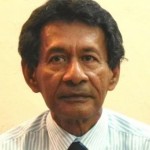
Prof. A.N.I. Ekanayaka
There seems to be much unnecessary anxiety, muddled thinking and
something fundamentally irrational about the prevailing revulsion in
various quarters to foreign participation in any independent inquiry
into allegations ofwar crimes in Sri Lanka. We must remember that at the 32nd sessions of the UNHRC last
month its Commissioner Zeid Ra’ad Al Hussain seemed adamant about the
need for such participation stating “I remain convinced that
international participation in the accountability mechanisms, as
stipulated in the Human Rights Council’s resolution, would be a
necessary guarantee for the credibility, independence and impartiality
of the process in the eyes of victims given the magnitude and complexity
of the alleged international crimes, which the OHCHR investigation
found could amount to war crimes and crimes against humanity”.
The OHCHR investigation to which the Commissioner referred was the 261
page report that was presented at the 30th sessions of the Commission
which stated inter alia that “The patterns of commission of gross human
rights violations and serious violations of international humanitarian
law, the indications of their systematic nature, combined with the
widespread character of the attacks all point to the possible
perpetration of international crimes” (1267). The report also said that
“for an accountability mechanism to succeed in Sri Lanka, it will
require more than a domestic mechanism”(1278).
Accordingly in any dispassionate analysis of this issue the place to
start is the joint resolution which Sri Lanka actively co-sponsored at
the 30th sessions of the UNHRC in response to the OHCHR findings. The
resolution agreed “to establish a Judicial Mechanism with a Special
Counsel to investigate allegations of violations and abuses of human
rights and violations of international humanitarian law, as applicable”.
This joint resolution carried with it the inescapable implication that
Sri Lanka was in agreement with the international community that the
allegations did indeed merit inquiry. Therefore the bottom line is that
Sri Lanka has concurred with the need for an independent inquiry into
allegations of war crimes. It has effectively admitted that there is a
case to answer.
That is the definitive Sri Lankan position and having conceded that an
inquiry was justified it is logically committed to an investigation that
will reveal “the truth the whole truth and nothing but the truth”.
Indeed as a general principle for anybody to agree to an inquiry about
any kind of allegation while backing away from the kind of inquiry that
will reveal the truth, would be a contradiction that is both
disingenuous and immoral. Obviously Sri Lanka would not wish to court an
international reputation for such duplicity. Accordingly by the
inexorable logic of the situation where Sri Lanka has agreed to an
inquiry, it is now bound to set up a mechanism of inquiry where the
probability of discovering the truth will be maximised, where the nature
of the tribunal and its composition would make it more rather than less
likely that the truth will be revealed. It would be foolish and
presumptuous to speculate on what that truth might be. Whether the
allegations are baseless or have some substance is not our concern here.
But there is no question that any genuine inquiry must give primacy to
finding out.
This logically leads to the next question, namely whether the inclusion
of a minority of distinguished foreign adjudicators in such a panel
would or would not increase the chances of finding out the truth. One
thing is clear. It certainly would not diminish the chances of finding
out the truth. Indeed it cannot. There is no doubt that the inclusion of
say two or three eminent and highly respected judges from abroad in a
tribunal where Sri Lankan adjudicators were in a majority would if at
all help rather than hinder the process of seeking out the truth. The
emotive suggestion that they might be influenced by a biased Tamil
diaspora is tendentious because in that case it could be equally alleged
that the majority Sinhala judges might be influenced by local Sinhala
Buddhist sentiment. Indeed by no stretch of imagination can it be argued
that the inclusion of foreign judges would be inimical to the process
of truth seeking in such an investigation. That is if the focus is on
seeking the plain truth and not some other nationalist agenda.
Accordingly approached negatively it has to be concluded that the
inclusion of foreign judges can do no harm. Approached positively it
might conceivably do some good for two reasons.
