Peace for the World World ! Your War Our Lives

The Dalai Lama
A Brief Colonial History Of Ceylon(SriLanka)
Sri Lanka: One Island Two Nations
A Brief Colonial History Of Ceylon(SriLanka)
Sri Lanka: One Island Two Nations
(Full Story)
Back to 500BC.

Saturday, August 27, 2016
Microplastics should be banned in cosmetics to save oceans, MPs say
Environmental audit committee calls for ban after hearing that microbeads harm marine life and enter the food chain
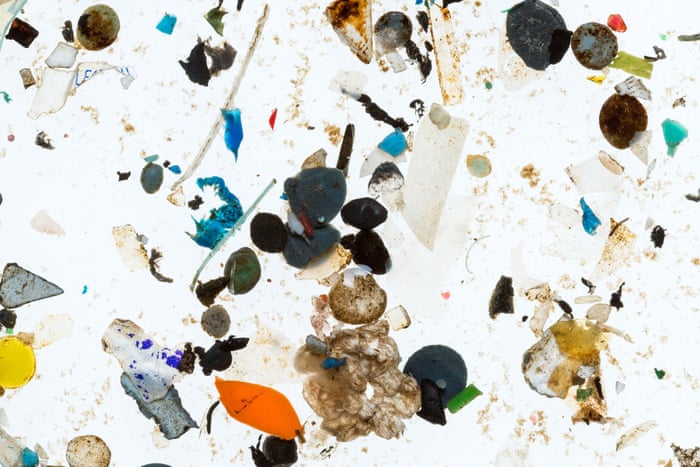
Close-up of microplastics and microbeads found in river water samples. Photograph: Fred Dott/Greenpeace
 Cosmetics
companies must be banned from using plastic microbeads in scrubs,
toothpaste and beauty products because of the marine pollution they are
causing, say a group of MPs.
Cosmetics
companies must be banned from using plastic microbeads in scrubs,
toothpaste and beauty products because of the marine pollution they are
causing, say a group of MPs.
Members of the environmental audit committee have called for a ban within
18 months after hearing that trillions of tiny pieces of plastic are
accumulating in the world’s oceans, lakes and estuaries, harming marine
life and entering the food chain.
About 86 tonnes of microplastics are released into the environment
every year in the UK from facial exfoliants alone, they were told.
Microplastic pollution comes from the fragmentation of larger pieces of
plastic waste, small synthetic fibres from clothing and the microbeads
used in cosmetics and other products. The microbeads in scrubs, shower
gels and toothpastes are an avoidable part of this plastic pollution
problem. A single shower could result in 100,000 plastic particles
entering the ocean, said the committee chair, Mary Creagh.
“We need a full, legal ban, preferably at an international level as
pollution does not respect borders,” she added. “If this isn’t possible
after our vote to leave the EU, then the government should introduce a
national ban. The best way to reduce this pollution is to prevent
plastic being flushed into the sea in the first place.”
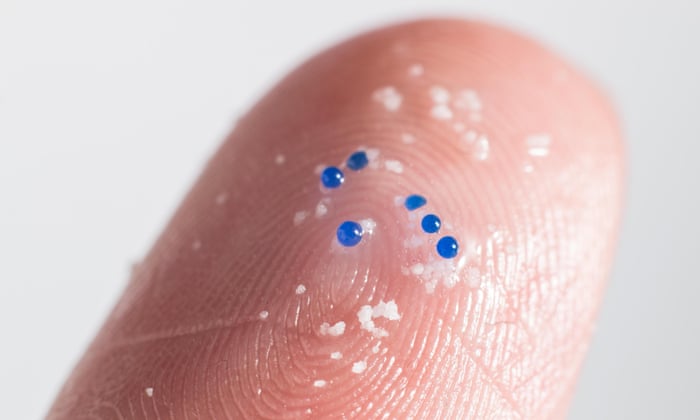
Plastic
microbeads. About 86 tonnes of microplastics are released into the UK
environment each year from facial exfoliants alone, MPs were told.
Photograph: Hennel/Alamy
Many large cosmetics companies have made voluntary commitments to
phase out microbeads by 2020. But the committee said a national ban,
preferably starting within 18 months, would have advantages for
consumers and the industry in terms of consistency, universality and
confidence. It is a significant and avoidable environmental problem.
Addressing it would show commitment to reducing the wider problem of
microplastics.
Microbeads are
part of the wider issue of microplastics. Their small size means that
they can be ingested by marine life and have the potential to transfer
chemicals to and from the marine environment.
Between 80,000 and 219,000 tonnes of microplastics enter the European marine environment a year.
Opportunities to capture microplastics through enhanced washing-machine
filtration systems and improved waste and water sewage treatment
processes must also be explored.
The committee called for urgent research, saying: “If someone eats six
oysters, it is likely they will have eaten 50 particles of
microplastics. Relatively little research has been done on potential
impacts to human health or the marine ecology.”
Most of the world’s ocean plastics by weight are large pieces of debris
(eg fishing equipment, bottles and plastic bags). However, the dominant
type of debris by quantity is microplastics. It is estimated that
15-51tn microplastic particles have accumulated in the ocean, with
microplastics reported at the sea surface and on shorelines worldwide.
They are also present in remote locations including deep sea sediments
and arctic sea ice.
Richard Thompson, director of the international marine litter research
unit at Plymouth University, said: “Microbeads in cosmetics are an
avoidable source of microplastic to the environment and so legislation
would be a welcome step.”
Tamara Galloway, at the University of Exeter, agreed. “Pollution from
microbeads is a truly global problem,” she said. “Tides and currents can
carry pollution across oceans to countries a long distance from where
they were originally released. Ideally, any legislation to control them
should be on an international level.”
