Peace for the World World ! Your War Our Lives

The Dalai Lama
A Brief Colonial History Of Ceylon(SriLanka)
Sri Lanka: One Island Two Nations
A Brief Colonial History Of Ceylon(SriLanka)
Sri Lanka: One Island Two Nations
(Full Story)
Back to 500BC.

Sunday, October 30, 2016
Coping With A Changing Climate

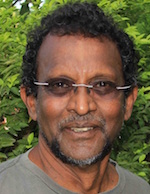
Dr Ranil Senanayake
A recent report issued by the UN Development Program, the Global
Environmental Facility and the Government of Australia, evaluating the
preparedness of Sri Lanka to deal with Climate Change pointed out the a
lack of “awareness about climate change impacts on the livelihood among
farmers and local government officials, especially those engaged in
water management and agriculture extension”. This is not the first
warning; we have had plenty of time to deal with this need. An article
titled; Climate Change’ published in 2011 asked of the outcome of the
Durban meeting that our climate change experts went to:
“While awaiting to hear of the brilliant contributions that Sri Lanka
has made to the just concluded United Nations Framework Convention on
Climate Change (UNFCCC), conference in Durban, the view from Durban is
somewhat clouded. The global polluters are demonstrating extreme disdain
of accepting any responsibility they have to the rest of humanity who
share a common atmosphere with them. The unilateral move by Canada in
withdrawing from the Kyoto Protocol, a move endorsed by the fossil
energy industry, demonstrates how much public interest has been eroded
from political enclaves.
The UNFCC itself is a lame duck, it is still unable to recognize or
identify the difference in value of carbon originating from biotic
sources and fossil sources. This fact is commonsense; that while a
diamond, petroleum, a lump of coal, piece of wood or piece of fruit is
comprised of carbon, they are not the same, and they have different
values. So in burning them up we have to recognize the value (cost) of
each. The carbon dioxide that emanates from them by burning is also
different. The carbon dioxide from biotic carbon will always have the
carbon isotope C14, while carbon dioxide from fossil carbon will never
contain C14. In time, the differences are in millions of years. This
much is common knowledge, most high school children are already aware of
these facts. Then why has the UNFCC chosen not to ‘see’ that there is a
value and temporal difference between biotic and fossil carbon cycles? A
cynic might say that many are in the pay of the energy industry. But,
what about our Sri Lankan scientists who attended Durban? Surely they
will never sell out to the energy industry! Perhaps they have already
identified these fundamental structural flaws within the UNFCC and we
might see this stand reflected in their reports.
In the meanwhile, apart from the innumerable conferences and workshops
that we could have, what should we do in Sri Lanka? This question has
come sharply into focus with the news that Russian scientists have
discovered hundreds of plumes of methane gas, some over 1,000 meters in
diameter, bubbling to the surface of the Arctic Ocean. Methane is about
20 times more powerful than carbon dioxide as a greenhouse gas. Dr.Igor
Semiletov of the Russian Academy of Sciences stated in a recent
interview “ Earlier we found torch-like structures like this but they
were only tens of meters in diameter. This is the first time that we’ve
found continuous, powerful and impressive seeping structures, more than
1,000 meters in diameter. It’s amazing.”
All this points to the need for immediate action. Landscapes are slow to
respond to rapid changes. The effect of the increase in storm force was
apparent all last year. By now we should have had some national
adaptation strategies. Yes, there has been a plethora of conferences
around the subject, but what do I do if my drinking water runs out? What
do I do if there is salt intrusion into my field? How do I deal with
sudden windstorms? If the years spent on discussing adaptation had borne
any fruit, we would now be seeing public education programs on climate
change preparedness by now. “
Sadly, today, in 2016 we have the UNDP stating that in Sri Lanka there
is a lack of “awareness about climate change impacts on the livelihood
among farmers and local government officials, especially those engaged
in water management and agriculture extension”
It is now patently clear that we will face a scarcity of food as the
global temperatures rise. Chlorophyll, the primary material of life
begins to denature as the 39degree threshold is passed. We are already
witnessing 40 degree plus temperatures in many nations with the
probability of exposure times increasing (fig 1). Should we not have
been conducting tests on heat resistant crops or adaptive landscapes ?
Compounding the hypocrisy that is being foisted on us. There is the
spectacle of Sri Lanka signing the Paris Accord to keep global
temperatures under control by limiting out carbon output while gleefully
promoting the construction of mega cities with no concern of their
carbon footprint. When we consider that for every ton of concrete we
emit 800 kgs of CO2 and every ton of steel is responsible for 1.2 tons
of CO2, who has reported on the increase in CO2 emissions by this giant
city building exercise? If the climate change secretariat has failed to
account for both the construction and operational CO2 costs of
construction in Sri Lanka, we would be cheating in our international
obligations.
