Peace for the World World ! Your War Our Lives

The Dalai Lama
A Brief Colonial History Of Ceylon(SriLanka)
Sri Lanka: One Island Two Nations
A Brief Colonial History Of Ceylon(SriLanka)
Sri Lanka: One Island Two Nations
(Full Story)
Back to 500BC.

Wednesday, November 30, 2016
German spy chief says Russian hackers could disrupt elections
Cyber-attacks aim to delegitimise democratic process and elicit political uncertainty, says Bruno Kahl
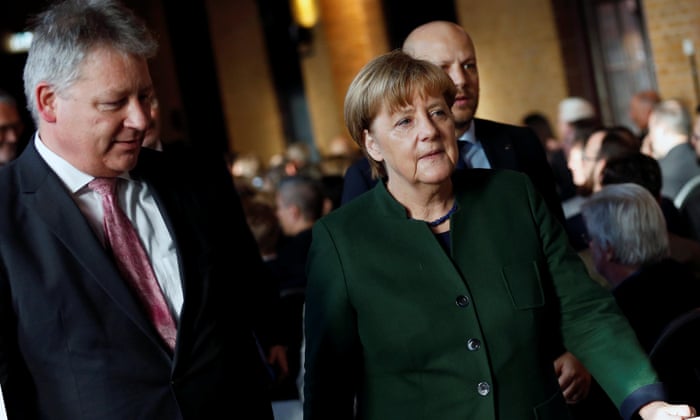
Bruno
Kahl and Chancellor Angela Merkel have warned about the impact of
cyber-attacks in the run-up to next year’s elections in Germany.
Photograph: Reuters
 The
head of Germany’s foreign intelligence service has warned that next
year’s general election could be targeted by Russian hackers intent on
spreading misinformation and undermining the democratic process.
The
head of Germany’s foreign intelligence service has warned that next
year’s general election could be targeted by Russian hackers intent on
spreading misinformation and undermining the democratic process.
Bruno Kahl, president of the Bundesnachrichtendienst, said Russia may
have been behind attempts during the US presidential campaign to interfere with the vote.
“We have evidence that cyber-attacks are taking place that have no
purpose other than to elicit political uncertainty,” he told the
Süddeutsche Zeitung in his first interview since he was appointed five
months ago.
“The perpetrators are interested in delegitimising the democratic
process as such, regardless of who that ends up helping. We have
indications that [the attacks] come from the Russian region.
“Being able to attribute it to a state agent is technically difficult
but there is some evidence that this is at least tolerated or desired by
the state.”
Kahl said the suspicion was that a large proportion of attacks were
being carried out simply to demonstrate technical prowess. “The traces
that are left behind in the internet create an impression of someone
wanting to demonstrate what they are capable of,” he said.
Kahl joins a range of leading voices in Germany who have recently expressed their concerns over Russian interference, particularly through the spread of fake news stories.
Hans-Georg Maaßen, president of the domestic BfV intelligence agency,
said in an interview that cyberspace had become “a place of hybrid
warfare” in which Russia was a key player. “More recently, we see the willingness of Russian intelligence to carry out sabotage,” he said.
Maaßen said Russian secret services had been carrying out attacks on
computer systems in Germany which, as far as his agency had been able to
ascertain, were “aimed at comprehensive strategic data gathering”.
Only when people were confronted with the fact the information they were
receiving was untrue would “the toxic lies lose their effectiveness”,
he said.
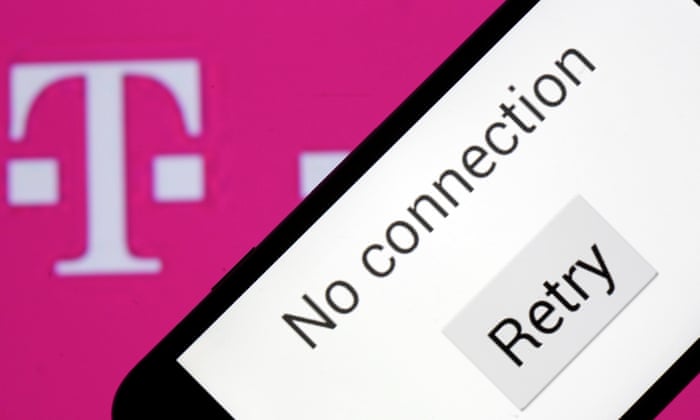
Recent Deutsche Telekom outages are believed to be part of a worldwide attempt to hijack routing devices. Photograph: Reuters
Hackers were said to have been behind attacks on Deutsche Telekom on
Sunday and Monday that disabled internet and phone access for almost a
million customers in Germany. The company said the security breach was
part of a worldwide attack on routers. Security experts said the hackers
may have been Russian but they had no proof.
The German chancellor, Angela Merkel, said on Tuesday she did not know
who was responsible for the strike but “such cyber-attacks, or hybrid
conflicts as they are known in Russian doctrine, are now part of daily
life and we must learn to cope with them.
“We have to inform people, and express our political convictions
clearly,” she said, calling on the population to not allow themselves to
be irritated by such rogue operations. “You just have to know that
there’s such a thing and learn to live with it,” she said.
Arne Schönbohm, president of the Federal Office for Information Security
and known as Germany’s ‘“cyber sheriff”, called the Deutsche Telekom
attacks worrying: “It shows to what extent cyber-attacks can affect
every citizen. We need to get used to the idea that in future computer
attacks, both comparable and far worse, will increasingly take place.”
In 2015, an attack on internet in the German parliament was blamed on
Russian hackers by German intelligence. Russian officials have
strenuously denied the accusations.
Germany faces a heated election campaign next year, largely due to the
pressure Merkel is under over her liberal refugee policy, along with the
rise of rightwing populists Alternative für Deutschland (AfD), which is
on track to enter the Bundestag for the first time.
Public disenchantment towards Merkel – under fire also for her critical
stance towards Russia over its annexation of the Crimea – is ripe for
exploitation by her political opponents, several of whom, including the
AfD, have reached out to the Kremlin and vice versa.
Merkel has also warned that populists and social media platforms
spreading propaganda were in danger of causing unprecedented damage to
democracy.
Speaking to the Bundestag last week, she said: “Today we have fake
sites, bots, trolls – things that regenerate themselves, reinforcing
opinions with certain algorithms, and we must learn how to deal with
them.”
A report published
this month by the Atlantic Council on Russian Influence on France,
Germany and the UK, pointed to an extensive Russian “disinformation
campaign” being carried out in Germany, which it said had “opened
opportunities for the Kremlin to influence German politics and the
public debate”.
The Pegida anti-Islam movement has repeatedly hammered home the message
at its rallies that the influence of President Vladimir Putin’s Russia
in Germany is a welcome alternative to the imperial designs of the US
and Brussels.
