Peace for the World World ! Your War Our Lives

The Dalai Lama
A Brief Colonial History Of Ceylon(SriLanka)
Sri Lanka: One Island Two Nations
A Brief Colonial History Of Ceylon(SriLanka)
Sri Lanka: One Island Two Nations
(Full Story)
Back to 500BC.

Thursday, November 24, 2016
Sexist Men Are More Likely To Have Mental Health Problems, Study Finds
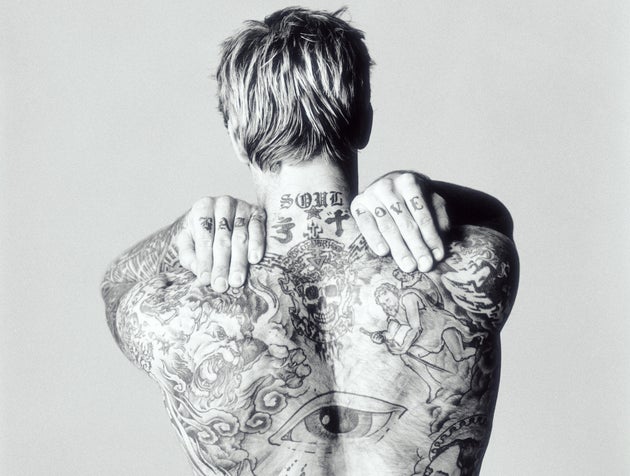 New research links masculine norms with psychological problems and an aversion to seeking help.
Toxic masculinity isn’t just bad for women.
 Carolyn Gregoire-11/23/2016
Men who see themselves as having power over women or adhering to
“playboy” behavior are significantly more likely to have psychological
problems than those who conform less to masculine gender norms ― and
they’re also less likely to seek help, according to a new study from the American Psychological Association.
The large-scale meta-analysis (or review of numerous studies), which was published Monday in the Journal of Counseling Psychology, examined
conformity to masculine norms and mental health outcomes in 78 research
samples involving nearly 20,000 men. The participants were
predominantly white but also included African-American and
Asian-American males.
The researchers evaluated participants using an inventory that measured
11 norms psychologists believe reflect traditional societal expectations
of masculinity. Then they looked for links to positive and negative
mental health outcomes and help-seeking behaviors.
11 Norms of Masculinity
• desire to win
• need for emotional control
• risk-taking
• violence
• dominance
• sexual promiscuity (being a “playboy”)
• self-reliance
• primacy of work (importance placed on one’s job)
• power over women
• disdain for homosexuality
• pursuit of status
Overall conformity to masculine norms was linked with negative mental
health outcomes like stress, depression, anxiety, substance abuse issues
and poor body image. Three particular norms, however, showed a
particularly strong association: self-reliance, power over women, and
“playboy” behavior ― the latter two being the most strongly associated
with sexist attitudes and behaviors.
“Our findings on the unfavorable relationship between conformity to
masculine norms and power over women is striking,” the study’s lead
author, Indiana University Bloomington psychologist Dr. Y. Joel Wong,
told The Huffington Post. “Sexism is a social injustice and it might
ultimately be harmful to everyone, including the perpetrators of
sexism.”
More troublingly, the men who conformed most to the sexist norms were also the least likely to seek help for their psychological problems.
Not all masculine traits, however, came with mental health risks.
Primacy of work was not associated with either positive or negative
mental health, while risk-taking behavior was correlated with both positive and negative outcomes, suggesting that it’s the type of risky behavior that matters.
Toxic Masculinity In American Culture
The findings join a growing body of research investigating
the complex links between masculinity and mental health. As many
psychologists have noted, it’s a complicated story, and factors like
race and socioeconomic status have to be included in the equation.
“When people are feeling put upon by social pressures, by exposures like
everyday racism, they may act in a particular way because doing so
allows them to recoup that part of themselves that gets chipped away at
by those social exposures,” Dr.
Wizdom Powell, a psychologist who studies gender and race at the
University of North Carolina at Chapel Hill, said in an interview with
the APA.
The authors of the meta-analysis didn’t explore how things like race,
education level, political affiliation and cultural influences might
affect a man’s tendency to adhere to masculine norms. But these
connections may be worth investigating, particularly in light of the
conversation around sexism that has sprung up in response to Donald Trump’s presidential campaign.
This month, America elected a president who has been accused of sexually assaulting 15 women ― and who excused his boasts of being able to assault women with impunity as “locker room talk,” revealing
a view of masculinity in sexist terms. Indeed, many commentators have
questioned the role of sexist attitudes in Trump’s rise to power. One
team of political scientists found that the more hostile voters were toward women, the more likely they were to support Trump.
As Jared Yates Sexton wrote in a New York Times op-ed on toxic masculinity in Trump’s America,
mortality rates for middle-aged white men have risen from what
psychologists call “despair deaths,” including drug overdoses, suicide
and alcohol-related diseases.
“[Trump] is the furthest thing from the working-class men of my
childhood, but whatever his motives for demeaning women, these
supporters hear in him an echo of their own desperation,” wrote Sexton, a
creative writing
professor at Georgia Southern University. “Though such masculinity might
temporarily shelter men from the pressures of their daily lives,
inevitably it robs them of their lives: Disturbing trends show that men,
especially the white men who make up a majority of Mr. Trump’s base,
are suffering greatly for their posturing.”
Of course, it’s likely only a small minority of Trump supporters that fit this profile. But as new questions about
sexism and misogyny are being raised, it’s an important moment to
consider how healthier norms of masculinity could benefit all of us.
“People can change and norms do change over time,” Wong said. “One way
we can help shift these norms is for more people, including men, to
express strong disapproval of behaviors that conform to sexist norms.
Don’t remain silent.”
