Peace for the World World ! Your War Our Lives

The Dalai Lama
A Brief Colonial History Of Ceylon(SriLanka)
Sri Lanka: One Island Two Nations
A Brief Colonial History Of Ceylon(SriLanka)
Sri Lanka: One Island Two Nations
(Full Story)
Back to 500BC.

Sunday, November 6, 2016
The Dress Rehearsal In Trincomalee

By Rajan Hoole –November 5, 2016
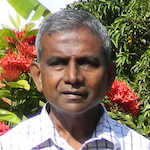
Dr. Rajan Hoole
“…it is clear that under natural ecological conditions intra-species
aggression is seen in defence of territory or as nature’s solution to
over-population. However, in the animal world, aggression rarely ends in
actual death, there being some inborn inhibition to killing. It is
pertinent to ask why such inhibitions do not operate in man, virtually
the only ‘unhinged killer’…there were several incidents during racial
riots and the war itself, of direct slaughter of civilians. This kind of
‘unhinged killing’appears to take place usually where human warfare
occurs as reactive rage.” – Daya Somasundaram, from Scarred Minds
The New Frontiersmen
Elections to the District Development Councils were scheduled for early
June 1981. These were being hailed by the Government and its supporters
as a means to finding a political solution to the Tamil problem. Despite
this, the UNP government of the day chose a strange way to usher in the
DDCs. It may be explained, in part, as a perverse reaction to the
attack on UNP and non-TULF candidates by Tamil militants, and the TULF’s
silence on these. These included the killing of Mr. Thiagarajah, former
MP for Vaddukoddai, and some policemen.
A train-load of election staff was sent from the South, many of whom did
not have a clue to what election duty meant. The train stopped at
Kurunegala. Minister. G.M. Premachandra, and Jayewickrema Perera, both
top UNPers, addressed the election staff through loud speakers. They
told them, “You are our frontier forces, you must come back with
victory.” This trumpet-call was recounted by a man from Galle, who was
then on election duty. He was reminded of this while witnessing the
violence at the North-Western Provincial Council elections under the PA
government in 1999.
In Jaffna there was a high-powered team including Ministers Gamini
Dissanayake, Cyril Mathew & Festus Perera, G.P.V. Samarasinghe,
secretary to the cabinet, Chandrananda de Silva, later commissioner of
elections and subsequently defence secretary, and Colonel Dharmapala,
defence secretary. There were also a large number of policemen brought
into Jaffna under DIG Edward Gunawardene. The mindset implicit in this
exercise also throws some light on the 1983 violence. Gamini Dissanayake
addressed the election staff. He told them, according to the man from
Galle above, to close the polling booths at 10.00 AM and cast the
remaining votes. Some innocent guy asked him, “For whom should we cast
them?” The Minister replied, “Why, to the animal (i.e. elephant) of
course!”
The operation was so botched up that the UNP got no benefit out of it. A
high point of the exercise was the burning of the Jaffna Public Library
by Edward Gunawardene’s men. There had of course been militant attacks
on policemen. But the considered opinion of some senior police
colleagues was that Ponnambalam (Brute) Mahendran, who was DIG, Jaffna,
would have handled the situation competently if not for the presence of
Gunawardene and his men. The operation did achieve, however, something
notable.
Until this time, with all the reservations the Tamils had about the
State, there was hope that a political solution would be arrived at
through negotiations between the Government and the TULF. The
Government’s conduct during the elections to the DDCs – the much awaited
political solution – greatly tarnished that hope. Two months later
there was anti-Tamil violence in the South where the President himself
blamed a section of his own party. The outrage among the Tamils
occasioned by the burning of the library and the press of the Eelanadu –
the only independent provincial daily in this country – was smothered
in the Colombo press. What was left of liberal traditions could not be
contained by the developing polarisation in the country. To responsible
Tamils, both here and abroad, it seemed clear that the Tamils needed
English journals of their own to highlight their concerns.
One group of Tamils in London who were associated with the Standing
Committee of Tamils – a charitable group supporting work among Tamil
refugees – collected contributions and started the Tamil Times. Despite
the misrepresentation in this country, it has been a responsible and
moderate monthly, which never supported the separatist cause in its
editorial outlook. It is nearing 20 years of publication without missing
a month, resisting all attempts by the LTTE to control it. About the
same time, another group around the late K. Kanthasamy started the
Saturday Review in Jaffna.
