Peace for the World World ! Your War Our Lives

The Dalai Lama
A Brief Colonial History Of Ceylon(SriLanka)
Sri Lanka: One Island Two Nations
A Brief Colonial History Of Ceylon(SriLanka)
Sri Lanka: One Island Two Nations
(Full Story)
Back to 500BC.

Saturday, November 19, 2016
UNP and SLFP miserably failed the country Inevitable need for third political force

 People
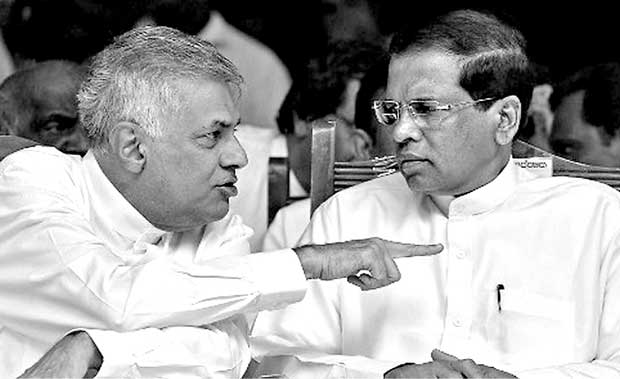
in general are fed up and disgusted at the government’s refusal to
fulfil its pledge to bring to book, those involved in crime, corruption,
amassed wealth illegally, plundered the country, waste and other such
activities during the previous regime. On 8 January 2015 they voted with
great enthusiasm in the hope that both President Maithripala Sirisena
and Prime Minister Ranil Wickremesinghe would be sincere in their
election slogans to punish all who plundered country’s wealth. However,
dashing all hopes, the government, instead of fulfilling its promises,
is being accused of the same evils such as widespread corruption and
waste, while crooks, criminals and others accused of various crimes
remain free and even travel abroad.
People
in general are fed up and disgusted at the government’s refusal to
fulfil its pledge to bring to book, those involved in crime, corruption,
amassed wealth illegally, plundered the country, waste and other such
activities during the previous regime. On 8 January 2015 they voted with
great enthusiasm in the hope that both President Maithripala Sirisena
and Prime Minister Ranil Wickremesinghe would be sincere in their
election slogans to punish all who plundered country’s wealth. However,
dashing all hopes, the government, instead of fulfilling its promises,
is being accused of the same evils such as widespread corruption and
waste, while crooks, criminals and others accused of various crimes
remain free and even travel abroad.
2016-11-19
 People
in general are fed up and disgusted at the government’s refusal to
fulfil its pledge to bring to book, those involved in crime, corruption,
amassed wealth illegally, plundered the country, waste and other such
activities during the previous regime. On 8 January 2015 they voted with
great enthusiasm in the hope that both President Maithripala Sirisena
and Prime Minister Ranil Wickremesinghe would be sincere in their
election slogans to punish all who plundered country’s wealth. However,
dashing all hopes, the government, instead of fulfilling its promises,
is being accused of the same evils such as widespread corruption and
waste, while crooks, criminals and others accused of various crimes
remain free and even travel abroad.
People
in general are fed up and disgusted at the government’s refusal to
fulfil its pledge to bring to book, those involved in crime, corruption,
amassed wealth illegally, plundered the country, waste and other such
activities during the previous regime. On 8 January 2015 they voted with
great enthusiasm in the hope that both President Maithripala Sirisena
and Prime Minister Ranil Wickremesinghe would be sincere in their
election slogans to punish all who plundered country’s wealth. However,
dashing all hopes, the government, instead of fulfilling its promises,
is being accused of the same evils such as widespread corruption and
waste, while crooks, criminals and others accused of various crimes
remain free and even travel abroad.
The mood in the country is “Gloom”. Civil society organisations even
discuss the possibility of a third political force as both the United
National Party and the Sri Lanka Freedom Party, ruled alternatively
since independence,had turned the country into one of the most
mismanaged in the world.They realise that the shortsighted racist
politics of these two parties had brought nothing but disaster.
For example Sri Lanka, during the time of independence, was one of most stable countries, often described as the role model, in the entire third world. There was political and economic stability, sufficient foreign reserve, health care and education systems, communal harmony and peace.
For example Sri Lanka, during the time of independence, was one of most stable countries, often described as the role model, in the entire third world. There was political and economic stability, sufficient foreign reserve, health care and education systems, communal harmony and peace.
Those were the days one could walk from Matara to Jaffna without fear of
being waylaid. Instead one may have been treated for a free cup of tea
or a meal as human values were cherished
Rights and privileges of all were enshrined in the constitution. People respected one another’s religious and cultural values. Politicians, professionals, intellectuals
and all others were respected by the society. Corruption and crime were
relatively unknown.
Rights and privileges of all were enshrined in the constitution. People respected one another’s religious and cultural values. Politicians, professionals, intellectuals
and all others were respected by the society. Corruption and crime were
relatively unknown.
There was an independent judiciary and police. Thus the country was
blessed with everything required to move ahead to ensure a better future
for all. However it failed to produce a visionary leader from the
majority community who could think above communal politics and guide the
country.
As a result, almost seven decades after independence today, Sri Lanka remains as one of the most mismanaged countries in the world.
As a result, almost seven decades after independence today, Sri Lanka remains as one of the most mismanaged countries in the world.
Who is responsible? Isn’t it the destructive racist politics of the UNP
and SLFP which turned the island into Asia’s worst killing field? Racist
politics began as early as the 1930s when some politicians began to
promote the interest of the Sinhalese for their own selfish political
interest.
For example during the State Council days in the 1930s it was D.S.Senanayake as Minister of Lands and Lands Settlement who initiated the colonisation of Sinhalese in Polonnaruwa, Padaviya and Inginiyagala in the East which were claimed by Tamils and Muslims as their traditional homeland.
Adding fuel to fire, politicians also started claiming that this was a Sinhala Buddhist country and dismissed minorities. Minorities who do not want to be second class citizens demanded equal rights and equal roles in the affairs of the country and in deciding their own destinies.
For example during the State Council days in the 1930s it was D.S.Senanayake as Minister of Lands and Lands Settlement who initiated the colonisation of Sinhalese in Polonnaruwa, Padaviya and Inginiyagala in the East which were claimed by Tamils and Muslims as their traditional homeland.
Adding fuel to fire, politicians also started claiming that this was a Sinhala Buddhist country and dismissed minorities. Minorities who do not want to be second class citizens demanded equal rights and equal roles in the affairs of the country and in deciding their own destinies.
Realising the racist mind-set of politicians, the British colonial
government, enshrined in the Soulbury Constitution a special provision,
section 29A , as a security valve in the hope of protecting minority
rights. Some of the Sinhalese leaders, before and after the
independence, were quite open in continuing to whip up communalism.They
openly equated and continued to equate Sinhalese nationalism with Sri
Lankan nationalism and Buddhism, and began implementing their communal
agendas ruthlessly, not realizing that they were plunging the country
into a bloodbath.
Exploiting the mood of the Sinhalese the Legislative Council Member
S.W.R.D. Bandaranaike formed the “Sinhala Maha Sabha” which segregated
the Sinhalese from the mainstream political scene.
J.R. Jayawardene moved in the United National Party annual convention the Sinhala only resolution. S.W.R.D.Bandaranaike called for “Sinhala only within 24 hours” and faced elections on communal slogans to gain power. Politicians also encouraged the rise of Sinhala chauvinism with frequent violent attacks on Tamils causing death and destruction.
J.R. Jayawardene moved in the United National Party annual convention the Sinhala only resolution. S.W.R.D.Bandaranaike called for “Sinhala only within 24 hours” and faced elections on communal slogans to gain power. Politicians also encouraged the rise of Sinhala chauvinism with frequent violent attacks on Tamils causing death and destruction.
However Mr. Bandaranaike was quick to realise the consequences of his
communal politics and took damage control measures such as the
Bandaranaike Chelvanayagam Pact, BC Pact. Even at that stage, did the
politicians do some stock-taking of the consequences of their racist
politics? They were not bothered.
Instead almost all governments with their eyes firmly fixed on
elections, either to win or to retain power, aggressively continued to
woo the majority community as the most effective vote-caching strategy.
This unfortunate trend continued, not realising the consequences. In
1970 Prime Minister Mrs. Srimavo Bandaranaike removed Section No 29A of
the Soulbury Constitution in her Republican Constitution and made
Buddhism the state religion. This led to all Tamil political parties
uniting under the umbrella of Tamil United Liberation Front (TULF) which
demanded equal rights.
Added to this President Jayewardene’s draconian 1978 Constitution which
created a democratically elected all powerful dictator, virtually turned
minorities voiceless and helpless. In July 1983 his party thugs
attacked and killed Tamils besides burning their properties under a very
well organised anti-Tamil programme.
The result was the emergence of the Tamil militancy, later trained,
armed and financed by India, which produced some of the deadliest
terrorists who virtually paralysed the island, besides paving the way
for a powerful Tamil Diaspora of Sri Lankan Tamils.
There were death and destruction all over, the economy was crippled, and
people lived in fear. The situation was such that women folk at home
were not sure whether their husbands who went to work or the children
who went to school would return alive. Those were the days when people
went about only for essential work as they did not know when and where a
bomb would explode.
While people suffered, politicians and their cronies flourished in the
form of commissions in weapons purchasing. This dire catastrophe spelt
adversity to the helpless people and prosperity to politicians of the
two main parties.
The ethnic war also brought in all sorts of players to the island. For
example India entered the island’s politics when the Indian Prime
Minister Rajiv Gandhi forced down the throat of President
J.R.Jayawardena, the 13th Amendment to the Constitution. In the
subsequent years India’s interference and dominance in the local
politics came to such a ridiculous stage that Sri Lankan politicians
visited New Delhi frequently to brief and, perhaps, to get their
blessings on local issues.
Most disillusioned people from all communities left the island in search of peaceful life to countries all over the world. Squeezed between Sinhala chauvinists and the Tamil racism and militancy, the Muslim community had its own share of sufferings. Their grievances fell on the deaf ears of almost every government after the independence.
Most disillusioned people from all communities left the island in search of peaceful life to countries all over the world. Squeezed between Sinhala chauvinists and the Tamil racism and militancy, the Muslim community had its own share of sufferings. Their grievances fell on the deaf ears of almost every government after the independence.
A section of Muslims from the East, launched a separate Muslim party
which isolated the Muslim community from both Sinhalese and Tamils.
Their sufferings continued even after the war ended due to the Rajapaksa
government’s hostility towards Muslims.
That historic opportunity was squandered once again due to racist
politics, unprecedented crime, corruption, waste and the virtual
collapse of the administration under the Mahinda Rajapaksa regime. The
regime unleashed violence against Muslims. There were more than 350
attacks on mosques, religious schools, business establishments and the
organised programme at Aluthgama, Beruwala and Dharga town.
It was under such circumstances that President Maithripala Sirisena and
Prime Minister Ranil Wickremesinghe came out with the slogan they would
eliminate crime, corruption and pave the way for good governance and
communal harmony.
Almost two years after assuming office where do we stand today? Once
again allegations of racist politics, widespread corruption,
lawlessness, rapid erosion of democracy, wasteful expenditure,
extravagance and luxury.
Due to mismanagement of the two parties, today the island has become a
playground for all deadly players from India, China, Israel, United
States, Britain and even Russia who are all active with their own
designs here.
Describing the situation, columnist Lacille de Silva said in a recent
article that “OURS IS A KLEPTOCRACY - LITERALLY ‘RULED BY THIEVES”.
Under the circumstance are we going to vote for these parties. Isn’t the
time ripe to think of a third political force to save the country and
restore its dignity?
