Peace for the World World ! Your War Our Lives

The Dalai Lama
A Brief Colonial History Of Ceylon(SriLanka)
Sri Lanka: One Island Two Nations
A Brief Colonial History Of Ceylon(SriLanka)
Sri Lanka: One Island Two Nations
(Full Story)
Back to 500BC.

Tuesday, November 29, 2016
WHY EVERY JOURNALIST, ACTIVIST & DISSENTER IN SRI LANKA MUST OPPOSE THE NEW DRAFT COUNTERTERRORISM LAW
 Gehan Gunatilleke.-28/11/2016
A year ago, Sri Lanka promised the world that it would repeal its
current Prevention of Terrorism Act (PTA). In a historic co-sponsored
resolution, it assured the UN Human Rights Council (UNHRC) that it would
replace the PTA with counterterrorism legislation that complies with
international best practices. The current PTA is described as
‘draconian’, and has been used to target human rights defenders,
journalists and political opponents of the state. Meanwhile, the
framework for a new counterterrorism law was recently unveiled in the
Sri Lankan press. The framework contains a number of serious problems,
including the denial of prompt access to legal counsel and the
admissibility of confessions potentially obtained through torture. This
post examines another disturbing feature of the framework: the
criminalisation of speech that ‘threatens unity’ and the disclosure of
confidential information.
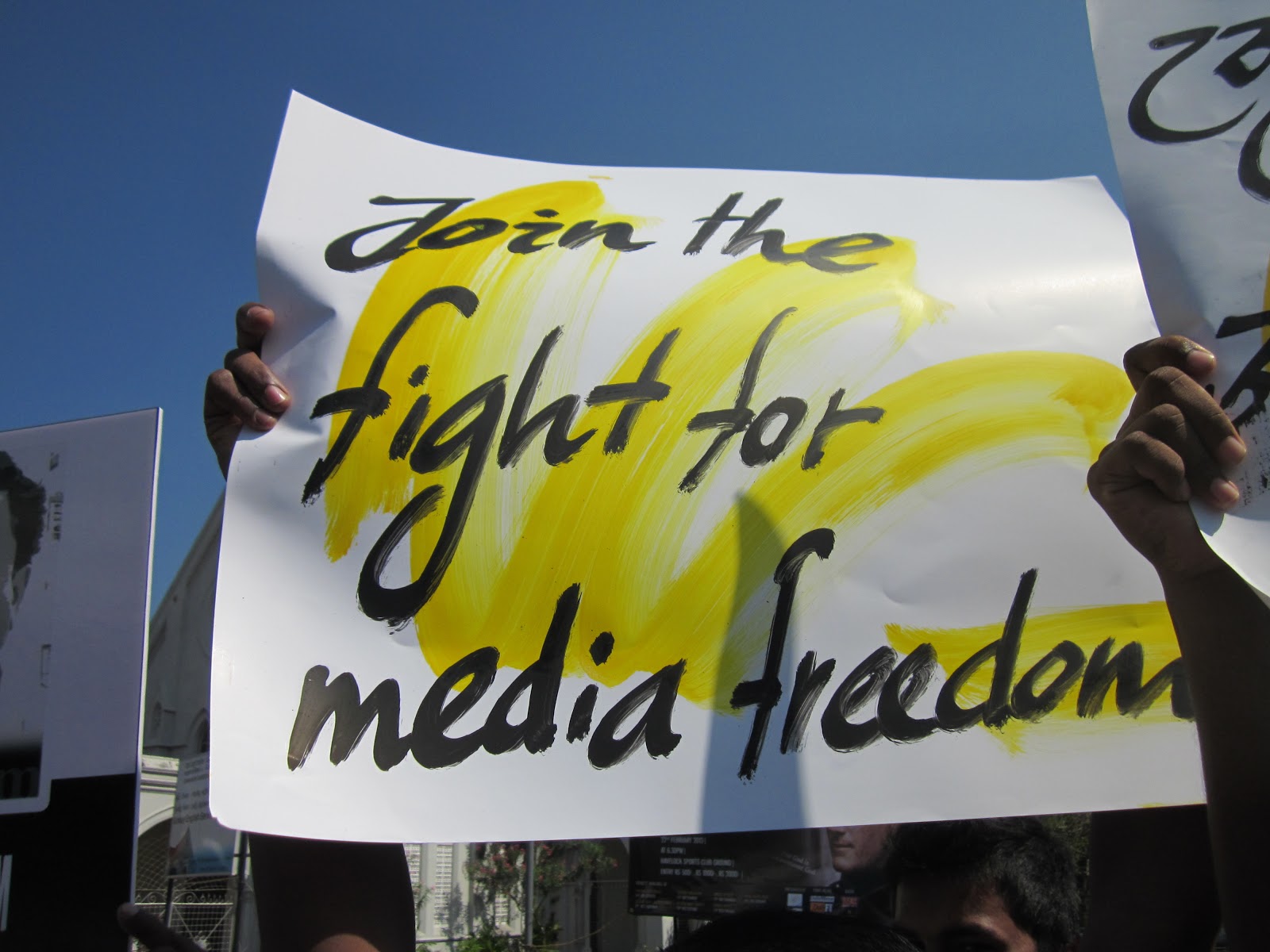
Sri Lankan civil society together with the Human Rights Commission must now prepare for yet another battle to resist repressive legislation. (Image credit: Agent Provocateur via Flickr)
Sri Lankan civil society together with the Human Rights Commission must now prepare for yet another battle to resist repressive legislation. (Image credit: Agent Provocateur via Flickr)
Saying or writing anything that could cause ‘communal
disharmony’ is criminalised under section 2(1)(h) of the current PTA.
This provision has a notorious history of abuse. In 2009, it was used to
convict journalist J.S. Tissainayagam for accusing the armed forces of
committing war crimes. The new framework contains a similar provision,
which is potentially worse than the PTA. Clause xviii of
the section on ‘terrorism-related offences’ criminalises ‘words either
spoken or intended to be read’, that ‘threaten the unity’ of Sri Lanka.
The clause could therefore outlaw criticism of state policies that
favour one community over another. For example, a journalist who
criticises a discriminatory language policy in the public sector could
be accused of ‘threatening the unity’ of the country. Moreover, civil
society advocates who press for the prosecution of war criminals and
perpetrators of religious violence could be accused of ‘threatening
unity’ through their advocacy. This clause, if enacted, could seriously
impede free speech in Sri Lanka and restrict the space for resisting
impunity and the abuse of power.
The new framework in fact goes a step further. It also
criminalises gathering or providing ‘confidential information’ with the
knowledge that such information will be used for the commission of any
offence under the new law. For example, providing confidential
information with the knowledge that it will be used to say or write
something that ‘threatens unity’ is deemed to be ‘espionage’ and carries
a prison term of ten years. This provision has serious
implications for whistleblowers, who are vital to revealing state
corruption and abuses. It also contradicts Sri Lanka’s new Right to
Information Act, which specifically prohibits the punishment of
whistleblowers who disclose information held by public authorities.
Hence the espionage offence could be particularly devastating when
combined with the offence of ‘threatening unity’.
The present government’s persistence in introducing repressive
legislation in the face of human rights commitments is certainly
disturbing. In fact, this is not even the first time it has attempted to
re-enact a provision similar to section 2(1)(h) of the PTA. In December
2015, it attempted to introduce an amendment to the Penal Code,
purportedly to criminalise hate speech. The proposed legislation
replicated section 2(1)(h), but was withdrawn following opposition from
civil society and the Human Rights Commission. Moreover, in August 2016,
the Minister of Justice gazetted a Bill that sought to deny suspects
the right to access legal counsel until police interrogations are
completed. Fortunately, this Bill was also shelved following civil
society opposition and the intervention of the Human Rights Commission.
This trend reveals a darker side to the present Sri Lankan government,
which has thus far characterised itself as progressive and committed to
human rights. It reveals the fact that government actors with repressive
interests wield enormous influence over the reform agenda. These
interests shape legislation to retain a pervasive national security
apparatus – the very apparatus that the present government promised it
would dismantle.
The new counterterrorism framework appears to perpetuate this trend. Sri
Lankan civil society together with the Human Rights Commission must now
prepare for yet another battle to resist repressive legislation. As
they reflect on a frustrating year since that historic resolution, they
can acknowledge one silver lining. It is the fact that Sri Lanka still
affords space for resistance through civil society activism and
independent institutions. This space must be safeguarded. Thus the
battle against this new counterterrorism framework is not merely against
repressive legislation. It is a battle to maintain this space for
resistance.
—————
 Gehan
Gunatilleke (@GehanDG) is a human rights lawyer based in Colombo, Sri
Lanka, and the Research Director of Verité Research. He is the author of
The Chronic and the Acute: Post-War Religious Violence in Sri Lanka. He
is also a Commonwealth scholar at New College, University of Oxford.
Gehan
Gunatilleke (@GehanDG) is a human rights lawyer based in Colombo, Sri
Lanka, and the Research Director of Verité Research. He is the author of
The Chronic and the Acute: Post-War Religious Violence in Sri Lanka. He
is also a Commonwealth scholar at New College, University of Oxford.
original caption: Speech and Spies: Why Sri Lanka’s New Counterterrorism Law is a Terrible Idea
ohrh.law.ox.ac.uk
ohrh.law.ox.ac.uk
