Peace for the World World ! Your War Our Lives

The Dalai Lama
A Brief Colonial History Of Ceylon(SriLanka)
Sri Lanka: One Island Two Nations
A Brief Colonial History Of Ceylon(SriLanka)
Sri Lanka: One Island Two Nations
(Full Story)
Back to 500BC.

Tuesday, November 29, 2016
Workers for McDonald's in Malaysia say they were victims of labour exploitation
Migrant
workers employed through labour supply firm allege they were deceived
about wages, cheated of payments and had passports confiscated
unlawfully
A
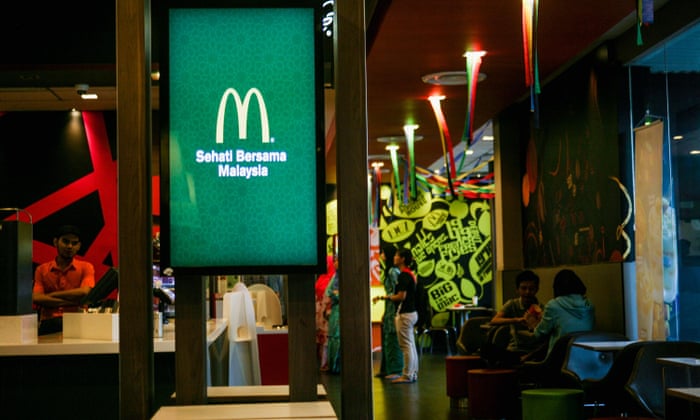
McDonald’s logo is seen in a restaurant in Shah Alam, outside Kuala
Lumpur. Migrants say they suffered labour abuses while working in the
firm’s restaurants in Malaysia. Photograph: Mohd Samsul Mohd Said/Getty
Images-- A
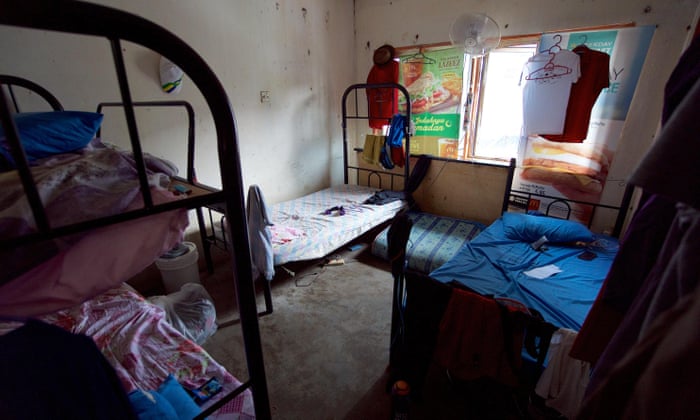
hostel used by Nepalese migrants working at McDonald’s in Kuala Lumpur.
The workers say up to 18 men shared the space, with most sleeping on
the floor. Photograph: Pete Pattisson
McDonald’s
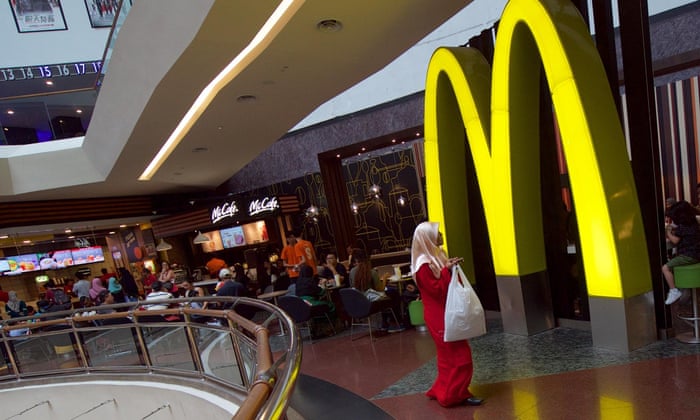
Mid-Valley in Kuala Lumpur. Migrant workers employed here (not
pictured) claim they were paid erratically by the labour supply firm
that hired them. Photograph: Pete Pattisson

Workers at McDonald’s restaurants in Malaysia claim they earned as little as 60p an hour and were cheated out of months of salary, a Guardian investigation has found.
The workers allege they were subjected to months – and in some cases
years – of exploitation by Human Connection HR, a labour supply company
contracted by McDonald’s in Malaysia to provide workers to its
restaurants in Kuala Lumpur.
The workers, who come from Nepal, say they had their passports confiscated, in contravention of Malaysian law.
They claim they were deceived about their wages and were charged
additional fees when they arrived in Malaysia, resulting in a 25%
deduction in their basic monthly salary. Over the course of working at
McDonald’s, this equated to the loss of months of wages.
Unlike in its other major markets – including the UK and US – where
McDonald’s operates through a franchise model, McDonald’s outlets in
Malaysia are company-owned.
The migrants also say that their salaries were not received on time,
leaving them unable to buy food or send money home to their families.
“We didn’t have the money to eat because we were not paid regularly,”
said one man, adding that some workers went on strike earlier this year
in protest at late payment of wages. “How can we go to work on an empty
stomach? I thought it was a good company and I would earn good money.
Now my life is damaged. I feel that I have no future.”
McDonald’s Malaysia said in an email that it had ended its contract with
Human Connection. “At McDonald’s Malaysia, the welfare of staff is a
top priority,” said the company. “Earlier this year, we became aware of
certain circumstances relating to services provided by Human Connection
HR which were not in compliance with our standards. As a result, we have
terminated our contract with them.”
The investigation, which comes just days after the Guardian exposed allegations of abuse among migrants making products for Samsung and Panasonic in
industrial zones across the country, sheds further light on the
malpractice of some labour supply agencies used by major international
brands in Malaysia.
“We were not given our salary on time,” said another Nepalese worker.
“When we went to meet the managers of McDonald’s to complain, they
usually said we were not employed by McDonald’s and they are not
responsible for anything. One of my friends even went to the McDonald’s
manager crying after he heard news of his child’s death [at home in
Nepal]. He asked him to ask for his passport [from Human Connection, so
that he could attend the funeral,] but the McDonald’s manager said that
he cannot do anything. I would rather die than go back to work at
McDonald’s. I will never work there [again].”
The Guardian spoke to 15 Nepalese workers formerly employed at four
McDonald’s restaurants in the capital, Kuala Lumpur. The men worked at
McDonald’s at different times over the course of three years.
More than half said that they had been forced to run away from their
jobs without their passports or back pay, entering the illegal work
market in an attempt to make some money. This would leave them
vulnerable to arrest and detention by the Malaysian authorities.
Others said they had been forced to pay their own way back to Nepal after their passports were not returned by Human Connection.
Some of the workers criticised McDonald’s for failing to respond to
complaints of mistreatment by Human Connection while they were working
in McDonald’s outlets.
They claim that they repeatedly informed the company about problems
relating to wages, salary deductions and passports, but received no
assistance.
“I complained about our salary to McDonald’s many times, and the branch
manager … sent the message to McDonald’s headquarters,” said one worker.
“[But] McDonald’s said they had already paid Human Connection.”
The manager of one McDonald’s branch that previously employed some of
the workers claims that the company’s headquarters in Malaysia were
informed about the problems the men faced: “The labour supply company
withheld two to three months’ wages. The workers only had a photocopy of
their documents, but they should have had the original with them. We
are humans. We tried to help them with food, but you can’t do it all the
time.”
During their time working in McDonald’s restaurants, the men claim they
were paid less than they were promised in Nepal. In some of their
contracts it states that they would not have to pay the foreign worker
levy, a charge placed on companies using migrant labour in Malaysia that
is often passed on to the workers themselves. Payslips seen by the
Guardian show that the levy was deducted, however, equating to a 25%
reduction in their basic wages.
The workers also claim that they had their passports confiscated by the
labour supply company on arrival in Malaysia, a pervasive but illegal
practice that ties them to their employer and denies them the freedom to
leave their job or the country.
“The supply company took our passports, but they will not send workers
back to Nepal or give our passports back,” said one man formerly working
at a McDonald’s restaurant. “Even those who finished the three-year
contract cannot go home because they don’t have their passports.”
Another worker said: “Even when it is time to go, the company does not
return your passport. I don’t know why … I asked to go home, but the
company said they will not send me back.”
The workers who chose to return home have had to pay the equivalent of
two months’ basic wages to a middleman to arrange the documents and
paperwork needed to get them back to Nepal without their passports.
“I expected to earn money here,” said one. “But I’m leaving with nothing.”
The men also complained about the conditions they faced in the
accommodation provided by Human Connection while they worked in
McDonald’s restaurants.
The Guardian visited one squalid hostel with paint peeling off the damp
walls. McDonald’s advertising banners were used as makeshift curtains.
In one room, a McDonald’s trophy was propped up on a fan switch with
“Best of the Best Kitchen Crew” printed on its base. At one point, the
workers say, 18 men were crammed into the small flat, with most sleeping
on mattresses on the floor. They shared one small, grimy toilet, which
also passed as a washroom.
In a statement, McDonald’s said: “While local employees make up the vast
majority – more than 90% – of our workforce, we sometimes work with
established recruitment agencies which employ foreign workers, and
sub-contract a number of them to McDonald’s in Malaysia. These staff
members are employees of the recruitment agency, not McDonald’s.
“McDonald’s Malaysia made repeated attempts with Human Connection HR to
investigate and verify issues of non-compliance shared by the workers,
raising our serious concerns through both verbal and written
correspondence. Because the workers are not employees of McDonald’s, our
efforts to address the issues were unsuccessful, as were proposals for
McDonald’s to assume responsibility for paying workers directly. In the
interim, to assist, we authorised restaurants to provide food and
provisions to workers affected while we worked to address the issue.
“Following the termination of our contract, the workers remain employees
of Human Connection HR and as such we understand that they will either
return to their home country or be redeployed to other businesses.”
Human Connection did not respond to a request for comment on the worker’s allegations.
Aidan McQuade, director of Anti-Slavery International, said businesses
must no longer hide behind codes of conduct but should instead take
proactive measures to ensure they are not profiting from exploited
labour.
“The great tragedy about this kind of exploitation is that it is
actually easy to fix,” he said. “Companies operating and profiting from
their business in places like Malaysia can’t say that they are not aware
of the issues facing migrant workers there. They need to take a
proactive investigative approach to ensuring that, if they use labour
supply companies, those companies are adhering to the law and corporate
codes of conduct. It’s time for this to stop.”
