Peace for the World World ! Your War Our Lives

The Dalai Lama
A Brief Colonial History Of Ceylon(SriLanka)
Sri Lanka: One Island Two Nations
A Brief Colonial History Of Ceylon(SriLanka)
Sri Lanka: One Island Two Nations
(Full Story)
Back to 500BC.

Friday, December 30, 2016
New Constitution & Contestation Of North East Merger

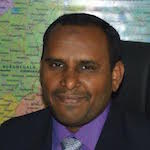
Dr. Aboobacker Rameez
Universities are a place of intellectual discourse and debates on
thoughts and findings. It fosters an environment of critical thinking
and skills necessary to build a profound understanding of the discipline
and the existing thoughts. It also serves as a touchstone of the
community to spur them to engage in crucial issues relevant to the
community.
As such, a group of academics gathered at a place in our
University-South Eastern University of Sri Lanka yesterday and engaged
in a discourse on the proposed new constitution and the contestation of
North East merger, a topic that has become a talk of the town in popular
discourses of media. Unlike Mahinda era where we found it difficult to
organize such a discussion of contemporary issues at the University
since our head of the institution at that time did not permit us to do
so, because he felt permitting such discourses in the university would
compromise his position, we have now full academic autonomy to engage in
such discourses in our University, thanks to the Yahapalanaya
government that ushered in January 2015 and appointed a learned
professor as the Vice Chancellor of University.
Eastern Province is model of pluralism
Interestingly, majority of the members who gathered there felt that the
existing set up, that is, the de-merger of North East would be ideal to
not only Muslims, but to Tamils too. In fact, the separate provincial
councils, as everybody knows, have proved to be a successful episode so
far, for it provided opportunity for members from Tamil as well as
Muslim community to occupy the post of Chief Minister in both provinces.
Most importantly, the Eastern Province which is diverse both ethnically
and religiously has had Chief Ministers from both Tamil and Muslim
communities previously. Moreover, the Eastern Province representing 37 %
Hindus, 35% Muslims, 23 % Buddhists, and 5% Christians respectively has
become a living example of multi-religiosity and pluralism that
provided a space for diverse communities to exist and live amicably over
the years. It is indubitable that education and health resources
coupled with employment opportunities in the province are shared
equitably in the province over the years. Thus, they felt that the North
East will have to remain as a separate province.
Controversy in allocation of resources
Majority of the members contended that allocation of resources such as
state lands, forests, wildlife, and water will become a contentious
issue, if North East were merged. There is a danger of it being
misappropriated by the central government in the event of North East
merger. As we all know, Wattamadu land and Wilpattu wildlife sanctuary
have been a hot issue in the popular debates in recent times. Under such
circumstances, not only Muslims, but Tamils living in the North East
will also be seriously affected.
While Tamils and Muslims are currently entangled in a number of issues
in terms of administrative set up and educational administrative
divisions in various districts in the Eastern province, the proposed
attempt of North East merger will exacerbate those issues further,
pitting Tamils against Muslims in the NE. For instance, there is a long
tussle percolating in the administrative divisions in Kalmunai of Ampara
district, where Tamils have been bargaining for a separate Divisional
Secretariat in Kalmunai area, as they feel reluctant to work under an
administration largely dominated by Muslims in Kalmunai DS division.
Interesting question raised by a member in the forum that how can the
TNA parliamentarians request for the support of Muslims in the North
East for the merger of two provinces, while they themselves are not
happy to work with Muslims in Kalmunai administrative division and
struggle for a separate DS administrative divisions for Tamils. These
are contentious issue that require solutions via a healthy discussion.
