Peace for the World World ! Your War Our Lives

The Dalai Lama
A Brief Colonial History Of Ceylon(SriLanka)
Sri Lanka: One Island Two Nations
A Brief Colonial History Of Ceylon(SriLanka)
Sri Lanka: One Island Two Nations
(Full Story)
Back to 500BC.

Tuesday, January 3, 2017
2017: Watershed Year For LGBTQI+ Rights In Sri Lanka?

By Chamindra Weerawardhana –January 1, 2017
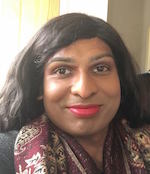
Dr. Chamindra Weerawardhana
A new year often dawns with new resolves and wishes, and this especially appears to be the case with the LGBTQI+ community
in Sri Lanka. As dialogue on a sexual orientation and gender identity
(SOGI)-related equality clause in the proposed new constitution
continues, an absolute priority is that of raising awareness on
SOGI-related fundamental rights among policymakers, senior government
officials, the judiciary and law enforcement officials. This is due to
an extremely worrying lack of awareness and understanding that pervades
government circles. The attitudes of many policymakers and officials
towards SOGI issues are shaped by prejudices and colonially imposed
Victorian [im]moralities, which, contrary to what many of us assume, are
also deeply ingrained in what could be described as the
‘Sinhala-Buddhist establishment’. In a land nurtured by Buddhist
philosophy along the logic of Sabbé satta bavantu sukhi thattha,
ensuring the protection of the basic human rights of all citizens fall
well within Sri Lankan, if not Sri Lankan-Buddhist traditions of
tolerance and acceptance. Indeed, this reading categorically contrasts
with the Temperance Movement-instigated appropriation of Victorian
moralities and values that many of us blindly assume as
‘Sinhala-Buddhist’, which, in reality, have very little ‘Sinhala’ and
next to no ‘Buddhist’ within. The latter Buddhist establishment remains
highly patriarchal, harbouring an extremely discriminatory attitude
towards gender equality within the clergy and beyond. This situation has
resulted in a climate in which those who present themselves as the
yellow-robe-clad custodians of ‘national’, if not ‘traditional’ values
are in fact perpetrators of gender and sexuality-related oppressive
conservatisms imposed upon us under Western colonial rule.
Hypocrisy in the LGBTQI+ political class?
Concerning the political class, this writer cannot avoid highlighting
the staggering level of hypocrisy among senior politicians. In a country
where LGB people occupy posts as high as Head of Government and several
key cabinet ministerial portfolios including Law and Order, External
Affairs and Education, one seldom comes across a politician prepared to
openly affirm ‘we stand unequivocally for the fundamental rights of all
citizens irrespective of their sexual orientation and/or gender
identity’. This silence can be explained in their fear of a possible
backlash that would be politically disadvantageous. However, the
high-level power that the aforementioned politicians wield provides them
with clear leverage to articulate SOGI-related fundamental rights and
freedoms within a broader and water-tight emphasis on human rights and
gender justice. Although the yahapalana government circles include
several supportive MPs and specialists (such as the spouse of the Head
of Government, a Gender Studies professor of international fame), its
attitude to gender politics (including SOGI-related issues) continues to
remain somewhat ‘hush-hush’, to say the least. A more forthright
approach on fundamental rights would indeed be a welcome gesture in
2017.
Gender justice as interlinked to external affairs priorities?
SOGI-related human rights are inherently linked to overall objectives of
gender justice. SOGI issues cannot be separated from issues of violence
against [cis and trans] women, the socioeconomic violence suffered by
[cis and trans] women from ethnic minorities and lower echelons of caste
and class structures. If equality (and especially gender equality) is
to be included in educational syllabi, it imperatively requires a strong
SOGI-related emphasis. Similarly, reconciliation initiatives are
incomplete in the absence of SOGI-related protections. Their omission
from the statute book, action plans and strategic goals implies a low,
if not insincere grasp of the welfare of citizens affected by
deep-seated ethnonational (or should I say ethno-patriarchal) violence.
Here again, Sri Lanka has the human resources and expertise to formulate
forerunner legislation that could provide an example not only to the
rest of the subcontinent, but also to the world at large. If Sri Lanka
is negatively perceived at UN and other international human rights
platforms, and if some powers are keen to push Sri Lanka against the
wall in the name of human rights and pursue their own agendas (such as
regime change operations), the myopia of the Sri Lankan political
establishment to tactfully adopt a discourse on fundamental rights to
ALL citizens (and a well-formulated and intersectional policy approach
on gender justice) is primarily to be blamed.
