Peace for the World World ! Your War Our Lives

The Dalai Lama
A Brief Colonial History Of Ceylon(SriLanka)
Sri Lanka: One Island Two Nations
A Brief Colonial History Of Ceylon(SriLanka)
Sri Lanka: One Island Two Nations
(Full Story)
Back to 500BC.

Friday, January 6, 2017
Is Regime-Change Alone The Answer?

By Chrishmal Warnasuriya –January 6, 2017
Chrishmal Warnasuriya
Two Years On Since Our ‘Silent Revolution’
Soon we will celebrate the 2nd anniversary of our Peoples Revolution of
8th January 2015, one which this writer himself described as “our third
independence” in its immediate aftermath; having played at least some
minor role in overthrowing a manifestly despotic, fearfully oppressive
and overtly nepotistic regime that was said to be insuperable at the
time. Therefore it is prudent and our duty to look-back and critically
evaluate what we have (or have not) secured with that change; as that
common saying goes these days – sathutui da den (are you happy now)?
A resounding “YES” is the answer for the basic freedoms we have managed
to secure, which is evident in the thousands of voices springing up
daily, both as collectives or individuals under the common theme of
“civil society”; many who were too fearful to speak-up during that
period of “white vans” but who have now found a democratic way of
expression. However is that freedom of speech and expression alone
sufficient? Do we allow several political cronies who were carried to
office on the shoulders of the common man to now shirk their
responsibilities by simply showing us that “freedom-candy” and continue
in the same corrupt bandwagon of merry-men; with absolutely no
difference in the management (or mismanagement) of the State and its
resources to that of the previous lot? This is a question that we must
collectively answer!
I, Myself & Me – Personality Variables Superseding Public Need
In the scientific study of foreign policy and global politics, we are
confronted with a theory by James Rosenau that role variables of leaders
in smaller or developing countries play a significant part in the
behaviour of nation-states. This can be seen in our comparative
political history too, as for instance between the statesmen in premier
SWRD or President JRJ who opted for less “limelight” in their affairs to
the more PR oriented tenures of Presidents Premadasa or Rajapakse; the
latter pair predominantly playing to the “populace gallery” in managing
the State where they were much loved by the masses.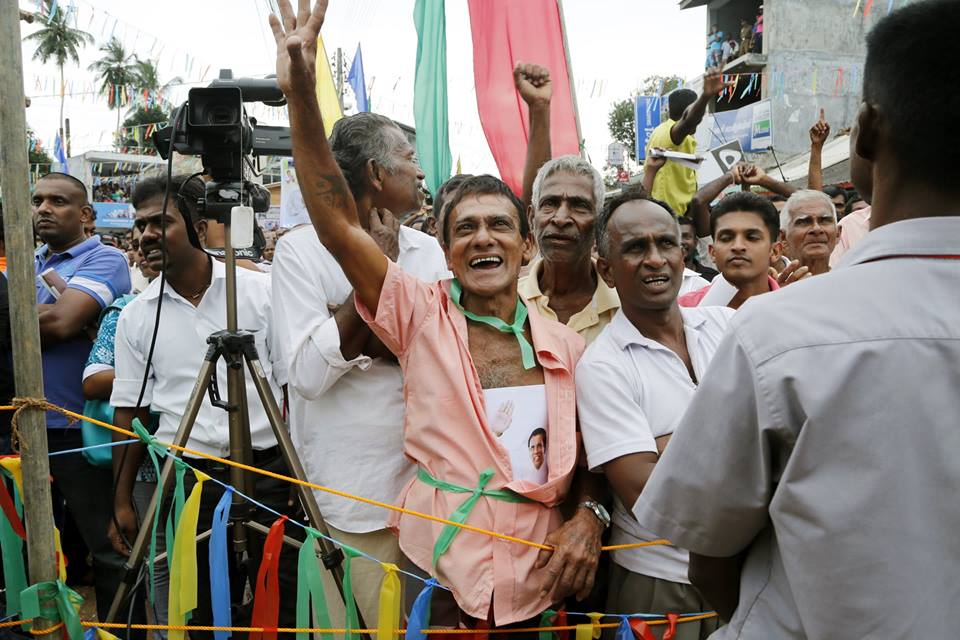
These personal yearnings of leaders for attention, to garner credit for
themselves for duties owed by the Institution are not only common to
politics but unfortunately, filters down to the very root of most of our
civil interactions. At the village level, in a temple or church (I’m
more comfortable discussing the latter) even men of the cloak, from
junior priests to Bishops would much rather be surrounded by sycophantic
“yes-men” who will never dispute anything and thereby miserably fail to
manage the Institution, where they could have delivered much better
results had they worked with constructive critics with knowledge and
erudition. The same is true for schools, principals or headmasters or
any other such Institution; these same ego-centric desires have reached
up to national level politics.
In such a backdrop, we need to question whether changing a regime alone
without addressing these fundamental questions, by simply changing faces
within the same old cancerous system without a conscious effort to
cut-out that self-centredness of those assuming public office; will
deliver to us the service standards commonly accepted as a benchmark by
tax payers in any developed nation.
