Peace for the World World ! Your War Our Lives

The Dalai Lama
A Brief Colonial History Of Ceylon(SriLanka)
Sri Lanka: One Island Two Nations
A Brief Colonial History Of Ceylon(SriLanka)
Sri Lanka: One Island Two Nations
(Full Story)
Back to 500BC.

Wednesday, January 4, 2017
North-East Police Solicit Bribes From Perpetrators And Act With Prejudice Against Abused Women – Report
 January 3, 2017
Law enforcement establishment in Sri Lanka have openly acted with
prejudice against sexually abused women in the North and East, by even
going to the extent of telling a victim to marry the man who raped her,
while the continuing culture of impunity has intensified sexual abuse
against women and children in the North and East provinces.
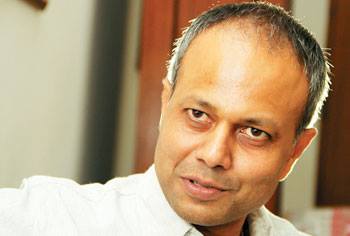
Sagala Ratnayaka – Minister of Law & Order
The 22 page report titled ‘Women’s Access to Justice in the North and East of Sri Lanka’ by the Women’s Action Network (WAN)
said police officers often do not take complaints by women seriously.
“In one case, a woman made a domestic violence complaint to the police,
and the police called her husband, who told the police she had danced at
her sister’s engagement party. The police had then told the woman that
dancing and her henna on her hands were “against the culture” and that
she shouldn’t be doing such things,” the report said.
In another case, women activists in Vavuniya reported that one police
officer had made a comment that if a girl is raped, she should ‘just’
marry her rapist.
According to the report, sometimes police even ask for bribes from the
husbands, or otherwise the police pressure the woman to withdraw the
case. In Mullaitivu, women’s organizations reported that police could be
manipulated with money or other favors. They might allow the husband to
slip away after receiving money and even release the culprit on bail
but would neglect to inform the woman who filed the case. “In
Kilinochchi, women’s organizations reported that favoritism is
everywhere. If someone has influence or a connection to the police, the
process will go smoothly. If not, a woman will have to wait in line to
file her case,” the report said.
The report noted that delays and lack of gender sensitivity in the
justice system, combined with inactivity and corruption in law
enforcement, have further entrenched the culture of impunity in the
country. “The safety and security of women, particularly Tamil women,
has been threatened due to the virtual immunity enjoyed by men,
particularly from the armed forced, who are celebrated as war heroes and
victors. Perpetrators of sexual violence in the armed forces have been
allowed to hold on to their powerful positions irrespective of being
accused of committing grave forms of sexual violence or ordering such
violations,” the report said.
In one incident which occurred in Batticaloa in 2009, a 24-year old
woman was raped and murdered. Her mother is still going to court seeking
justice for her murdered daughter.
In Batticaloa District, there were 163 domestic violence cases reported
in 2014 and 164 in 2015. In Ampara District, there were 363 domestic
violence cases in 2014 and 334 in 2015. From 2014-2015, there were 20
reported rapes in Batticaloa, 54 reported rapes in Ampara, 44 cases of
child abuse in Batticaloa and 95 child abuse cases in Ampara. In many
instances many women refrain from talking about domestic violence
because of the cultural stigmas around it and the value placed on
marriage.
The report highlighted that intimate partner violence remains a
widespread problem in the North and East, and many women’s organizations
report that this form of violence is increasing. In Kilinochchi, women
said they have never seen domestic violence before like they see it now
and that new cases surface on a daily basis.
The report urged authorities to ensure timely justice for sexual
violence against women and children. “Investigate, prosecute, and punish
those who are accused of rape and sexual abuse, especially those in
positions of power, and end impunity in regards to violence against
women,” the report said.
WAN also said that all cases must be promptly investigated and
prosecuted. “Declare violence against women and girls, particularly
sexual violence, a national crisis,” the report said.
The report also called for the immediate appointment of a special team
to handle cases that are pending in the Attorney General’s Department to
come for trial.
The head of a women’s organization in Batticaloa said that long delays
in the justice process contributed to the increasing violence: it takes a
minimum of six years, usually around ten years, for a criminal case
involving adults to come to trial; a case involving children takes less
time, approximately six to seven years. In Vavuniya, activists said that
one woman had been trying to get justice for 16 years.
Another issue facing abused women in the provinces was the lack of Tamil
speaking police officers. “In locations where there are no
Tamil-speaking female officers, Tamil women who report domestic violence
have to tell their stories to male officers or translators.
Translations themselves most often imbued with patriarchal attitudes and
are biased in favor of the perpetrators,” the report said.
The report also highlighted instances where the police emergency number
119 was almost ‘useless.’ In many cases, the emergency number was
reported to be very unreliable as once a complaint is lodged, police
might visit the scene of the incident or will not.
