Peace for the World World ! Your War Our Lives

The Dalai Lama
A Brief Colonial History Of Ceylon(SriLanka)
Sri Lanka: One Island Two Nations
A Brief Colonial History Of Ceylon(SriLanka)
Sri Lanka: One Island Two Nations
(Full Story)
Back to 500BC.

Wednesday, January 4, 2017
Post-War Sri Lanka’s Use Of Landmines Creates Serious Questions

January 3, 2017
The Secretary to the Ministry of Defence Karunasena Hettiarachchi has recently made statements to the media regarding the use of landmines in
the protection of military camps in post-war Sri Lanka. In a related
statement, he also said that there is no link between reconciliation and
Sri Lanka’s acceding to humanitarian disarmament conventions such as
the Mine Ban Treaty.
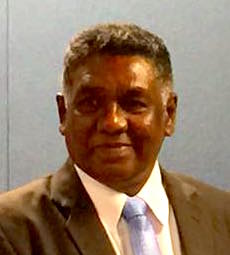
Karunasena Hettiarachchi
The Government of Sri Lanka has declared “National
Integration and Reconciliation Week” from 8th to 14th January 2017 on
the eve of completion of the President’s second year in office. The
above statements were made by the Secretary of Defence when the media
inquired about the importance of Sri Lanka’s accession to the Convention
on the Cluster Munitions (CCM) and Mine Ban Treaty (MBT) during the
declared week.
The Secretary’s statement creates serious questions on the sincerity and
genuineness of the Sri Lanka’s ongoing reconciliation programme;
particularly at the end of the second year of Presidency of Maitripala
Sirisena government’s theme of “good governance.” Concerned parties have
criticized and denounced these moves by the government. In the month of
August 2016, the Sri Lanka Campaign to Ban Landmines sent a petition to
President Sirisena asking for accession to both the CCM and MBT in
post-war Sri Lanka without a delay; this petition was signed by former
diplomats and senior government officials, academia, civil society,
ex-military officials, mine-action operators and the business community.
According to the Secretary’s statement, Sri Lanka will be the first and
only country in the world to say that the military camps need to use
landmines for their protection in the civilian-populated areas during
the post-war setting and ongoing reconciliation. Sri Lanka’s military
camps are located in highly civilian-populated areas throughout the
country. A few countries that do use landmines in the world
today mention that they are used only in land-borders where there is
zero civilian population. Such countries always deny that they use
mines to protect their military camps and Sri Lanka will be an
exceptional case in this regard.
A new fear will now arise among civilians who live near military camps
in post-war Sri Lanka. Children that live near the camps will need to be
extra vigilant due to the threat of maiming or death. During rainy
times, mines that are buried in military camps will surface with
flood water and float into civilian-populated areas. No doubt this
will create a serious threat to civilians and particularly to children.
This situation has been already experienced in the past by civilians who
live near minefields. In addition to human life, there is the threat to
wildlife – particularly with respect to elephants where camps are
located near or in jungle areas.
Human rights defenders say that the use of cluster munitions and
landmines violate the International Human Rights Law (IHR),
International Humanitarian Law (IHL), Child Rights Convention (CRC) and
UN Convention on the Rights of Persons with Disabilities (UNCRPD) which
Sri Lanka ratified recently. They also pointed out that accession to
such conventions is a key factor to bring meaningful and true
reconciliation and many other benefits to post-war Sri Lanka. This
includes Sri Lanka’s current position on the Global Peace Index (GPI)
which will increase and also help investor confidence and political
stability in the country. Victim-activated weapons such as landmines and
cluster munitions are considered inhuman weapons due to their
inherently indiscriminate nature and are outlawed by the global
community. Further, Sri Lanka will be able to meaningfully contribute to
the Sustainable Development Goal (No. 16 of SDGs) which emphasize that
“peace building” is an important theme to make the world a happier place
to live in.
