Peace for the World World ! Your War Our Lives

The Dalai Lama
A Brief Colonial History Of Ceylon(SriLanka)
Sri Lanka: One Island Two Nations
A Brief Colonial History Of Ceylon(SriLanka)
Sri Lanka: One Island Two Nations
(Full Story)
Back to 500BC.

Sunday, January 8, 2017
Trump-Netanyahu Democrats come to Israel’s aid in Congress
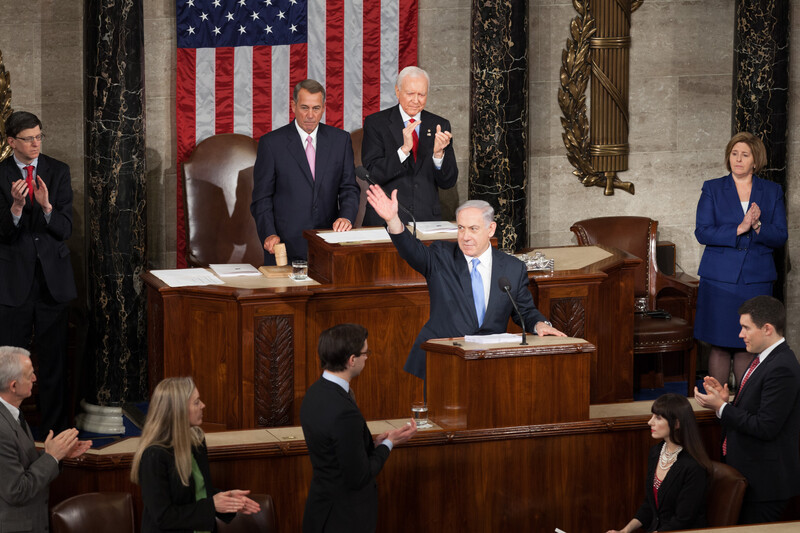
Israeli Prime Minister Benjamin
Netanyahu addresses Congress in March 2015, a speech that accelerated
the fracturing of Democratic Party support for Israel. (Heather Reed)
Michael F. Brown-Saturday 7 January 2017

The Trump-Netanyahu wing of the Democratic Party took aim Thursday at the Obama administration by helping pass a House resolution condemning the recent UN vote calling on Israel to stop building settlements on occupied Palestinian land.
The measure in Congress labeled UN Security Council Resolution 2334 “an obstacle to Israeli-Palestinian peace.”
For this wing of the party, Palestinians are expendable.
This has long been the case for the majority of US lawmakers, but this
early bipartisan initiative signals that despite alarm-ringing about
Trump, many Democrats will fail to stand up for human rights once the
president-elect takes office.
The overall vote for the House resolution was 342-80. A majority of Democrats (109) joined with all but a handful of Republicans to back the measure, while 76 Democrats voted against it.
Texas Republican Louie Gohmert rejected the
resolution on the grounds that it wasn’t pro-Israel enough because it
mentioned a two-state solution. He said it would incur the wrath of God
and “bring judgment down upon our nation for trying to partition
Israel.”
The 109 Democrats rejected President Barack Obama’s belated willingness to allow the UN to condemn Israel’s illegal settlements, and were in effect Trump’s willing collaborators.
The Senate is expected to hold its own vote on the UN resolution soon.
Democrats delighted Israeli Prime Minister Benjamin Netanyahu, who posted a video on social media praising the bipartisan vote.
Democratic split
But the fact that 76 Democrats voted against the preferred Israeli position is noteworthy.
In March 2015, some 50 House members, plus eight senators, skipped Netanyahu’s speech to Congress that aimed to derail Obama’s ultimately successful nuclear negotiations with Iran.
Less than two years ago, that was seen as an unusually high number showing displeasure with the Israeli prime minister.
So Thursday’s vote can be taken as more evidence of the ongoing fracturing in the Democratic Party over unconditional support for Israel.
Yousef Munayyer, executive director of the US Campaign for Palestinian
Rights, tweeted that the vote signaled the end of the days when AIPAC,
the powerful Israel lobby group, “commanded near total loyalty.”

I remember not long ago when AIPAC commanded near total loyalty, maybe a handful defected. Those days are over. twitter.com/YousefMunayyer…
Jewish Voice for Peace noted the “significant,” though still insufficient, dissent:

US House approves anti-peace resolution protecting settlements, w/ significant (but not significant enough) dissent jewishvoiceforpeace.org/tell-congress-…

In his recent speech explaining why the US abstained in the UN vote, Secretary of State John Kerry did not use the word apartheid, but used a term that is just as potent: “separate and unequal” recalls the Jim Crow era of segregation and legally mandated white supremacy in the US South.
Yet the Trump-Netanyahu wing of the party – led by House Democratic Whip Steny Hoyer and Senate Minority Leader Charles Schumer –
would rather defend Israeli expansionism and occupation than back their
own president for expressing serious, though belated, misgivings about
Israel’s repeated violations of international law.
Some Democrats did not just slam the outgoing administration, but went as far as courting the president-elect.
“I think support for Israel in Congress is bipartisan and should remain
bipartisan and if President Trump is working with us on Israel, I’m
perfectly happy to work with the president of the United States,” said
Eliot Engel, a member of the House Foreign Affairs Committee.
Hoyer explained that
his opposition to the UN resolution was because it “fails to pressure
Palestinians to abandon a so-called ‘right of return’ or recognize
Israel as a Jewish state.”
He warned that the US abstention in the Security Council that allowed
the resolution to pass would “fuel the insidious BDS movement and
embolden Palestinian leaders who continue to drag their feet.”
The text of the House resolution claims that the UN resolution
“effectively lends legitimacy to efforts by the Palestinian Authority to
impose its own solution through international organizations and through
unjustified boycott or divestment campaigns against Israel.”
This is only one of many distortions that turn reality on its head: the
BDS – boycott, divestment and sanctions – movement is an initiative of
Palestinian civil society, not the PA.
Substantial shift in opinion
The divided Democratic caucus perhaps reflects a party base that is
increasingly vocal against Israel’s actions, especially as Israel’s
government lurches ever further to the right.
An influential Israeli think tank noted this
week that during Obama’s term “the notion that the two nations have
‘shared values,’ appears to have eroded with the perceived weakening of
Israel’s democratic ethos.”
The sight of some Democrats aligning with such an Israel, as well as with a new American president who attracts white supremacists and is unguarded about his own racism, is likely to sharpen differences over Israel.
The shift among a sizable segment of Democratic voters to positions more critical of Israel is well documented by recent polling.
The polarization was visible during
the primary campaign, with supporters of Hillary Clinton significantly
more likely to be strongly pro-Israel than supporters of Bernie Sanders.
According to a Morning Consult/Politico poll in
late December, registered Democrats backed the UN resolution condemning
Israeli settlements by an overwhelming 47-16 margin. Overall, 53
percent of self-identified liberals backed the UN resolution, and just
14 percent opposed it. Among conservatives, the numbers are almost
reversed.
And reflecting well established trends, support for the UN resolution
was higher among younger people, African Americans and Latinos – the
ascendant demographic groups in the Democratic Party. The American
Jewish community is clearly split, with 42 percent supporting the UN
resolution and 47 percent opposing it.
Netanyahu’s vitriolic attacks on Obama – who remains highly popular
among Democrats – will also do nothing to shore up support for Israel.
By openly aligning with Trump and the US far-right, Israeli leaders may
simply be accelerating the divisions over Israel within the Democratic
Party and between the parties.
Nevertheless, it remains shocking that for now more House Democrats are
prepared to side with the Likud Party Prime Minister of Israel than with
their own Democratic president.
This fact underscores the need for activists to be ready to hold
Democratic officials accountable, even as they think about how to resist
Trump’s policies. This is especially true as the battle takes shape for the future of the party.
The risk is that on Palestinian rights, the Trump-Netanyahu wing of the Democratic Party might prevail.
