Peace for the World World ! Your War Our Lives

The Dalai Lama
A Brief Colonial History Of Ceylon(SriLanka)
Sri Lanka: One Island Two Nations
A Brief Colonial History Of Ceylon(SriLanka)
Sri Lanka: One Island Two Nations
(Full Story)
Back to 500BC.

Saturday, January 7, 2017
Young Russian denies she aided election hackers: ‘I never work with douchebags’
White
House claims Alisa Shevchenko was involved in hacking the US election
but in an interview she says authorities misinterpreted facts or were
fooled
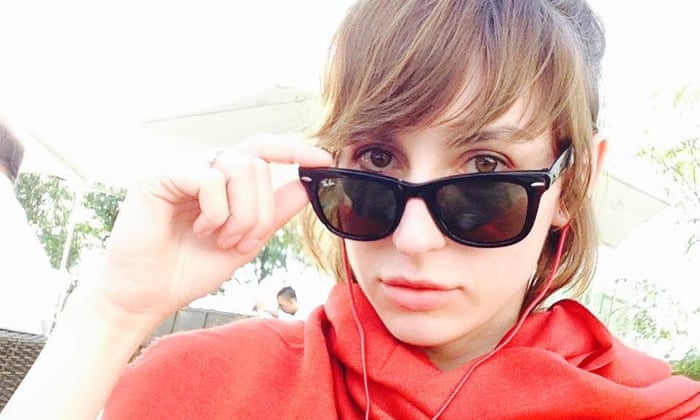
Alisa Shevchenko: ‘I am now de facto blocked from the world’s major information security market.’ Photograph: Alisa Shevchenko

Alisa Shevchenko is a talented young Russian hacker, known for working
with companies to find vulnerabilities in their systems. She spends her
winters in Asia, meditating and training in Thai kickboxing.
She is also, the White House claims, guilty of helping Vladimir Putin interfere in the US election.
Her company was a surprise inclusion on the US sanctions list released
last week, alongside top officers in Russia’s GRU military intelligence
agency and two well-known criminal hackers. The company “provided the
GRU with technical research and development”, according to the fact
sheet released by the White House. No further details were given.
In addition to the sanctions, the US expelled 35 Russian diplomats from the country, and said it would take further, non-public measures in response.
After a week in which Russian interference in the election – apparently
with the goal of helping Donald Trump to victory – has dominated the
news agenda, Shevchenko has spoken out to decry the sanctions against
her.
Shevchenko told the Guardian she was furious at her company’s inclusion
on the list, and denied ever having knowingly worked for the Russian
government. She communicated via encrypted email, from a location she
said was “a wild countryside area a few hours away from Bangkok”.
In answers that were defiant, and occasionally abrasive, she decried the
“insane level of hysteria around the entire ‘Russian hacking’ story”.
She suggested that the US authorities were guilty either of “a
technically incompetent misinterpretation of the facts” or had been
fooled by a “counterfeit in order to frame my company”. Those who could
have had an interest in framing her could include competitors, US
intelligence or Russian intelligence, with the goal of screening the
real culprits, Shevchenko said.
“A young female hacker and her helpless company seems like a perfect
pick for that goal. I don’t try to hide, I travel a lot, and am a
friendly communicative person. And most importantly, I don’t have any
big money, power or connections behind me to shrug off the blame. So
really, it could be anyone.”
US intelligence believes the Democratic party’s servers were hacked by a
group known alternatively as Fancy Bear, APT 29 or Sofacy, which they
say was working for the GRU, Russia’s military intelligence. In the
private sector, attribution directly to the GRU comes most clearly from
US firm CrowdStrike, which is influential in US security circles. The US
government believes the hacked emails were then leaked – possibly
through an intermediary – to Julian Assange and WikiLeaks.
Putin has denied all Russian interference in the election, suggesting
the blame has fallen on Moscow due to sour grapes from the losing side.
Putin has expressed hope that under Trump, who has repeatedly praised Russia and the president personally, relations between the two countries will improve.
Russian authorities are known to offer a mixture of carrot and stick to
engage prominent hackers in work for the state, and third-party
contracting of state information security tasks is common in most
countries.
A number of Russian security experts declined to comment, citing the sensitivity of the subject.
“Pretty much everyone in the community has done some work for their
government at some point,” said Dave Aitel, who runs Immunity, a US
software security company. He described Shevchenko as “extremely well
known in the information security community”.
Shevchenko described herself as “a typical introverted computer geek”
who is largely self taught. She declined to say how old she was, deeming
it an “impolite question”, saying instead: “If you really need a number
then go ahead and make it up based on my photographs”.
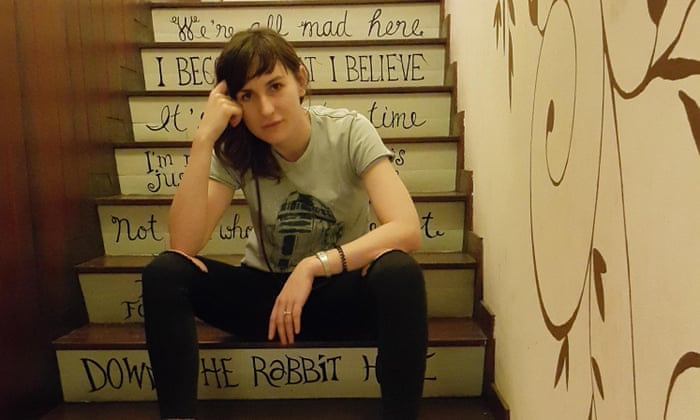
Shevchenko: ‘a typical introverted computer geek’. Photograph: Alisa Shevchenko
She said she dropped out of three different universities, as she was
passionate about learning but did not enjoy the structure of a
university course. Around 2004, she joined Kaspersky Lab, a high-profile
Russian cybersecurity firm.
She left to set up her own company, initially called Esage Lab (“I was
thinking of something ‘sage’, as in a wizard or a magician,” she said).
Later, she changed its name to ZOR. Both names are on the US sanctions
list.
Shevchenko specialises in finding so-called “zero-days”, previously
undisclosed software bugs that could leave companies vulnerable. “We
have not only searched for bugs but exploited them, but only with the
customer’s sanction,” she said. She said she never hired anyone she knew
to have a criminal background for her companies.
Shevchenko said she had been approached repeatedly by people she
believed to be from the Russian government. She insisted, however, that
she had always rejected the advances. She said she had not been
threatened or intimidated as a result.
A 2014 profile of Shevchenko in Russian Forbes magazine noted that she
worked with DialogNauka, a Russian company that listed among its clients
the Russian ministry of defence and parts of the security services.
Questioned by the Guardian, she insisted that none of her own work for
DialogNauka “was even remotely possible to use as a nation-state attacks
supply”.
Shevchenko said she had turned down plenty of offers of work on
ideological grounds: “I never work with douchebags. I only work with
honest and open people that I feel good about.” Asked directly if she
had ever worked on a government contract in any capacity, she answered
“not that I know of”.
Shevchenko said ZOR was closed more than a year ago, because it was
difficult and expensive to do the requisite public relations work
required to drum up business. She now works as a “one-man army”, she
said.
Many analysts have said it seems very likely that Russian state actors
are behind Fancy Bear, but concede that the publicly released evidence
does not include a smoking gun.
The former NSA contractor-turned-whistleblower Edward Snowden, who currently lives in Russia, wrote on Twitter: “Few techs doubt that Russians could have a hand in hacks, but public policy requires public evidence.”
Brian Bartholomew, of Kaspersky Lab’s US office in Massachusetts, said
the biggest clue was an in-house piece of software called XAgent, which
he had never seen elsewhere.
“Assange said it could have been a 14-year-old hacker – if you look at
the collective operations of this group, there’s no way a 14-year-old
has this much money, time and effort to conduct all of these operations
together,” he said.
Of the entities on the sanctions list, including Shevchenko’s company,
Bartholomew said: “There’s probably a good reason that those names were
put in the document.”
Aitel said he had no doubt Russian intelligence was behind the hack and
said authorities would certainly use third-party contractors for
operations, but he added that it was problematic to sanction individuals
without releasing evidence. “No matter what she did technically, she’s
not a policy maker. It doesn’t make much sense to sanction individuals
on the basis that ‘we know something secret so we’re going to sanction
you’.”
Only Shevchenko’s company – rather than Shevchenko personally – is on
the US treasury’s list of specially designated nationals (SDNs), which
are subject to an asset freeze in any dealings with US persons or the US
financial system.
“If she starts a new company, then that company is clean, but a lot of
people might not want to do business with her if they do their due
diligence and find that she’s one step removed from an SDN,” said Louis
Rothberg, an expert in export control with the international law firm
Morgan Lewis & Bockius.
Shevchenko said she assumes it is “not possible” for her to travel to the US now, and she does not particularly want to.
.@Guardian: What's your plan now?
Me: Take LSD and go for a walk in a national park with no security— Alisa 👁 (@badd1e) January 6, 2017
“I am now de facto blocked from the world’s major information security market,” Shevchenko said.
On the other hand, she allowed, there was apparently a certain cachet in
being named as someone who hacked a US election. “I have received a
number of employment, business partnership or collaboration offers” in
the days since the sanctions list was released, she said.
