Peace for the World World ! Your War Our Lives

The Dalai Lama
A Brief Colonial History Of Ceylon(SriLanka)
Sri Lanka: One Island Two Nations
A Brief Colonial History Of Ceylon(SriLanka)
Sri Lanka: One Island Two Nations
(Full Story)
Back to 500BC.

Tuesday, March 7, 2017
On 8 March, stand with women of Palestine
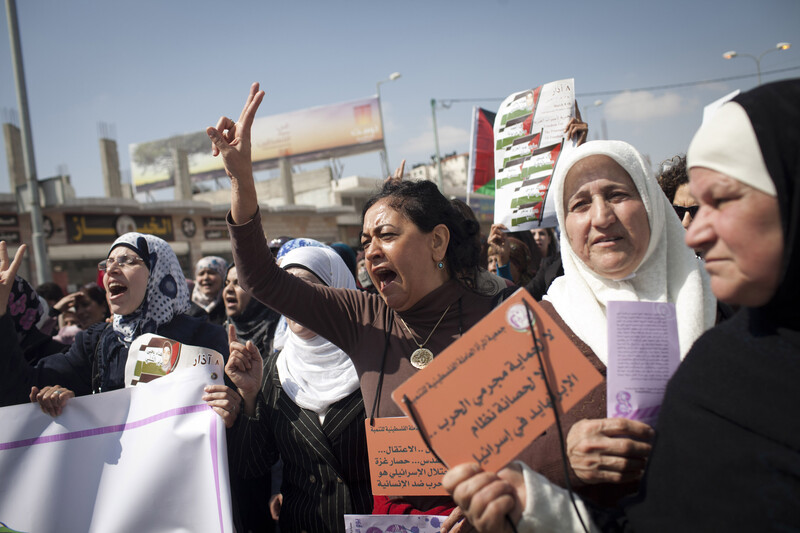
The history of women’s resistance in Palestine is a long one.ActiveStills
6 March 2017

The 8 March international women’s strike is an unprecedented opportunity for feminists to stand against Islamophobia and Israeli apartheid, while supporting Palestinian self-determination.
The strike call for
a “feminism for the 99 percent” includes explicit demands for an
“anti-racist, anti-colonial feminism,” the decolonization of Palestinian
land and the tearing down of apartheid walls, whether they be along
the US-Mexico border or in the occupied West Bank.
Those who have endorsed the call include the political prisoner Rasmea Odeh and Angela Davis, a veteran campaigner for justice and a staunch supporter of the Palestinian call for boycott, divestment and sanctions (BDS) against Israel.
The march’s platform is, therefore, partly a celebration of the history
of Palestinian women and their role in fighting the Israeli occupation.
That history is a long one.
This year marks the centenary of the Balfour Declaration. Through that document, Arthur James Balfour,
then Britain’s foreign secretary, promised to support the establishment
of a “Jewish national home” – a euphemism for a Jewish state – in
Palestine.
In the 1920s, women protested against the Zionist colonization program that Balfour had backed.
Following it, a delegation of 14 women called to see John Chancellor,
then the British high commissioner for Palestine. The women called for a
revocation of the Balfour Declaration and objected to the beating of
demonstrators, the ill-treatment of prisoners and the collective punishment of villages by the British authorities then ruling Palestine.
Key role in struggle
During the 1930s Arab rebellion in Palestine, women collected funds and distributed food to detainees. They also delivered food, weapons and water to men involved in the rebellion.
In 1948, Palestinian women fought in armed battles against Zionist forces.
Women in Jaffa formed Zahrat al-Uqhuwan (the Daisy) shortly before the Nakba,
the 1948 mass expulsion of Palestinians. That organization delivered
medical services, food, water and ammunition to Palestinian rebels.
During the 1948-1968 period, Palestinian women played key roles in
al-Ard (The Land), a resistance movement eventually suppressed by
Israeli authorities.
Since 1967, Palestinian women have played numerous roles in Palestinian freedom struggles. Women like Fatima Barnawi participated in armed resistance.
In January 1969, Palestinian women staged a sit-in strike in front of
Israeli prisons and detention centers demanding release of imprisoned
family members. In Gaza alone, 65 women died resisting the occupation
between 1967 and 1970.
Fear forbidden
In more recent times, Palestinian women were central to the mass uprising of the first intifada that began on 9 December 1987, the day fear was forbidden and the stones were taken up, as the Palestinian journalist Makram Makhoul put it.
The intifada began after
four Palestinians were killed at an Israeli checkpoint in Gaza, and
17-year-old Hatem Abu Sisi, was murdered by an Israeli officer shooting
into a crowd of grieving Palestinian protesters.
The women’s committees that had existed before the uprising provided some of the leadership of the emerging popular committees that were of critical importance to the intifada.
The leadership was involved in organizing relief services and raising
funds for prisoners and their families. It also arranged legal
assistance and undertook leafleting to organize more people to join the
intifada.
When Israel shut down Palestinian schools – a common tactic of the
occupation forces – women organized underground alternative schools that
sprung up in homes, mosques and churches. Women were also central in
organizing the mass boycott of Israeli goods.
On 8 March 1988, the women’s committees that had organized Palestinian
women workers, students and housewives called for a joint program on
International Women’s Day.
The committees arranged child care services to allow for mass
participation of women in popular committees and trade unions. The
program also encouraged women to join the general strikes taking place
all over the West Bank and Gaza, and to organize defenses against raids
by Israeli soldiers and settlers.
During the second intifada that began in 2000, Manal Abu Akhar – who was
shot in the chest as a child during the first intifada – used her home in Dheisheh, a Bethlehem-area refugee camp, to shelter fighters.
She also helped to “de-arrest” Palestinians seized by the Israeli
military. Palestinian women would throw their bodies on the ground to
try to create chaos so that others could escape.
Abu Akhar also used her home as a lookout to monitor the movement of the Israeli military.
Support BDS
More recently, Palestinian women have been caught in Israel’s deadly crackdowns. In October 2015, 17 year-old Dania Irsheid was shot dead at an Israeli checkpoint in Hebron. Israeli soldiers said she was shot because she threatened them with a knife but that has been denied by witnesses.
Another teenager, Bayan al-Esseili, was shot dead that same month near the Kiryat Arba settlement in Hebron.
A grouping called the Jerusalemite Women’s Coalition spoke out against those killings.
Speaking as women, mothers, sisters, daughters and youth, the coalition called for
the “protection of our bodily safety and security when in our homes,
walking in our neighborhood, reaching schools, clinics, work places and
worship venues.”
“We, the women of occupied East Jerusalem, are politically orphaned,”
the groups stated. “We are victims without protection, as the
Palestinian Authority has no right to protect us in our city, and the
Israeli state treats us as terrorists who should be humiliated,
attacked, violated and controlled.”
And on 8 March last year, Palestinian women released a statement of solidarity with the thousands of Palestinian women who have been incarcerated by Israel since 1967.
The statement was written as more than 60 Palestinian women were behind
Israeli bars. It protested the ongoing denial to Palestinian women of
healthcare and education, and the horrific conditions faced by
Palestinian women imprisoned for resistance to the occupation.
This year’s 8 March platform urges participants to keep on demonstrating
their support for Palestinian liberation after the march is over.
The platform’s demand for open borders, for immigrant rights and for the
decolonization of Palestine should lead demonstrators directly to
support for the BDS movement.
The Palestinian BDS call demands an end to Israeli occupation of Arab
lands, full and equal rights for Palestinian citizens of Israel,
dismantling of the Israeli apartheid wall in the West Bank and
implementation of UN resolution 194 supporting the right of Palestinian
refugees to return to their homeland.
Those goals are fully in keeping with the spirit of the 8 March platform.
Trade unions fighting in the West that have endorsed the platform should
support BDS tactics as a means of demonstrating solidarity with
Palestinian women workers – both those in and outside trade unions.
The unemployment rate
for Palestinian women in the West Bank stood at 28.5 percent in the
last few months of 2016. That was twice as high as the rate of male
unemployment.
In Gaza, the rate of female unemployment was more than 64 percent,
according to the Palestinian Central Bureau for Statistics. The
corresponding rate for men was 33 per cent.
These data demonstrate why every Palestinian trade union supports the BDS campaign against Israel.
Reject “imperialist feminism”
The 8 March call for an “an end to gender violence,” including police
brutality and “state policies” that engender poverty can bring
demonstrators into direct solidarity with Palestinian feminists.
As the scholar and activist Nada Elia has noted,
Israel’s infrastructure is “designed to sustain high rates of
miscarriages by blocking basic resources such as water and medical
supplies, forcing women in labor to wait at military checkpoints on
their way to a hospital, and generally creating inhumane and unlivable
conditions for Palestinians. This also increased miscarriages, pre-term
labor and stillbirths. Ethiopian-Israeli women, most of them Jewish,
have also been subject to mandatory contraceptive injections without
their consent.”
Demonstrators on 8 March can link their struggles to ongoing work by
groups like the General Union of Palestinian Women which organize around
battles for justice for Palestinian women.
Under Donald Trump’s presidency, the violent expansion of Israeli settlements has
continued apace, and we must prepare to resist any impending plans for
war against Gaza. But we cannot afford to wait for the next bombs to
fall to know that Gaza itself is already unlivable and that the UN has predicted that conditions will worsen by the end of this decade.
To be a Palestinian woman in Gaza is to have no control over one’s body
and the ability to live any semblance of a full life. The US has funded
and supported the racist violence inflicted on the women, men and
children of Gaza.
Finally, those who advocate for global feminism on 8 March must not let
their political support for Palestine become entangled with support for Zionism or
the Israeli occupation. Now more than ever, a sharp line must be drawn
between those on the left who avow what Deepa Kumar, a writer and
academic, calls “imperialist feminism” and those who fight for the emancipation of women everywhere.
Only a feminism “from the river to the sea” and beyond can turn the tide
against the brutally gendered violence of the US and Israel. Only an
anti-racist, anti-imperialist feminism can end the war on Palestinian
women that is a building block of Zionism, the Israeli occupation and
the US empire.
Sofia Arias lives in New York City and Bill V. Mullen lives in Indiana. Both are long-time Palestine solidarity activists.
