Peace for the World World ! Your War Our Lives

The Dalai Lama
A Brief Colonial History Of Ceylon(SriLanka)
Sri Lanka: One Island Two Nations
A Brief Colonial History Of Ceylon(SriLanka)
Sri Lanka: One Island Two Nations
(Full Story)
Back to 500BC.

Thursday, March 9, 2017
“Women in the Changing World of Work: Planet 50:50 by 2030.”
Lakshmi Puri is Assistant Secretary-General of the United Nations and Deputy Executive Director of UN Women
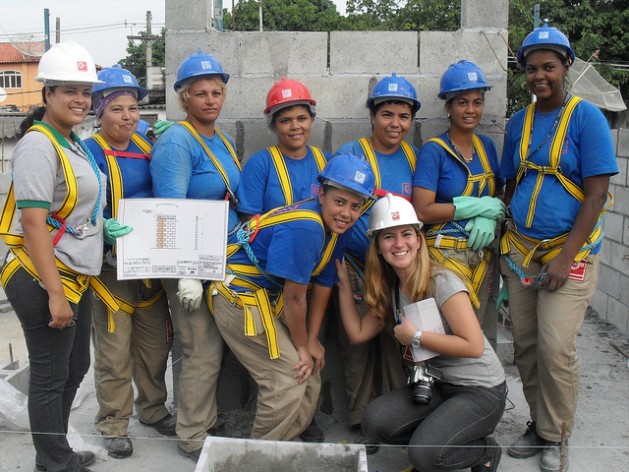
Women are working in construction in Rio de Janeiro. Credit:Fabiana Frayssinet/IPS
 Wednesday, March 8, 2017
-
Yayi Bayam Diouf became the first woman to fish in her small rural
fishing village in Senegal despite initially being told by the men in
her community that the fish wouldn’t take bait from a menstruating
woman. When she started practicing law, Ann Green, CEO of ANZ Lao, was
asked to make coffee or pick up dry cleaning (by men and women), simply
because she was a young woman. The difficulties faced by Yayi and Ann in
entering the labour force and at the workplace are not only unique to
them, but sadly is the reality for many women across the globe.
These difficulties represent violations of women’s human rights to work
and their rights at work with gender-discriminatory laws still in
existence in 155 countries, resulting in the gender wage gap of 23
percent globally. Also, women represent 75 percent of informal
employment, in low-paid and undervalued jobs that are usually
unprotected by labour laws, and lack social protection.
 Only
half of women participate in the labour force compared to three
quarters of men, and in most developing countries it is as low as 25
percent. Women spend 2.5 times more time and effort than men on unpaid
care work and household responsibilities. All of this results in women
taking home 1/10 of the global income, while accounting for 2/3 of
global working hours. These inequalities have devastating immediate and
long-terms negative impacts on women who have a lower lifetime income,
have saved less, and yet face higher overall retirement and healthcare
costs due to a longer life expectancy.
Only
half of women participate in the labour force compared to three
quarters of men, and in most developing countries it is as low as 25
percent. Women spend 2.5 times more time and effort than men on unpaid
care work and household responsibilities. All of this results in women
taking home 1/10 of the global income, while accounting for 2/3 of
global working hours. These inequalities have devastating immediate and
long-terms negative impacts on women who have a lower lifetime income,
have saved less, and yet face higher overall retirement and healthcare
costs due to a longer life expectancy.
Women’s economic empowerment is about transforming the world of work,
which is still very patriarchal and treats the equal voice,
participation and leadership of women as an anomaly, tokenism,
compartment or add on. Despite recognizing progress, structural barriers
continue to hinder progress towards women’s economic empowerment
globally.
Women in all professions face what we call sticky floors, leaking
pipelines and broken ladders, glass ceilings and glass walls! At the
current pace, it may take 170 years to achieve economic equality among
men and women – according to estimates from the World Economic Forum’s
latest Gender Gap Report. This is simply unacceptable.
To accelerate the move to a planet 50/50 in women’s economic empowerment
and work will require a transformation of both the public and private
sector environments and world of work they create for women and also how
they change it to make it a women’s space of productive and fulfilling
work.
It will mean adopting necessary laws, policies and special measures by
governments. It means their actively regulating and providing incentives
to companies and enterprises to become gender equal employers, supply
chains and incubators of innovation and entrepreneurship.
The 2030 Agenda for Sustainable Development, together with the Addis
Ababa Action Agenda (on financing for development), position gender
equality and the empowerment of women as critical and essential drivers
for sustainable development. There is a Sustainable Development Goal on
gender equality (Goal 5) which seeks to ‘Achieve gender equality and
empower all women and girls’ and sets out global targets to address many
of the remaining obstacles to gender inequality.
The framework recognizes women’s economic empowerment as essential
enabler and beneficiary of gender equality and sustainable development
and a means of implementation of all the six targets of SDG 5, including
ending all forms of discrimination against all women and girls; ending
all forms of violence and harmful practices like child marriage:
recognizing and valuing unpaid care and domestic work through the
provision of public services, infrastructure and social protection
policies and the promotion of shared responsibility within the household
and the family; ensuring women’s full and effective participation and
equal opportunities for leadership at all levels of decision-making in
political, economic and public life; and ensuring universal access to
sexual and reproductive health and rights.
Achieving these targets would have a multiplier effect across all other
development areas, including ensuring equal access to decent work and
full and productive employment (SDG 8), ending poverty (SDG-1), food
security (SDG-2), universal health (SDG-3), quality education (SDG-4)
and reducing inequalities (SDG-10).
The upcoming 61st session of the Commission on the Status of Women
(CSW61) will consider “Women’s Economic Empowerment in The Changing
World of Work”, as its priority theme providing the international
community the opportunity to define concrete, practical and
action-oriented recommendations to overcome the structural barriers to
gender equality, gender-based discrimination and violence against women
at work.
We live in a world where change is happening constantly, presenting new
challenges and opportunities to the realization of women’s economic
empowerment. The innovations – especially in digital and information and
communications technologies, mobility and informality are also
increasing rapidly. Emerging areas, such as the green economy and
climate change mitigation and adaptation offer new opportunities for
decent work for women.
Also, in the context of new digital and information technologies, it is
estimated that women will lose five jobs for every job gained compared
with men losing three jobs for every job gained in the fourth industrial
revolution. Successful harnessing of technological innovations is an
imperative as is women’s STEM education and capability building,
financial and digital inclusion for the realization of women’s economic
empowerment.
Achievement of women’s economic empowerment, as well its related
benefits, requires transformative and structural change. In his report
on the priority theme of CSW61, the Secretary-General of the United
Nations identifies are four concrete action areas in achieving women’s
economic empowerment in the changing world of work, including
strengthening normative and legal frameworks for full employment and
decent work for all women at all levels; implementing economic and
social policies for women’s economic empowerment; addressing the growing
informality of work and mobility of women workers and technology driven
changes; and strengthening private sector role in women’s economic
empowerment.
Progress must be provided from both the demand and supply sides of the
labour market. From the demand side, the enhancement of capacity
building and the creation of a value chain of education skills and
training for women is key to accelerating change.
This will in turn lead to decent work opportunities as well as
productive employment for women. From the supply side, there must be a
creation of an enabling environment for women to be recruited, retained
and promoted in the work place, including through promoting policies to
manage trade and financial globalization.
These forces, profoundly altering the world of work should come as a
benefit to women and the working poor in rural and urban areas; and
macroeconomic and labour market policies must create decent jobs,
protect worker rights, and generate living wages, including for informal
and migrant women workers.
Enhanced interventions to tackle persistent gender inequalities and gaps
in the world of work, and stepped-up attention to technological and
digital changes to ensure they become vehicles for women’s economic
empowerment are needed. The creation of quality paid care economy is
also pivotal in employment creation and in empowering at least a billion
women- directly and indirectly as well as providing much needed jobs
for all!
Transformative change is not only possible but it would generate
tremendous dividends for the economy. According to the McKinsey Global
Institute, if women were to play an identical role in labour markets to
that of men, as much as USD 28 trillion, or 26 percent, could be added
to global annual GDP by 2025.
Moreover, the total value of unpaid care and domestic work, dominated by
women, is estimated to be between 10 and 39 per cent of national GDPs,
and can surpass that of manufacturing, commerce, transportation and
other key sectors. With women’s economic empowerment the global economy
can therefore yield inclusive growth that generates decent work for all
and reduces poverty ensuring that no one is left behind.
With the United Nations Observance of International Women’s Day, we
celebrate the tectonic shift in the way that gender equality and women’s
economic empowerment has been prioritized and valued in the
international development agenda and express the resolve that we will
all do everything it takes including transformative financing to achieve
the ambitious goal of Planet 50/50 in the world of work by 2030.
This article is part of a series of stories and op-eds launched by IPS on the occasion of this year’s International Women’s Day on March 8.
This article is part of a series of stories and op-eds launched by IPS on the occasion of this year’s International Women’s Day on March 8.
