Peace for the World World ! Your War Our Lives

The Dalai Lama
A Brief Colonial History Of Ceylon(SriLanka)
Sri Lanka: One Island Two Nations
A Brief Colonial History Of Ceylon(SriLanka)
Sri Lanka: One Island Two Nations
(Full Story)
Back to 500BC.

Sunday, October 1, 2017
Generations of uncertainty
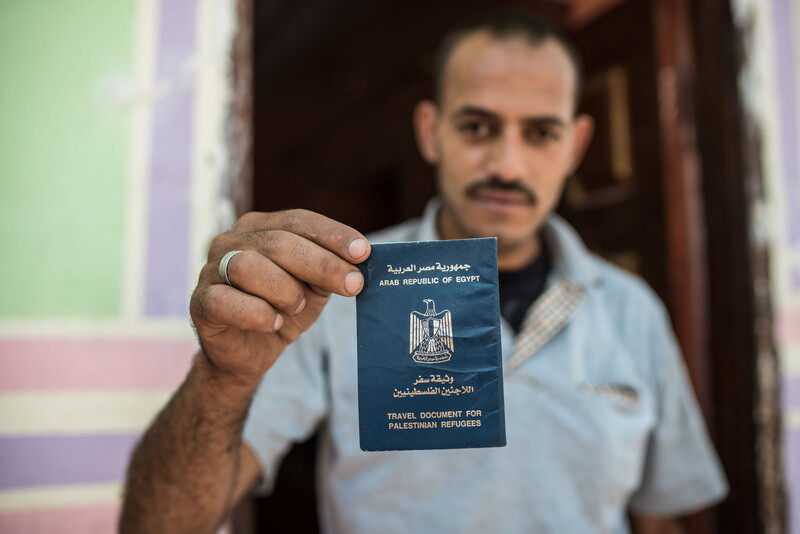
Stateless Palestinian refugees in Egypt are banned from studying and working in several professions.
Xinhua 28 September 2017
Ahmad, a young merchant living in the Egyptian city of El-Arish, was nursing a recent heartbreak.
Less than a month ago, he asked for an Egyptian woman’s hand in
marriage. He was rejected, he said, because he is a Palestinian carrying
a refugee travel document.
Yet his family have resided in Egypt for the better part of a century.
Ahmad’s family is originally from al-Maghar in central Palestine. They
were forced out when the village was ethnically cleansed by Zionist
forces in May 1948, the month the state of Israel was declared.
The family were among the estimated 11,600 Palestinians who fled to
Egypt that year. There the authorities issued them refugee travel
documents but not citizenship.
Unlike refugees who ended up in Syria, Jordan and Lebanon, Palestinians
who fled to Egypt did not have access to relief services from UNRWA, the United Nations agency for Palestine refugees, as Egypt prevented it from operating in the country.
Vulnerable
Ahmad and his family have to renew their travel documents every three
years. Their tenuous status leaves them feeling vulnerable.
“We face many problems,” Ahmad told The Electronic Intifada. “We are
discriminated against when we have to present [our documents] to the
Egyptian police or army on the road, and we are made to feel like
settlers in Egypt with no rights.”
Their refugee status makes it difficult to travel outside the country.
Ahmad said that he and his family members have been prevented from
performing the Hajj pilgrimage in Mecca, and thus fulfilling their
religious duty.
“Three years ago, we were banned from attending pilgrimage. My mother
and brother tried to travel this year to perform their pilgrimage, and
the Egyptian authorities prevented them from doing so because they carry
Palestinian travel documents,” Ahmad said.
“There are many complications when it comes to travel.”
That is not the only limitation borne from their refugee status.
“We are barred from owning property on Egyptian soil,” Ahmad said. “We
have sidestepped this problem by registering our property under the
names of relatives who hold Egyptian nationality, or reliable friends.”
But even when Ahmad wanted to set up natural gas service at his
apartment, he said, “I had to register it under the name of one of our
relatives who holds Egyptian citizenship.”
Subsequent waves of mass displacement of Palestinians by Israel have
swelled the number of refugees in Egypt over the years. There were some
160,000 Palestinian refugees residing in the country as of 2014.
Israel has prevented Palestinian refugees from exercising their right of
return from the lands and properties from which they were expelled.
“Golden age”
Marwan Mustafa’s grandfather came from Gaza to work in Egypt in 1962.
Five years later, he was joined by the rest of his family in the wake of
Israel’s seizure of the Gaza Strip, the West Bank, Egypt’s Sinai
Peninsula and Syria’s Golan Heights.
Mustafa, a 29-year-old journalist, said Palestinian refugees in Egypt
enjoyed better treatment during the years of Egyptian president Gamal Abdel Nasser. Nasser’s tenure, starting in 1952, is considered a “golden age” for Palestinians in the country.
“My father used to repeat a saying that Palestinians would hear in
universities: Enroll the Palestinian, and if there is space left, enroll
the Egyptian.”
Such treatment deteriorated after Nasser’s death in 1970. Palestinian
refugees were cut off from public services such as education and
healthcare after a Palestinian faction in Cyprus assassinated Yusuf
al-Sibai – an Egyptian writer and culture minister who supported
President Anwar Sadat’s normalization with Israel – in Cyprus in 1978.
A law enacted in 1981 restricted the participation of Palestinian
refugees and other foreigners in the workforce through a regime of
permits and quotas.
Palestinian refugees also have to pay extra fees for university
education, and are banned from studying medicine, pharmacy, journalism,
political science and economics.
Economic burden
Restrictions to access to jobs in the private sector force many
Palestinian refugees in Egypt to work as truck or taxi drivers or as day
laborers and street vendors.
The fee to renew travel documents and residency rights has increased
over the years, causing an additional economic burden for refugees.
Residency may be revoked if a Palestinian spends more than six months
outside Egypt.
Palestinian refugees can obtain a Palestinian Authority passport from the body’s embassy in Egypt. But it’s next to useless.
“When I tried to apply for a visa to go to Turkey, the Turkish embassy
asked for an online application because I was residing in Egypt,” Ahmad
said.
But when he started the online application process, he was told to apply
directly through the embassy because he doesn’t hold citizenship.
“When I went to the embassy another time, they asked me again for an
online application because in their view, I should be treated like an
Egyptian.”
It was yet another disappointment for the stateless young man. With
restrictions on his ability to pursue a career and improve his
situation, he is not marriage material. Unable even to travel, despair
is a more likely companion, as for many in his position.
“I was stuck in a loop and in the end I did not apply for a visa.”
