Peace for the World World ! Your War Our Lives

The Dalai Lama
A Brief Colonial History Of Ceylon(SriLanka)
Sri Lanka: One Island Two Nations
A Brief Colonial History Of Ceylon(SriLanka)
Sri Lanka: One Island Two Nations
(Full Story)
Back to 500BC.

Friday, December 15, 2017
It's personal: How Trump betrayed both Abbas and Abdullah of Jordan
For once the Jordanian king and Palestinian president have earned their position as Arab leaders


 On
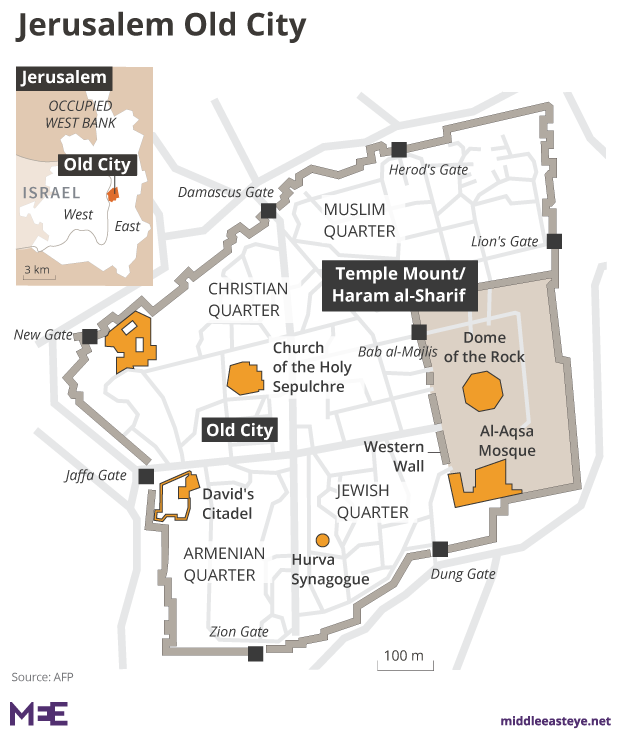
21 August 1969, an Australian citizen called Denis Rohan set fire to an
800-year-old wooden pulpit, a gift to al-Aqsa mosque from the Islamic
hero Saladin (1137-1193), who led the military campaign against the
Crusaders.
On
21 August 1969, an Australian citizen called Denis Rohan set fire to an
800-year-old wooden pulpit, a gift to al-Aqsa mosque from the Islamic
hero Saladin (1137-1193), who led the military campaign against the
Crusaders.
Apart from being considered mentally ill, Rohan thought he was acting on
divine instructions. These were to enable the Jews to build the temple
on the ruins of the mosque, thus hastening the second coming of Jesus
Christ.
A galvanising effect
The arson attack which destroyed the ancient pulpit and part of the roof
had a galvanising effect. A month later, 24 leaders and representatives
of Muslim countries met in Rabat and created the precursor of a group
now known as the Organisation of Islamic Cooperation (OIC).
This group, now 57 nations strong, met in Istanbul on Wednesday. Just as
it had 48 years ago, Al Aqsa galvanised them - once again - into
action. Instead of being attacked by an Evangelical Christian from
Australia, Al Aqsa was threatened by a US president pandering to similar
messianic Christians in America.
The conference achieved a number of goals. It made an historic decision to recognise East Jerusalem as the capital of the State of Palestine, thus pitting 57 states against Israel's express intention to unify the city of Jerusalem.
Istanbul laid the foundations for a realignment of Arab states
This move sets a heavy diplomatic ball rolling around the world, one
that will roll independently of Israel's or America's will. It could
roll all through Asia, Latin America and Africa. And it will make it
more difficult for other nations to quietly move their embassies to the
city.
Today the US vice president Mike Pence delayed his visit to Israel.
The summit placed Palestine once again in the centre of the Muslim world
after seven years of the Arab Spring, the wave of popular uprising that
swept across the region in 2011, and the reign of Islamic State group
(IS) in both Iraq and Syria . As a result the seminal Israel-Palestine
conflict receded from view.
 Erdogan,
flanked by Kuwait's emir, Sabah, Abdullah of Jordan and Mahmoud Abbas
of the Palestinian Authority, at the OIC conference (AA)
Erdogan,
flanked by Kuwait's emir, Sabah, Abdullah of Jordan and Mahmoud Abbas
of the Palestinian Authority, at the OIC conference (AA)
It also sidelined the conference which Saudi Crown Prince Mohammed bin Salman laid on for Donald Trump in Riyadh last May.
A US president lecturing Muslim leaders on Islamic extremism was
superseded by one in which Muslim leaders lectured him on his own
fundamentalists. Realising they were about to be upstaged, the Saudis
panicked.
They sent a junior minister of Islamic affairs to Istanbul, excised all
coverage of the event from their own media, and fed another story in the
works about Al Jazeera's coverage of Jerusalem protests acting as an incitement to violence.
No blank cheques
More importantly, Istanbul laid the foundations for a realignment of
Arab states. It showcased a rebellion by two key pro-Western Arab
leaders, King Abdullah of Jordan and Mahmoud Abbas, the Palestinian
president, against their traditional allies in Washington.
The former is the head of the second Arab country to recognise Israel,
the latter is the Palestinian leader who has devoted his life to
negotiating the now-defunct two-state solution.
Realising the importance of what was about to happen in Istanbul, Saudi
Arabia and Egypt made strenuous efforts to stop Abdullah and Abbas from
going.
As has been reported, Abdullah and Abbas were summoned for an urgent meeting in Cairo. Only Abbas turned up.
I am told by well-informed sources, who spoke on condition of anonymity,
that Egyptian President Abdel Fattah el-Sisi put pressure on Abbas so
as not to head the Palestinian delegation to Istanbul and thus downgrade
the importance of the conference.
To help him decline his invitation to Istanbul, fake news was spread that Abbas had had a stroke. Abbas ignored this.
Meanwhile King Abdullah was summoned to Riyadh, and there again I am
informed, he was told not to attend Istanbul. King Abdullah stayed for a
few hours in Riyadh and then left for Istanbul.
Their attendance at the conference sent a message to Saudi Arabia as
well as to the US: Riyadh's deal with Trump is not accepted by Jordan
and Palestine and in this they are supported by Muslim countries. In
other words: You have no blank cheque to negotiate with Israel over our
heads.
Both men made a public display of their defiance and anger by standing
shoulder to shoulder with the fire-breathing Islamist-leaning Turkish
President Recep Tayyip Erdogan in the group photograph.
Abdullah vigorously nodded as Erdogan said:"I repeat Jerusalem is our
red line. The Noble Sanctuary will forever belong to Muslims. We will
never give up on our demand for a sovereign and independent Palestine.
We cannot be spectators in this situation because it impacts all our
futures."
 Abbas feels betrayed by US President Donald Trump (Reuters)
Abbas then gave the speech of his life.
He tore into America for wrecking his life's work of pushing for a
two-state solution. Jerusalem, he said, crossed all red lines. He
revealed he had a gentleman's agreement with Washington on not seeking
full statehood and membership of all international organisations before a
lasting peace was signed, and proceeded to tear that up.
This means Palestine will be free to launch a case against Israel in the
International Criminal Court. And thirdly he would take a complaint
against the US before the UN Security Council for violating one of its
own resolutions, a procedure against which the US itself cannot vote,
Abbas claimed.
An act of betrayal
Neither men are natural allies of Erdogan. Two years ago, Abdullah flew
to Washington to brief Congressional leaders about the dangers posed by
the Turkish president to regional order.
Abbas feels the rivalry of Hamas keenly and has repeatedly attempted to
pull Fatah out of the unity government. What force propelled the two men
to Istanbul, and to a conference they knew could change the alignment
of the entire region?
It had to be something powerful to overcome their natural disinclination to stand with Islamists.
Both turned to the man who, according to the latest Pew poll,
is considered the most popular in the region and to the country,
Turkey, which is looked at as the most influential regional power, after
Russia.
Domestic politics played its part. Both knew anger on their own streets
was intense. Amman saw the biggest street protests in decades. More than
half of Jordanians are Palestinian refugees, including those displaced
from Jerusalem after the 1967 war. And the majority of Amman residents
are either Palestinian refugees or Palestinians with Jordanian
citizenship.
Both saw Donald Trump's recognition of Jerusalem as the capital of
Israel as an act of political betrayal. For Abbas, it betrayed an
unwritten agreement he had with Washington not to press Palestine's case
in the International Criminal Court until a final settlement was
reached.
For Abdullah, betrayal was no less real. Jordan's role as custodian of
Al Aqsa is not casual. It's written into peace treaties, notably the
Wadi Araba treaty King Hussein signed with Yitzhak Rabin of Israel in
1994.
Similarly, when King Hussein announced in 1988 the disengagement between
Jordan and the West Bank, recognising the PLO as the sole
representative of the Palestinian people, the king insisted Jordan would
keep the custodianship of Al Aqsa.
It's personal
But the third reason for the offence both Abbas and Abdullah have taken
is the most interesting of all. It's personal. Their anger is genuine.
In Abbas' eyes, Trump betrayed decades of work towards the establishment
of a Palestinian state.
Abbas played patsy to an expanding Israel, and paid the price daily for
that by doing Israel's law enforcement for it in territory it would
never leave.
For Abdullah, it's an insult to his family - a Hashemite, not a
Palestinian one. I became convinced of this after a long conversation
with a member of the royal household. The Hashemites still remember the
time when they were custodians of all three holy sites of Islam - Mecca,
Medina and Jerusalem.
This was in 1924, when Hussein bin Ali al-Hashimi, the Arab leader who
proclaimed the Great Arab Revolution against the Ottomans, held Mecca
and Medina under his control. In the same year, the people of Jerusalem
gave him the right to control their city.
READ MORE ►
However late in the same year he lost his kingdom, Hijaz, to the Saudi Sultan Abdulaziz bin Saud.
Jordan is all that remains of what is still called the Great Arab
Revolution sparked by the great grandfather of Abdullah. The only source
of religious legitimacy for his family is the custodianship of the Al
Aqsa.
When the 32-year-old upstart Saudi crown prince tells Abbas to forget
Jerusalem and the right of return, history is repeating itself in
Hashemite consciousness. They have not forgotten their feud with the
House of Saud and their loss of two of the three holy places all those
years ago. It still rankles.
Jerusalem, then, is not just a foreign issue in a foreign country. It's a
test of their very legitimacy as rulers in their own country. Family
history tells Abdullah that when they let a fundamental element of their
legitimacy as rulers slip from their grasp, it is lost for ever.
The losing side?
Abdullah's choice carries its own risks. Sceptics may say he could just
have chosen the losing side, once again. All the wealth, most of
the military power and high technology are controlled by the opposing
camp of Saudis, Emiratis, Israel and America. Together they make a
strong force.
But he will also remember how his father King Hussein rejected the
winning side three times in his long reign, heeding to his instincts as
an Arab.
In 1967, the Israelis warned Hussein not to get involved, but he did
anyway. Hussein reconciled with his old enemy, Egypt's Gamal Abdel
Nasser. "It wasn't possible for Hussein to opt out [of] this war. If he
had, everyone would have blamed him for the defeat," Leila
Sharaf, a former Jordanian information minister told an Al Jazeera documentary.
In 1973, Hussein sent troops to help Syria in the Golan Heights to fight
in the war launched by Anwar Sadat and Hafez Assad. Hussein supported
the Iraqi leader Saddam Hussein in the first Gulf war in 1991.
Each time, Jordan consciously sided with fellow Arabs even though it
knew they were headed for defeat. Hussein did not foresee the extent of
that defeat in 1967 but he did know Jordan would be defeated. Why?
Because to do otherwise would be to incur even greater, possibly
existential risk. This is the position that Abdullah now finds himself
in.
The worst part of Trump's statement for Jordan was the US president's
insistence that recognition of Jerusalem as Israel’s capital reflected
reality. Trump was not bothered by legality, international law,
treaties, UN resolutions, all refusing to accept Israel's annexation of
East Jerusalem.
It was the transformation of Jerusalem into another "fact on the ground"
that Israel had established through conquest and settlement that made
it impossible to accept.
For once, and I never thought I would write this, King Abdullah and President Abbas have earned their position as Arab leaders.
- David Hearst is
editor-in-chief of Middle East Eye. He was chief foreign leader writer
of The Guardian, former Associate Foreign Editor, European Editor,
Moscow Bureau Chief, European Correspondent, and Ireland Correspondent.
He joined The Guardian from The Scotsman, where he was education
correspondent.
The views expressed in this article belong to the author and do not necessarily reflect the editorial policy of Middle East Eye.
Photo: Jordan's King Abdullah II (R)
welcomes Palestinian President Mahmoud Abbas at the Royal Palace in
Amman on 7 December 2017 (Khalil Mazraawi/AFP)
This article is available in French on Middle East Eye French edition.
