Peace for the World World ! Your War Our Lives

The Dalai Lama
A Brief Colonial History Of Ceylon(SriLanka)
Sri Lanka: One Island Two Nations
A Brief Colonial History Of Ceylon(SriLanka)
Sri Lanka: One Island Two Nations
(Full Story)
Back to 500BC.

Tuesday, January 2, 2018
A Pitiful Apologist For The UNP


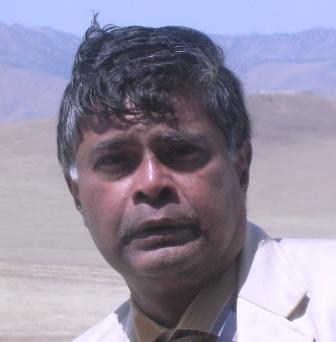 A very jolly looking man who lives in Australia, Shyamon Jayasinghe,
has emerged as the leading apologist for the UNP with intellectual
pretensions. Sadly his passion is not twinned with any regard for truth
or facts. I suppose that is understandable in a man with what seems a
commitment to a capitalist perspective, but it is regrettable that he
does not also assess the contribution of his chosen standard bearers to
populist politics.
A very jolly looking man who lives in Australia, Shyamon Jayasinghe,
has emerged as the leading apologist for the UNP with intellectual
pretensions. Sadly his passion is not twinned with any regard for truth
or facts. I suppose that is understandable in a man with what seems a
commitment to a capitalist perspective, but it is regrettable that he
does not also assess the contribution of his chosen standard bearers to
populist politics.
For instance, in a recent article,
he claims that it was the SLFP that sowed communal tensions in 1956. He
forgets or ignores it was the UNP which repudiated John Kotelawala’s
announcement in Jaffna that the UNP stood for parity of status for
Sinhala and Tamil. At the party sessions held early in 1956 in Kelaniya,
J R Jayewardene’s stronghold, the UNP declared that it stood for
Sinhala only and also passed a resolution that Parliament should be
dissolved straight away and the UNP seek a mandate to implement Sinhala
only.
Jayasinghe claims that Bandaranaike left the UNP
because he felt he was being deprived of the succession, which
Jayasinghe grants was through maneuvering by D S Senanayake to have his
son succeed him. But Jayasinghe’s claim that the ideology Bandaranaike
developed was an afterthought is ridiculous, in that the latter had in
fact earlier led the Sinhala Maha Sabha, and had only joined the UNP
when he thought it would accept at least some of his policies. And in
those days his championing of Sinhala was as opposed to English, which
he thought deprived the majority of people in this country of a say in
governance. It should not be forgotten that his Language Act of 1956
dethroned English, though it was silly of him to introduce simply a one
sentence Act without thinking of how it would be implemented, and to
leave out Tamil altogether.
Similar gung ho opposition to English also motivated
Jayewardene, which Shyamon Jayasinghe conveniently forgets. In blaming
the SLFP for getting rid of English as a medium of instruction, he
ignores too, or deliberately forgets, that Kannangara’s English medium
Central Colleges were destroyed by Jayewardene long before there was an
SLFP government. As soon as he got into the State Council, Jayewardene
proposed a motion to make Sinhala compulsorily the medium of education.
After expostulations by the Congress leadership, he then added Tamil as
an afterthought, and declared in his speech on the proposal that in Sri Lanka there were ‘two
different nations; one nation learning Sinhalese and Tamil and speaking
in Sinhalese and Tamil, and the other speaking and learning English.’
The State Council amended Jayewardene’s original
proposal so as to make Sinhala or Tamil the compulsory medium only at
primary level. But then in the early fifties Eddie Nugawela as Minister
of Education extended this to secondary school too through a gazette
notification, not a law. The only contribution of the SLFP to stopping
English as a medium of education was when science stream studies were
also converted into mother tongue from 1964 onward. Thus, whereas from
the early fifties most children did their Ordinary Level examination in
Sinhala or Tamil, from 1965 this was also the case with science stream
students. Given that very few schools offered science at ordinary level
in those days, this was an egalitarian move, though it would obviously
have been better had the government equalized upward by making English
medium available in more schools, rather than equalizing downward, an
endemic disease of this country.
It took an SLFP led government to extend opportunities
for English medium, though I can claim credit for this by persuading
Tara de Mel to start this islandwide, and then fulfilling her request to
take charge of the programme. I did so only part time since I was at
the same time coordinating the new degree programme of the Sri Lanka
Military Academy while acting as Dean of my Faculty at Sabaragamuwa
University. But Tara obviously agreed with the view of the students of
the Faculty when they came en masse asking me to take up the position of
Dean, which I had resigned from some years earlier, that even a part of
my time was worth more than full time work by anyone else.
Shyamon Jayasinghe, so enthusiastic about English
medium, does not ask why Jayewardene did not reintroduce it along with
the open economy in 1977. And he totally ignores Ranil’s efforts when he
was Prime Minister to sabotage English medium, telling Karunasena
Kodituwakku (who proved a tower of strength in this regard) that he
should stop it. His mother – whose property another Ranil acolyte
accuses me of weaseling out of her, obviously not understanding the
limits of Wijewardene wealth – used, my father told me, to complain that
I was obsessed with English medium whereas both Ranil and I, who had
studied in Sinhala medium, had excellent English.
Her assumption that all others straitjacketed in
Sinhala or Tamil medium could achieve the same, whatever their family
background, was symptomatic of a utterly insensitive aristocracy. Worse,
she had forgotten how her youngest son could barely function in
English, and only achieved fluency when his father sent him to England
to study printing so that he could take over his father’s firm. That son
Channa was over the moon that his son, a delightful youngster now, was
selected for English medium at Royal College in 2003, but then six
months later began belabouring me to tell his brother that English
medium was collapsing.
That had happened because Ranil had stopped Kodituwakku
from extending my contract. Kodituwakku had hastened to assure me, when
explaining why the extension he had requested had been denied, that it
was nothing personal, but that Ranil had said he should get someone
fulltime. But even the Cabinet Secretary Mr Weragoda smiled wryly when
giving me this excuse, and admitted that, after my contract expired,
they had not bothered to find anyone to replace me fulltime.
So, hearing from elsewhere too how the programme was suffering, I succumbed on October 2nd 2003
when Channa pleaded with me yet again, obviously unwilling to speak to
Ranil himself. But when I spoke to Ranil, he told me that he had told
Karunasena not to start, and he would now have to stop. When I asked him
whether he was opposed to English medium, he said no, but he had no
time to attend to this himself, since he was concentrating on the
economy. He claimed that no one else was capable of doing it, except
possibly for his first Permanent Secretary at Education, Eric de Silva,
but he had refused to take on any position.
Why then he got rid of me, when obviously I had been
doing a good job, was not something I thought to ask him. But I did ask
Tara to arrange for me to speak to Chandrika, and after a long rambling
but delightful conversation, she promised to act and indeed convened a
meeting on education at President’s house. The consensus in favour of
English medium, including Cabinet Ministers, I think overwhelmed Ranil,
and English medium was saved, to be made better functional after Ranil
lost the 2004 election.
Sometimes I think Ranil’s opposition to English medium
springs from his adulation of J R Jayewardene, though I should note that
in some respects he has thrown Jayewardene’s less full-blooded approach
to capitalism to the winds. In that regard I find Jayasinghe’s account
simplistic. His headlong attack on socialism is understandable, and one
cannot expect him to make allowance for the need to promote equity,
though certainly there was much mismanagement and cronyism in state
institutions meant to serve the people, instead serving politicians. But
he fails to explain why his hero Jayewardene in 1977, when introducing
an open economy, kept so much in state hands and further entrenched
cronyism.
Jayasinghe criticizes Jayewardene for entrenching
socialism by renaming us the Democratic Socialism republic, but fails to
assess why he instead extended cronyism also to the private sector,
with his daughter in law for instance and his Secretary’s son getting
lucrative contracts. In that regard Ranil has gone even further. Arjuna
Mahendran as Governor of the Central Bank, kept on despite obvious
misdemeanours, Aruni Wijewardene as High Commissioner in London, Suren
Ratwatte as CEO of Sri Lankan Airlines, are all examples of friends and
relations in high places that require professional input and cutting
edge capacity.
Jayasinghe is incapable of, or unwilling, to look into
these matters. But in presenting half truths, he helps us to understand
the extent of sanctimonious hypocrisy in an elite that still thinks the
UNP the only acceptable party of governance. His article concludes with
an attack on President Sirisena, for accepting crossovers, which
Jayasinghe declares celebrates ‘opportunism, incompetence and an implied
element of promised corruption’.
Read More
