Peace for the World World ! Your War Our Lives

The Dalai Lama
A Brief Colonial History Of Ceylon(SriLanka)
Sri Lanka: One Island Two Nations
A Brief Colonial History Of Ceylon(SriLanka)
Sri Lanka: One Island Two Nations
(Full Story)
Back to 500BC.

Monday, March 12, 2018
Building A “Third Force”


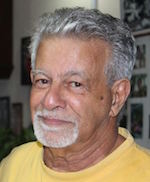
Emil van der Poorten
It
is the belief shared by all non-racist, non-xenophobic Sri Lankans
that, particularly after the most recent outbreak of mayhem provoked by
simply being “different,” an alternative to the two main political
configurations is needed and urgently so.
I have deliberately omitted consideration of the People’s Liberation Front (Janatha Vimukthi Peramuna or JVP)
as an alternative because its persistent adherence to a discredited set
of political beliefs and its deification of Rohana Wijeweera, its
leader until he was “terminated with extreme prejudice” as the old
Central Intelligence term had it. The latter, in particular, makes it
totally unacceptable to people of the so-called Cultivator caste (Govikula) in
Sri Lanka who believe, rightly or wrongly, that they were targeted for
extermination by the Wijeweera-led JVP at the time of the second Sri
Lankan insurrection at the end of the ‘eighties purely and simply
because the JVP leadership and rank-and-file saw them (the Goviyas)
as opposed to what the JVP stood for by virtue of their being
established in feudal and post-feudal Sri Lankan society as superior by
virtue of a significant majority of the Sinhalese belonging to that
caste, while the JVP leadership and cadre belonged to two of the
so-called ”Depressed” castes.
The
primary challenge in trying to build a new political entity in a
country such as Sri Lanka whose fundamental political culture has been
changed by the J. R. Jayewardene-led United National Party beginning in
the latter part of the 1970s, is the financial demands of such a
venture. Beginning with their first insurrection in the 1970s, the JVP
sought to meet this need by holding up banks and individuals. Simply
put, it didn’t work and, given the fact that the Sri Lankan political
establishment, irrespective of its political hue, has armed forces
equivalent to the Russian army at its command is less than a pipe-dream!
I
would suggest that one route to raise the funds that are required to
establish any kind of new political organization could come from the
kind of electronic fund-raising that has emerged in the United States of
America ever since the urgency of dumping Donald Trump and all he
stands for became apparent.
Sri Lankans have the reputation of being technologically savvy beyond the norm of so-called developing countries. The
fact that mobile phone usage, with all the attendant gizmos that go
with that means of communication, is well above the average, even for
the more economically-advanced countries, could be the, until now,
hidden clue as to where this can begin. “Texting”
is no longer exotic and, particularly with younger people, has become a
major part of the routine of their daily lives.
That fact needs to be exploited and an initial group of “believers”, no matter how small, needs to get the ball rolling. The numbers of recruits could grow exponentially if enough effort is put in by those first engaged in the task.
While
the preceding description might seem simple enough, the over-riding
reality of the Sri Lankan political culture must not be lost sight of:
the moment that any such dissident movement, no matter how peaceful and
democratic, is showing signs of success the forces of repression will
mobilize themselves. And
make no mistake, those forces cut across all the phony political
divisions trotted out for those who’d like to believe that some sort of
multi-party democracy prevails in Sri Lanka.
If
the forces for change can expand rapidly enough, the very nature of
that growth is going to make it difficult to contain by the hegemonists
backed by a very, very large armed force to which it will feed
privileges that prevent it from making common cause with the suggested
agents of change.
Read More
