Peace for the World World ! Your War Our Lives

The Dalai Lama
A Brief Colonial History Of Ceylon(SriLanka)
Sri Lanka: One Island Two Nations
A Brief Colonial History Of Ceylon(SriLanka)
Sri Lanka: One Island Two Nations
(Full Story)
Back to 500BC.

Friday, March 2, 2018
Has The World Been Taken Over By Reactionary Politicians?

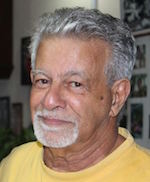
Emil van der Poorten
 With
The Donald seemingly bestriding the world and the entire universe
observing him with bemused wonder, it certainly is time to look around
the leadership of countries – democratic and otherwise – and place them
in an appropriate place in the spectrum of political policy and
practice.
With
The Donald seemingly bestriding the world and the entire universe
observing him with bemused wonder, it certainly is time to look around
the leadership of countries – democratic and otherwise – and place them
in an appropriate place in the spectrum of political policy and
practice.
The very mention of the name “Putin” should be enough to invoke the
vision of the leader of what is left of the Soviet Union. The man does
not even pretend to follow any of the rules usually governing democratic
societies and, while selectively picking off Russian oligarchs if they
don’t actively contribute to the system of corruption over which he
presides, runs the biggest country in the world like the Russian Mafioso
he is.
In neighbouring Ukraine which has come off second best in contests,
armed and otherwise, with its giant neighbor over which Mr. Putin
reigns, it appears that each government is more repressive and corrupt
than the one that preceded it.
France has, after a series of corrupt politicians parading as
“socialists,” produced a leader who is a suave version of dictators
parading as democrats in other western jurisdictions. The light at the
end of that particular tunnel is the fact that, whenever France seems to
be teetering on the edge of total Fascism, there has been an upsurge of
indignation at the threat to traditions that grew out of its revolution
being destroyed which lead to the government in power having to
backpedal. One can but hope that that tradition survives.
Britain, long considered the cradle of democratic tradition and
practice, has its “compromise Tory” Theresa May, with Boris Johnson, the
brilliant but totally unscrupulous man who deliberately refused any
suggestion that he should accept the leadership of the Tories after
Brexit, lurking in the shadows and calling the shots. Scary stuff!
The Scandinavian countries, particularly over the latter part of the 20th Century,
were considered bastions of humane governance where the financial
bottom line was not the ultimate arbiter of what should or should not be
done in a nation. However, the emergence of an increasing number of
what are, euphemistically, referred to as “centre-right” governments has
eroded that tradition very seriously. The warning signs have come in
the form of racist and anti-immigrant groups, many displaying a capacity
for extreme violence on the street.
The fact that Angela Merkel who once carried the banner for political
conservatism in Western Europe is now viewed as the last best defender
of humanist governance in that part of the world should say it all to
anyone suffering under the illusion (delusion?) that democratic
practice, as close to the ideal as possible, was alive and well in
countries that were considered to adhere to such norms.
As for Southern Asia in which the countries that had emerged from the
yoke of Imperial exploitation, initially, at least attempted to adopt
the best of the governance system that had been practiced by their
oppressors on their home turf unfortunately that story has been a sad
one.
Pakistan has had a series of fiscally corrupt leaders that have followed
what has unhappily become the tradition of preaching social democracy
to the masses while practicing capitalism in its most abhorrent form in
the management of those nations. The fact that the Bhutto family has met
with sticky ends should in no way undercut this historical reality.
Those who’ve succeeded them haven’t been much better and seem to survive
on the basis of some form of conservative tribalism rather than as
reward for good governance.
India, now probably the most populous nation on earth, has at its head a
man banned – until he reached the pinnacle of power in that country –
from so much as entering the USA because of his record of leading murder
and mayhem on his home turf. Mark the fact that even by the standards
of the USA which has a justified reputation of being tolerant of
murderous tin pot dictators, particularly in South and Central America,
this man was considered “untouchable” until his ascendance to power.
Myanmar, which had a rather spotty reputation in the matter of “one man,
one vote” kind of democracy, has descended into a violent,
anti-minority and militaristic state after a brief romance with Aung San
Suu Kyi and her humanism. Even a cursory study of Myanmar’s/Burma’s
post-World War II history will reveal the fact that the Nobel
Laureate’s father was an army general and the fact that he was gunned
down within the walls of that country’s legislature does not, in any
way, alter the nature of his own politics which could be described as
crypto-communist populism.
As for the Phillipines and its, fortunately, unique President Duterte,
what can one say more than simply point to the summary justice he
dispenses in his country, claiming that those being “terminated with
extreme prejudice,” as the CIA characterized that process, were all drug
dealers (“with a few exceptions”). Even given the fact that the
collection of thousands of islands that claims to be one country never
had anything close to democratic governance, Duterte’s behaviour is not
only bizarre, it is murderously so.
And now to our “home front.”
Beginning with the Presidency of Sri Lanka’s Yankee Dick Jayewardene,
the so-called “democratic world” has accepted leaders who have been
responsible for murder and mayhem at an escalating rate, no matter how
well they succeeded in concealing themselves behind nominal democratic
practices. This acceptance by those nations that had, in fact, developed
democratic systems within their own boundaries was particularly
reprehensible because, in the larger scheme of things, Sri Lanka didn’t
have to be pandered to for strategic or other reasons. Western
intelligence could not but have been aware of the ramifications of the
militarization of governance that flowed from its armed forces being as
large as the Russian army! The only explanation for that tolerance is
probably the fact that those alleged “bastions of democracy” simply
couldn’t be bothered with imposing the kinds of sanctions that would
have been appropriate in the circumstances, with the singular exception
of the removal of a preferential tariff on our garment exports. The
pious proclamations that our prosperous trading partners made from time
to time appeared to be as a response to the political power of diaspora
groups that owed their origins to the fact that they had fled
persecution in Sri Lanka and wielded some electoral clout in their new
home countries because of their numbers and militancy.
Read More
