Peace for the World World ! Your War Our Lives

The Dalai Lama
A Brief Colonial History Of Ceylon(SriLanka)
Sri Lanka: One Island Two Nations
A Brief Colonial History Of Ceylon(SriLanka)
Sri Lanka: One Island Two Nations
(Full Story)
Back to 500BC.

Saturday, April 21, 2018
Amartya Sen, Identity & Violence: The Illusion Of Destiny
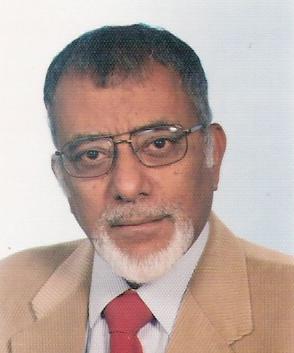
Prof. Charles Sarvan
 I recently contributed a comment on Toni Morrison’s The Origin of Others.Subsequently,
the above-mentioned work by Professor Sen came to mind: what follows
are a few points from his book. Page reference is to the Penguin Books
edition, 2006. To save clumsy and repeated attribution, unless otherwise
made clear, the ‘argument’ is that made by Amartya Sen. A Nobel-Prize
winner, Sen was Master of Trinity College, Cambridge, and is a Professor
at Harvard University. Among the many aspects of his identity that Sen
lists are Asian, Bengali, an American and British resident, an
economist, a believer in secularism and democracy, a feminist, a
heterosexual, a defender of gay and lesbian rights, a non-believer in an
after-life, as in an earlier life or lives. Once when entering the UK,
the immigration officer having examined Amartya Sen’s Indian passport
thoroughly, and noting that his address was given as the “Master’s
Lodge, Trinity College”, asked him whether the Master was a close friend
to extend such hospitality. It did not remotely occur to that white
official that the brown man standing before him was the Master of
Trinity College, Cambridge. Like that immigration-officer, many of us
presume that people can be categorised according to some singular and
overriding criterion. Our shared humanity gets savaged when our
differences are narrowed into “one devised system of uniquely powerful
categorization” (Sen, pp. 16-17). A cultivated sense of identity with
one group can be made into “a powerful weapon to brutalize another”.
Many of “the conflicts and barbarities” in the world are sustained
through the illusion of a unique identity. The short story by Flannery
O’Connor I referred to in that earlier contribution, ‘The Artificial
Nigger’, is apposite here: the ‘innocent’ boy sees a human being; more
narrowly, a man. Then when he’s challenged and pressed, Nelson offers:
an old man; a fat man. But his ‘racist’ grandfather sees only that the
man is black: skin-colour and only skin-colour is what matters to him.
I recently contributed a comment on Toni Morrison’s The Origin of Others.Subsequently,
the above-mentioned work by Professor Sen came to mind: what follows
are a few points from his book. Page reference is to the Penguin Books
edition, 2006. To save clumsy and repeated attribution, unless otherwise
made clear, the ‘argument’ is that made by Amartya Sen. A Nobel-Prize
winner, Sen was Master of Trinity College, Cambridge, and is a Professor
at Harvard University. Among the many aspects of his identity that Sen
lists are Asian, Bengali, an American and British resident, an
economist, a believer in secularism and democracy, a feminist, a
heterosexual, a defender of gay and lesbian rights, a non-believer in an
after-life, as in an earlier life or lives. Once when entering the UK,
the immigration officer having examined Amartya Sen’s Indian passport
thoroughly, and noting that his address was given as the “Master’s
Lodge, Trinity College”, asked him whether the Master was a close friend
to extend such hospitality. It did not remotely occur to that white
official that the brown man standing before him was the Master of
Trinity College, Cambridge. Like that immigration-officer, many of us
presume that people can be categorised according to some singular and
overriding criterion. Our shared humanity gets savaged when our
differences are narrowed into “one devised system of uniquely powerful
categorization” (Sen, pp. 16-17). A cultivated sense of identity with
one group can be made into “a powerful weapon to brutalize another”.
Many of “the conflicts and barbarities” in the world are sustained
through the illusion of a unique identity. The short story by Flannery
O’Connor I referred to in that earlier contribution, ‘The Artificial
Nigger’, is apposite here: the ‘innocent’ boy sees a human being; more
narrowly, a man. Then when he’s challenged and pressed, Nelson offers:
an old man; a fat man. But his ‘racist’ grandfather sees only that the
man is black: skin-colour and only skin-colour is what matters to him.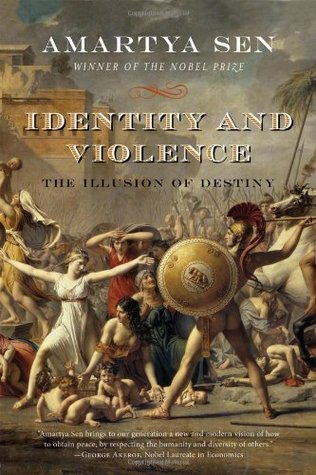 Often,
one affiliation dominates and cancels out all other affiliations. In
turn, this leads to conflicts which are then seen as “natural” and,
therefore, inevitable and justified. For example, conflict between
Sinhalese and Tamils is interpreted in “lofty historical terms, seeing
in them something that is much grander than the shabbiness of
contemporary politics” (Sen, p. 43). Creating hatred takes the form of
invoking some allegedly predominant identity that drowns all other
affiliations and overpowers any human sympathy and kindness.
Often,
one affiliation dominates and cancels out all other affiliations. In
turn, this leads to conflicts which are then seen as “natural” and,
therefore, inevitable and justified. For example, conflict between
Sinhalese and Tamils is interpreted in “lofty historical terms, seeing
in them something that is much grander than the shabbiness of
contemporary politics” (Sen, p. 43). Creating hatred takes the form of
invoking some allegedly predominant identity that drowns all other
affiliations and overpowers any human sympathy and kindness.
Professor Sen admits that a sense of group-identity can strengthen and
warm our relations within the collective – even as it leads to exclusion
which, in turn, can result in mal-treatment of the ‘Other’. Indeed,
this sense of belonging can be so strong that the group seems to be an
extension of one’s own self: p. 33. (Perhaps, one could here turn to
Erich Fromm’s Escape from Freedom, also known as Fear of Freedom, and
his observations on inner freedom.) Individual behaviour can be excused
on the grounds of group-norms. For example, in as much as a person is
judged by the laws of her or his country within which she or he acted,
so must it be when it comes to social (or anti-social) behaviour,
morality and ethics. The individual, absorbed and strengthened by
merging with the group, surrenders individual judgement. I cite an
extract from what I wrote about Reinhold Niebuhr’s Moral Man and Immoral Society:
Niebuhr suggests that when we are in a group, ‘other-than-self’
attributes are vitiated, if not entirely destroyed. There is then little
of reason to guide our conduct, less check on our impulses, less
capacity for transcending our individual self. Accepting generalisations
(and myths) which, though an oversimplification, are very potent, our
behaviour as a group is often a shame to our morality as individuals. In
other words, as members of a group, we are ready to act in ways in
which we, as individuals, would not. The tragedy of human history is
that we have been unable to match our collective (group) behaviour to
the ideals we cherish as individuals. Though we are individuals, we are
also members of a society, a nation, a state. Inescapably, we exist
within a group, and our group behaviour leaves much to be deplored and
regretted. Indeed, our group-behaviour can encompass the unjust, the
cruel, the horrific (Sarvan, Public Writings,
Volume 1). Of course, some might doubt that the individual human being,
generally, is morally superior to the group. One also wonders: To what
extent is the individual a creation of her or his group?
Read More
