Peace for the World World ! Your War Our Lives

The Dalai Lama
A Brief Colonial History Of Ceylon(SriLanka)
Sri Lanka: One Island Two Nations
A Brief Colonial History Of Ceylon(SriLanka)
Sri Lanka: One Island Two Nations
(Full Story)
Back to 500BC.

Friday, April 20, 2018
Multi-Religious Society: No More Conflicts
By N.M. Rishard –APRIL 19, 2018

N.M. Rishard
 As
we all know that world order has changed dramatically. Many countries
particularly western countries experience different challenges due to
its new phenomena resulted by this new world order. For instance,
migration to west as refugees is significant consequences of modern
days. The
war in some part of Middle East countries compelled their respective
citizens to migrate to another country hoping to lead a peaceful life.
Besides, they are given opportunities to pursue their higher studies in
high ranked universities such as oxford and Harvard. The PhD holders
prefer securing any related jobs for their respective fields to
returning to their motherland. This is the same thing what happens to
the people who go to western countries to gain any jobs. This
unprecedented trend that brought various cultures, religions, ethnics
and castes into a specific environment, has created some major
challenges.
As
we all know that world order has changed dramatically. Many countries
particularly western countries experience different challenges due to
its new phenomena resulted by this new world order. For instance,
migration to west as refugees is significant consequences of modern
days. The
war in some part of Middle East countries compelled their respective
citizens to migrate to another country hoping to lead a peaceful life.
Besides, they are given opportunities to pursue their higher studies in
high ranked universities such as oxford and Harvard. The PhD holders
prefer securing any related jobs for their respective fields to
returning to their motherland. This is the same thing what happens to
the people who go to western countries to gain any jobs. This
unprecedented trend that brought various cultures, religions, ethnics
and castes into a specific environment, has created some major
challenges.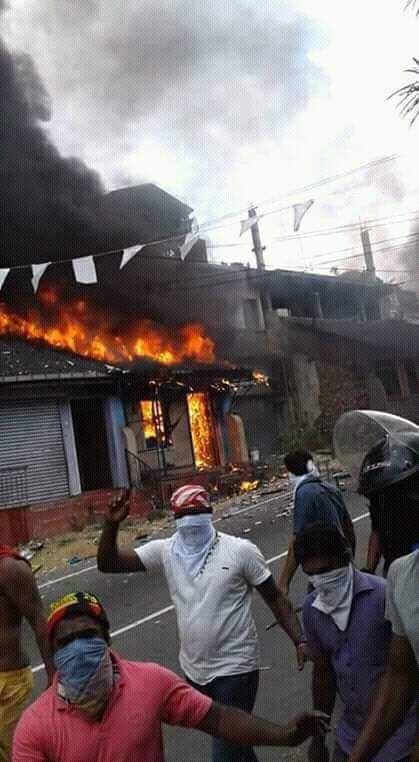 When
it comes to Sri Lankan context, it is totally different to that of
above mentioned reality. Many studies have apparently proved that all
communities in Sri Lanka irrespective of their identities have led a
peaceful and harmonious life for more than thousand years without
downgrading each other, even though there were few exceptional incidents
emerged in the past history. Therefore, pluralism having different
religious identities and ethnic backgrounds is not a new phenomenon to
us as Sri Lankans; rather it rooted very profoundly in the blood of this
nation. Unfortunately, ethnic polarization erupted in middle of 70s and
later, it emerged as a war between the Sri Lankan government and LTTE
which claimed for a separate and autonomous land. Three decades of war
were filled by black memories such as eviction, robber, murder,
kidnapping, torture and bomb explosion that put the country down
economically, politically and socially. During the war that was
intensified in Northern Province, entire nation including the people who
were in southern region faced many difficulties and hardships. For
instance, bus journey from Kandy to Colombo that was only 115 kilo
meters had to pass through more than five check points where all
passengers should get down with their bags for the security purposes.
When
it comes to Sri Lankan context, it is totally different to that of
above mentioned reality. Many studies have apparently proved that all
communities in Sri Lanka irrespective of their identities have led a
peaceful and harmonious life for more than thousand years without
downgrading each other, even though there were few exceptional incidents
emerged in the past history. Therefore, pluralism having different
religious identities and ethnic backgrounds is not a new phenomenon to
us as Sri Lankans; rather it rooted very profoundly in the blood of this
nation. Unfortunately, ethnic polarization erupted in middle of 70s and
later, it emerged as a war between the Sri Lankan government and LTTE
which claimed for a separate and autonomous land. Three decades of war
were filled by black memories such as eviction, robber, murder,
kidnapping, torture and bomb explosion that put the country down
economically, politically and socially. During the war that was
intensified in Northern Province, entire nation including the people who
were in southern region faced many difficulties and hardships. For
instance, bus journey from Kandy to Colombo that was only 115 kilo
meters had to pass through more than five check points where all
passengers should get down with their bags for the security purposes.
Another black page of this bloody conflict is explosions which were
carried out by the terrorist group in public places. This scenario
created fears and tension among general public. Moreover, we had to lost
many lives of our relatives and neighbours. Specially, northern people
suffered a lot. Most teenagers, at their age of education, were
compelled by the terrorist group to join and carry weapons. Thousands of
people including children, pregnant women and elders were evicted
forcibly from north region and they were not given permission to take
land deed or other documents with them. The war continued without having
a sustainable solution even though several the peace negotiation talks
were conducted very frequently with the mediation of foreign
organizations in several occasions. However, the prolonged war came to
an end after continuous sacrifices and dedications carried out by
military forces. Former-president Mahinda Rajapaksha’s regime was able
to eradicate the clutches of terrorism and the entire citizens,
irrespective of religion and faith, celebrated the victory that is still
considered as “second independence”. The expectation of the society at
that time was to bring a real peace and co-existence among the
communities that were not prevalence for approximately three decades.
Mahinda Rajapaksha had a golden opportunity to re-unite the nation and
to be celebrated as a national leader or hero. But, unfortunately, what
happened was totally different to the aspirations of general public.
New public figures, who were totally absent during the past, emerged
instantaneously and became the leader of some movements that appeared
with religious identity even though directed by political players. Hate
speeches against Sri Lankan Muslims stormed very often in public
meetings and media conferences. Further, the newly emerged group of
racists fostered the mistrust and misunderstanding among the
communities. Such intensified propaganda had created some negative
consequences in the collective phycology as well as attitude of both
Sinhalese and Muslims. Brutal attacks, which were staged repeatedly in
several places such as Aluthgama and Kandy,
made a rift in the relationship between two respective communities.
Both regimes, which came to power following to the victory, have
somewhat failed to fulfil their promises in terms of the security of
minority Muslim who played a pivotal role in nation building process
throughout the history. Those who were in high positions and
authorities, except few, prefer not to utter even a condemnation against
the unethical and injustice attacks led by some religious leaders on
innocent people.
Social media, especially Facebook and WhatsApp, played a negative role
in promoting racism and bigotry. It is obvious that some people
forwarded and shared what they received in social media without
verifying the information. Some past incidents got rebirthed again and
again. Hatred speeches that played with the emotions and feelings of the
society were circulated by the followers.
Read More
