Peace for the World World ! Your War Our Lives

The Dalai Lama
A Brief Colonial History Of Ceylon(SriLanka)
Sri Lanka: One Island Two Nations
A Brief Colonial History Of Ceylon(SriLanka)
Sri Lanka: One Island Two Nations
(Full Story)
Back to 500BC.

Sunday, May 20, 2018
'Maduro would beat Jesus': Venezuelans lament rigged system as election looms
Many fear dirty tricks will keep the unpopular president in power, but the opposition is urging people not to boycott Sunday’s vote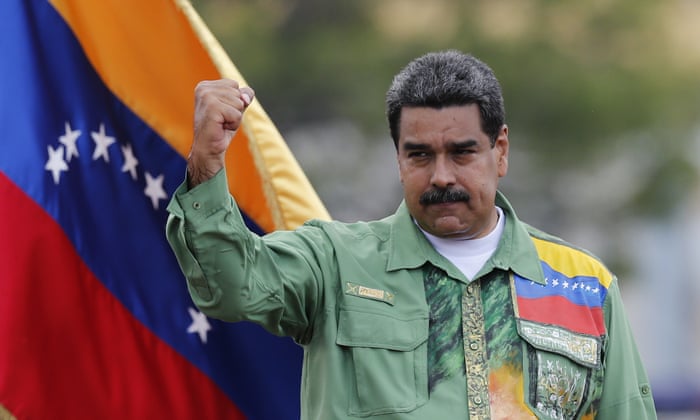 Venezuela’s
president Nicolás Maduro is seeking another’s term, despite leading the
country into an economic crisis. Photograph: Ariana Cubillos/AP
Venezuela’s
president Nicolás Maduro is seeking another’s term, despite leading the
country into an economic crisis. Photograph: Ariana Cubillos/AP John Otis in Caracas @JohnOtis-Sat 19 May 2018
After denouncing Venezuela’s food shortages and hyperinflation in a speech ahead of Sunday’s presidential election, the opposition candidate, Henrí Falcón, sat in his campaign bus, sucking a throat lozenge – and chewing over his predicament.
Falcón ought to be the favorite. He’s up against Nicolás Maduro, the deeply unpopular and increasingly authoritarian president who is seeking another six-year term despite leading this oil-rich nation into its worst economic crisis in decades.
Yet Falcón is the underdog.
He’s resigned to the usual dirty tricks from the ruling Socialist Party, including the use of state food hand-outs to lure hungry people into voting for Maduro.
But what most infuriates him is friendly fire: Venezuela’s largest opposition parties are denouncing Falcón as a stooge for participating in an election they say will be a sham – and which they have vowed to boycott.
“This makes it a lot more complicated,” Falcón admits. “But we are going to take risks and follow the democratic path. Now is not the time for politicians to go into hiding.”
Falcón has been buoyed by polls that show him either ahead or within striking distance of Maduro. He also points to research showing that even on an unfair electoral playing field, it’s almost always better to participate than to stand down.
A 2009 study by the Brookings Institution of more than 100 electoral boycotts – from Afghanistan to Iraq to Peru – found that their goal of rendering elections illegitimate in the eyes of the world was rarely achieved. Instead, they left the boycotting parties in an even weaker state.
Javier Corrales, a Venezuela expert at Amherst College, says that Sunday’s election presents an extremely rare opportunity for voters to remove an autocrat through peaceful means. Surrendering to Maduro, he says, “is the biggest mistake I’ve seen the opposition make in a decade.”
 Henrí Falcón, the Venezuelan opposition presidential candidate, at a rally. Photograph: Federico Parra/AFP/Getty Images
The leaders of the largest of the 20-some parties that make up the opposition coalition claim that electoral conditions are so grossly weighted in Maduro’s favor that voting on Sunday would be pointless.
Most electoral officials are Maduro loyalists who, in past elections, have turned a blind eye to vote tampering and the last-minute relocation of polling places in opposition strongholds.
The government controls most TV and radio stations which transmit a constant stream of of pro-Maduro propaganda. It is also fomenting the notion that the ballot is not secret and that people who vote for the opposition will lose government jobs, public housing, and vital food handouts.
