Peace for the World World ! Your War Our Lives

The Dalai Lama
A Brief Colonial History Of Ceylon(SriLanka)
Sri Lanka: One Island Two Nations
A Brief Colonial History Of Ceylon(SriLanka)
Sri Lanka: One Island Two Nations
(Full Story)
Back to 500BC.

Saturday, May 19, 2018
Sri Lanka, Nine Years After the War
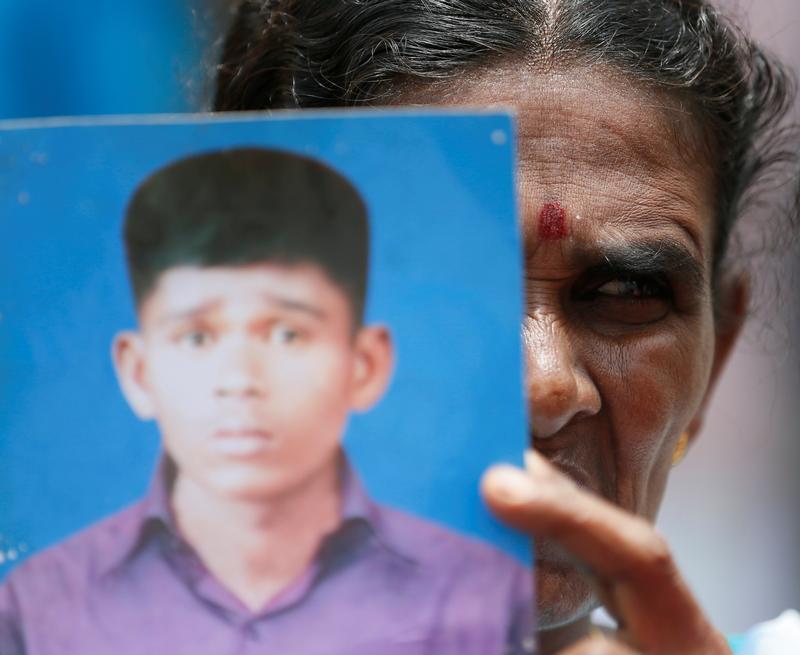
A woman holds up an image of her family member who disappeared during
the civil war with the Liberation Tigers of Tamil Eelam (LTTE) at a
silent protest to commemorate thethe International Day of the Victims of
Enforced Disappearances in Colombo, Sri Lanka , August 30, 2016.
© 2016 ReutersTejshree Thapa-May 18, 2018
Senior South Asia Researcher

The images are vivid. Soldiers standing over the body of the brutal
leader of the Liberation Tigers of Tamil Eelam (LTTE) separatist
insurgency, who was for so long considered invincible.
Mahinda Rajapaksa, who was president at that time, kissing the ground in
gratitude for the end of a 27-year-long war that resulted in hundreds
of thousands killed, injured, or displaced.
On May 19, 2009, there was general elation in Sri Lanka that the fighting was over.
The government’s victory, however, had come at the cost of serious
violations of the laws of war by both sides. During the conflict the
LTTE committed sectarian massacres, political assassinations and suicide
bombings, widely deployed child soldiers, and executed detainees.
The Sri Lankan military committed countless arbitrary detentions,
extrajudicial killings, and enforced disappearances. Abuses in the last
stages of the fighting were shockingly egregious. The army
indiscriminately shelled civilians used as human shields by the LTTE.
Trophy videos emerged of summary executions of prisoners, and of
soldiers jeering over the bodies of women combatants whom they had
stripped, possibly raped, and murdered.
Nine years after the war’s end, the search for justice—and answers –
remains elusive. Most of the LTTE leadership was wiped out during the
final weeks of the conflict, and there are few who can be held
accountable for their atrocities today. The LTTE fighters who surrendered at war’s end have been permitted to return home, but over a hundred are still missing.
Some families of the forcibly disappeared have been holding outdoor
vigils continuously for over a year seeking answers, despite
declarations from the president and prime minister that all the missing
are dead.
In 2015 the government responded to intense pressure from victim
communities and local activists by pledging to set up transitional
justice mechanisms.
While progress has been slow, the Office of Missing Persons has finally begun hearings.
The goal now should be to ensure answers, accountability, and
reparations. For families of the disappeared, it has been too many long
years of waiting.
