
 (SYRIA)
- Last month, 186 of the 193-Member States of the UN claimed that they
want all foreign forces out of Syria. Iran with its 18 Shia militia
recruited from the region, Russia, America, France, the UK—the Lot.
(SYRIA)
- Last month, 186 of the 193-Member States of the UN claimed that they
want all foreign forces out of Syria. Iran with its 18 Shia militia
recruited from the region, Russia, America, France, the UK—the Lot.Peace for the World World ! Your War Our Lives

The Dalai Lama
A Brief Colonial History Of Ceylon(SriLanka)
Sri Lanka: One Island Two Nations
A Brief Colonial History Of Ceylon(SriLanka)
Sri Lanka: One Island Two Nations
(Full Story)
Back to 500BC.
Wednesday, May 30, 2018
The Multiple Stepmothers of Daesh (ISIS) in Syria - Part I
UN
agencies have repeatedly been threatened with expulsion from Syria if
they deviate from the widely disputed claimed number of 350,000 people
killed, whereas, the facts support the number to be over a million.

Above is a rare photo made available to this observer by Naam Shaam
showing “Ahman” of Mssrs. Zahran Alloush, Hassan Abboud and Isa
al-Sheikh, the leaders of the Islam Brigade (now Islamic Front), Ahrar
al-Sham and Suqour al-Islam respectively, taken upon their release on
3/31/2011 by the Assad regime from the Saidnaya prison 20dm north of
Damascus.
May-24-2018
(SYRIA)
- Last month, 186 of the 193-Member States of the UN claimed that they
want all foreign forces out of Syria. Iran with its 18 Shia militia
recruited from the region, Russia, America, France, the UK—the Lot.
Most urgently wanting all these countries and their proxies out of Syria
are naturally the people of Syria themselves- and the Lebanese, Iraqis,
Yemeni and others is this region dying in Syria for nothing.
More than half a million Syrians have been slaughtered with some
estimates putting the real figure of Syrian killed at over one million,
with four million wounded. This past week, following a White
House-Kremlin Conference call, Russia unexpectedly announced its
intention to leave Syria and that all foreign forces must depart as
well.
This week, rumors from Washington, without offering concrete details,
speculate that President Trump communicated to President Putin an offer
that was way too attractive for him to refuse. Did Trump offer Putin
Syria’s reconstruction--minus the Iranians and their proxies-- if he
helps to expel Iran?
Suddenly, on 5/18/18, Moscow summoned President Assad to come to Souchi
on the Black Sea and shortly thereafter announced that all foreign
forces, including Iran and Hezbollah, must leave as well.
Russia's chief Syria negotiator Alexander Lavrentyev announced that the
withdrawal of foreign troops would be done "as a whole" and explicitly
included Iranians and Hezbollah. But as this observer has learned during
more than two dozen visits to Syria and Iran over the past more than
six years, Iran has no intention of leaving Syria. Nor does the Assad
regime want Iran’s fighters and more than 18 Iranian funded, trained and
armed militias to leave Syria—yet.
Surely, there must be a strategy
Putin surely knows all this, so what’s his presumably carefully considered angle? On 5/23/18, “Syria's deputy foreign minister Faisal Mekdad replied to Vladmir Putin’s insistence that “all foreign forces leave Syria as a whole.”
Asked whether the removal of Iranian and Hezbollah forces could end Israel's strikes on Syria, Faisal Mekdad told RIA Novosti state news agency, with a scorn, that "this topic is not even on Syria’s agenda for discussion."
Iranian officials also reacted testily, with Foreign Ministry spokesman
Bahram Ghasemi telling reporters “Nobody can force Iran to do something
against its will.” According to pro-government propagandist Mohammad
Marandi, a “political analyst” at the University of Tehran “Iranians are
fine with leaving Syria.
They weren’t there in the first place and if the Americans and their
allies hadn’t created this mess in Syria, they wouldn’t be there now.”
Tehran officials, according to students at the University of Tehran are
not happy with Marandi’s unauthorized assertation.
Meanwhile, Russian military officials, including senior military officer
Sergei Rudskoi at a Moscow briefing on 5/23/28 insisted that the United
Nations and other international organizations must pay to “rebuild
Syrian territory recaptured from terrorists by government forces to
consolidate the "successes" of the military campaign.”
The General added, despite some ridicule laughter from the audience,
that “The global community must help fund the al-Assad government to
completely restore any areas that were damaged by military action
against terrorist groups in Syria and restore the economy of Syria.”
More chuckles from the audience.
Finally, Rosko ended his appeal with: “Currently all the conditions have
been created to restore Syria as a single, non-sectarian undivided
state. We will forget the past seven years. But to achieve this aim, not
only Russia needs to make efforts, but also the other members of the
international community must pay the major share." Rudskoi said. More
open laughter from the audience.
War in Syria is costing a pretty penny
Some 6.1 million people are now internally displaced in Syria, more than
five million have fled the country and 13 million including six million
children urgently need aid, according to the U.N.
More than one million may have been killed but UN agencies have
repeatedly been threatened with expulsion from Syria if they deviate
from the admittedly old and widely disputed claimed number of 350,000
killed. So, the UN continues to use a lower figure knowing that it is
not accurate.
The U.N. estimates that $9 billion is needed in 2018 alone to help those
in need inside Syria and living as refugees in neighboring countries,
but international donors in April pledged only $4.4 billion at a
conference in Brussels.
Two congressional sources on the US Senate Foreign Relations Committee
scoffed at the Russian proposal about raising money to rebuild Syria.
One told this observer, “I promise you that the US Congress will not
contribute one penny to rebuild Syria, until the Iranian, Russian,
Americans and all other foreign forces are long gone from what was a
beautiful country. Obviously, Putin, in addition to his dour
expressions, has a sense of humor after all!”
Neither Iran or Russia has a fraction of the $ 300-400 billion to
rebuild Syria and the global community will likely not touch the subject
until a democratic government exists in that largely destroyed country.
Among the early Stepmothers still nurturing ISIS in Syria are the Assad regime and Iran’s Supreme Leader-but they are not the only ones
In private, Iranian officials imply that Iran owns Syria having bought and paid for it with Iranian money and blood and does not intend to leave Syria or abandon its deep and expanding penetration of the region.
This is partly because, in the words of Mohsen Sazegara, a founding
member of Sepah Pasdaran (Al Quds Force of the IRGC), “One of Iran’s
wings will be broken if we abandon Assad and he falls or if we leave the
region.”
Sazegara added, “Iranian officials will continue using all their
contacts in Iraq, Lebanon, Yemen, Bahrain and elsewhere to keep
President Assad in power.
If there are 20 Shia in any country on this planet who need our help we
will set up an intelligence and military operation inside that country
to defend them. That is our moral and religious duty as Muslims from
Karbala! Who can stop us?” The fact is that that ISIS and more than a
dozen jihadist militia did not exist in Syria at the time of the Dar’a
graffiti writers in March of 2011. Al-Nusra wouldn't arrive in Syria
until many months afterward. So how did they so quickly arrive in Syria?
“We—Against the Terrorists”
The rare photo shown above was made available to this observer by Naam
Shaam showing “Ahman” of Mssrs. Zahran Alloush, Hassan Abboud and Isa
al-Sheikh, the leaders of the Islam Brigade (now Islamic Front), Ahrar
al-Sham and Suqour al-Islam respectively, taken upon their release on
3/31/2011 by the Assad regime from the Saidnaya prison 20dm north of
Damascus.
All these gentlemen went on to form different Islamist groups that
became some of the largest and most heavily armed and supported factions
“fighting” against the regime in Syria. Hundreds of other Islamists
were also released knowing that they would immediately organize
“anti-Regime militia”. The project was a hoax from the beginning with
all these groups highly infiltrated by regime security agencies. This
was the plan of the Iranian advisers and the Assad regime to create a
“We—Against the Terrorists” paradigm for the consumption of the Syrian
public and outsiders to buy into “foreign terrorists sent by outsiders
(the Americans, UK, Saudi’s et al) have arrived!” deception.
Around the same time, Abu Mohammad al-Fateh al-Jolani, the leader of the
Syrian offshoot of Al-Qaeda, al-Nusra Front, also was allowed into
Syria from Iraq. ISIS spokesman Abu Mohammad al-Adnani revealed in a
speech in May 2014 that the group has refrained from attacking Iranian
forces “acting upon the orders of al-Qaeda to safeguard Iran’s interests
and supply lines to Lebanon.”
Internal Syrian state security documents leaked to the media in early
2014 provided further proof that some Islamist armed groups fighting in
Syria, particularly Daesh, had been deeply infiltrated by the Iranian
and Syrian regimes and had been coordinating with it to a large extent.
One such document is an alleged letter signed by Colonel Haydar Haydar,
the head of the ‘security committee’ in the town of Nabl, near Aleppo,
and addressed to Major-General Ali Mamlouk, the head of the National
Security Office.
It reveals arrangements for training and arming hundreds of Iranian
recruited Shia volunteers, who are said to be “ready to fight on
frontlines or join the ranks of Islamist groups.”
Mohammed Al-Saud a high ranking former regime official who defected
after witnessing the torture and killing of an innocent 13-year one boy
has testified: “In 2011, the majority of the current ISIS leadership was
released from jail by Bashar Al Assad,”
The former member of the Syrian Security Services told the Abu Dhabi
newspaper, the National, on condition of anonymity, that with the Assad
regime and Iran’s help, by 2012 it was estimated that, despite the open
rift with their earlier partners Al Qaeda, ISIS had almost doubled its
previous numbers to 2,500 fighters. According to journalist Simon
Speakman Cordall, writing in the UK Guardian, Mohammed Al-Saud was under
no illusions when he reported: “In 2011, that most of the current ISIS
leadership was released from jail by Bashar Al Assad.
“No one in the regime has ever admitted this or explained why.”
Al-Saud, a Syrian dissident with the National Coalition for Syrian
Revolutionary and Opposition Forces, left Syria under threat of arrest
in 2011. He claims that released prisoners were members of ISIS.
“Abu Muhammad al-Joulani, (founder of the Jihadist group, Jabhat
al-Jabhat al-Nusra) was rumored to be there. Mohammed Haydar Zammar,
(one of the organizers of the 9/11 attacks) was there. According to
Al-Saud, this is where the Syria-Iran part of ISIS was born.
“The situation in there and my friends say it’s the same in all regime
prisons, is like the middle ages. There were too many people and not
enough space. There wasn’t enough water to drink.
"There wasn’t enough food to eat and what there was would have been
ignored by dogs in the street. Torture was an everyday reality. After
years in there, all those people became Salafists and in a bad, bad way.
Just as the regime and Iran planned.” Within days of the March 11, 2011
peaceful demonstrations in Dar’a, South Syria and a 14-year old student
who this observer has been honored to visit with in Turkey, wrote some
graffiti on a neighborhood wall that mentioned President Assad and
Iran’s “Supreme Leader”.
Ali Khamenei understood that the dozens of demonstrations which quickly
sprung up across Syria constituted existential threats to Iran’s plans
for Syria. The protests quickly spread to Homs and the city was soon
dubbed “the capital of the revolution.”
According to the intelligence think-tank Stratfor, thousands of whose
emails were leaked by WikiLeaks in March 2012, members of Sepah Pasdaran
and Hezbollah were deployed in Dar’a and other parts of Syria in the
early days of the March 2011 revolution to “stand behind Syrian troops
and kill them immediately if they refused to open fire on other Syrian
soldiers who refused to kill Syrian civilians who were demonstrating
peacefully." Yet, the plans of Iran and Syria were and remain divergent.
The Asaad regime wants to stay is power at any cost and the Iranian
regime intends to absorb Syria at any cost. But for the time being they
need one another.
Ali Khamenei also knew from experience that to counter the student
graffiti and the nearly instant uprising of civilians spread employing
the powerful message from the kids which was “Democracy Now and Regime
change to achieve it!” it was essential to create an enemy, a WE-THEY”
to draw attention from the Assad regime’s oppressive rule.
“The other” were quickly defined as Western, Israeli and Gulf-imported
jihadi terrorists and the decision was made to arrange for some
“Takfiri’s” to launch acts of terrorism against civilians in Syria
without delay.
Erasing evidence of crimes against humanity
The Assad regime moved quickly and began releasing hundreds more of
hardened jihadists from more than a dozen Syrian prisons. Three of the
most experienced and committed jihadists released as noted above, were
Zahran Alloush, Hassan Abboud and Isa al-Sheikh, the leaders of the
Islam Brigade.
They were released by the regime from the Sadnaya prison (dubbed by
locals as the “Slaughterhouse”) where more than 50,000 have been
reportedly butchered and photographed by “Caesar.”
Over the past few years to erase evidence of crimes against humanity,
some bodies have been cremated in a gas chamber on the western edge of
the facility.
In mid-2011, the regime worked to locate and organize “terrorists” to
justify the Assad regime and Iran waging war against the nearly 90% of
the civilian population of Syria seeking a democratic government. Other
actions by the Assad regime in the early stages of the revolution, and
under direction from Iranian “advisors” were again designed to reinforce
the “WE-THEY” dynamic
commonly employed by despots for public consumption. “The regime did not
just open the door to the prisons and let these extremists out, it
facilitated them in their work, armed them with cash and weapons in
their creation of armed brigades,” a former member of the Syrian
Security Services, Mohammas Al-Saud told the Abu Dhabi newspaper, the
National, on condition of anonymity.
“The regime knew what these people were. It knew what they wanted and
the extent of their networks. Then it released them. These are the same
people who are now spreading across the region and globally.”
Al-Saud added that “Al Qaeda are extremists. They’re terrorists, they’re
everything you want to say about them, but they’re operating to a
central creed. ISIS are simply a bunch of ignorant young men who have
been brainwashed into thinking what they’re doing is right.”
The news agency also quotes a Lebanese security official saying: “Even
if Hezbollah has its wise men, the decision [to fight in Syria] is not
theirs. The decision is for those who created and established Hezbollah.
They are obliged to follow Iran’s orders.” Sheikh Subhi al-Tufayli, who
led Hezbollah Lebanon between 1989 and 1991 before he fell out with the
Iranian regime, told Reuters in an interview in 2013 that Hezbollah’s
decision to intervene in Syria had been entirely down to Iran:
“I was secretary-general of the party and I know that the decision is
Iranian, and the alternative would have been a confrontation with the
Iranians. I know that the Lebanese in Hezbollah, and Sayyed Hassan
Nasrallah more than anyone, are not convinced about this war in Syria.”
In another interview in July 2013, al-Tufaili said: “Although Iran does
not get involved in all the little details of Hezbollah Lebanon,
political decisions are always 100% Iranian."
Documents reveal Assad's militant assistance
Syrian President Bashar Assad's regime has negotiated, starting in late 2011 and deals with the Islamic State's (IS) “Oil Ministry” that at one point contributed up to 72% of the militant group's profit from natural resources, The Wall Street Journal reported in 2015.
This and other information was uncovered during a raid on the home of
Abu Sayyaf, the Islamic State "oil minister" who was killed by US
Special Forces at his Syria’s Deir Ezzour compound.
Abu Sayyaf's records show that ISIS negotiated scores of agreements with
the Assad regime to allow Islamic State trucks and pipelines to move
from regime-controlled fields through territory controlled by the
Islamic State which brought in roughly $40 million a month in oil sales
alone. The Assad regime's oil and gas ties to the Islamic State have
been well documented with four Syrian government officials, including a
Russian-Syrian businessman named George Haswani, were sanctioned by the
US for serving as middlemen between Assad and ISIS for oil deals.
"In exchange for gas, the regime provides utilities like electricity,
which ISIS taxes accordingly," wrote Matthew Reed, the vice president of
Foreign Reports Inc., a Washington, D.C.-based consulting firm focused
on oil and politics in the Middle East.
One document, identified as Memo No. 156 and dated February 11, 2015,
said agreements allowing trucks and pipeline transit from
regime-controlled oil fields through ISIS-controlled territory were
already in place.
The documents also confirmed previous estimates as to how lucrative the
deals were. A senior US treasury official estimated that ISIS made more
than $500 million a year trading oil with the Assad regime.
In this context, Assad and ISIS became close partners with the Assad
regime being “stepmother” of the Jihadist militia from weeks after the
beginning of the 2011 revolution.
Witnesses in Syria to some of these oil transactions explain that in his
defense, President Assad used some of the money the regime received to
buy electricity, water, home fuel and other essentials for the besieged
civilian population of Syria.
I credit these testimonies and would argue that therefore these
Assad-ISIS “dealings” are not war crimes or crimes against humanity to
be part of the indictments of the future Special Tribunal for Syria
(STS).
Iran’s nurturing arms for ISIS
The ‘tipping point’ behind the Iranian regime’s decision to adjust its
Syria strategy from an indirect, supervisory and supporting role to
heavy, direct involvement appears to have occurred in Summer 2012, after
Syrian rebels captured large sections of Aleppo and of the suburbs of
Damascus.
Fearing that the Assad regime would soon collapse, Tehran reportedly
dispatched senior Sepah Pasdaran commanders skilled in urban warfare to
supervise and direct military operations.
According to US and Iranian officials, Sepah Qods established “operation
rooms” to control cooperation between Sepah Pasdaran, Syrian regime
forces and Hezbollah Lebanon. In June 2012, Syrian rebels in Aleppo
claim to have intercepted and recorded a radio transmission between an
Iranian commander and a commander from Hezbollah in which the first
gives the second military instructions. The month before, media reports
claimed Hezbollah fighters were involved in the Douma and Saqba
massacres near Damascus. From before this date Iran was in deep in Syria
working in many ways with ISIS
Well dear reader, if Bashar Assad, Ali Khamenei and Hassan Nasrallah, among others are Stepmothers of ISIS. Who’s the Mother?
COMING: Part II offers a humble thesis for consideration.
_________________________________________
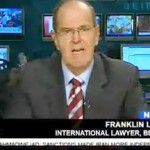 Dr. Franklin Lamb is
a visiting Professor of International Law at the Faculty of Law,
Damascus University and volunteers with the Sabra-Shatila Scholarship
Program (sssp-lb.com).
Dr. Franklin Lamb is
a visiting Professor of International Law at the Faculty of Law,
Damascus University and volunteers with the Sabra-Shatila Scholarship
Program (sssp-lb.com). He is working with the Palestine Civil Rights Campaign in Lebanon on drafting legislation which would, if adopted by Lebanon’s Cabinet and Parliament, grant the right to work and to own a home to Lebanon’s forgotten Palestinian Refugees. One part of the PCRC legislative project is its online Petition which can be viewed and signed at:petitiononline.com/ssfpcrc/petition.html.
Franklin Lamb’s book on the Sabra-Shatila Massacre, International Legal Responsibility for the Sabra-Shatila Massacre, now out of print, was published in 1983, following the death of Janet Lee Stevens, whom it was dedicated to. He was a witness before the Israeli Kahan Commission Inquiry, held at Hebrew University in Jerusalem in January 1983.
We are very proud to have Dr. Franklin Lamb on the Salem-News Team.
