Peace for the World World ! Your War Our Lives

The Dalai Lama
A Brief Colonial History Of Ceylon(SriLanka)
Sri Lanka: One Island Two Nations
A Brief Colonial History Of Ceylon(SriLanka)
Sri Lanka: One Island Two Nations
(Full Story)
Back to 500BC.

Saturday, May 19, 2018
The Selfless Leader & The People’s Lawyer
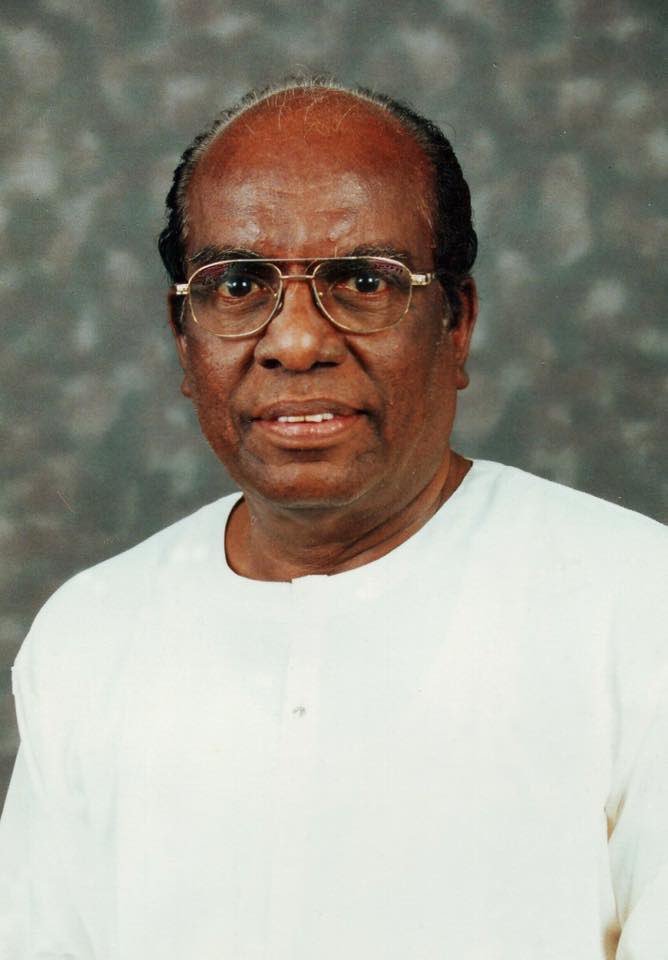
By Janahan Dhanabalasingam & Kumaresan Purantharan –MAY 16, 2018

Appathuray Vinayagamoorthy, a distinguished Tamil political leader,
former Member of Parliament for Jaffna District, Leader of the All
Ceylon Tamil Congress and well-known Human Rights Lawyer bade adieu to
the world on 28 May 2017. In his long arduous political journey,
spanning nearly six decades, he made a niche for himself in the Tamil
political arena not by seeking to achieve fame but by serving the
downtrodden. He was honest, straightforward and unswerving in his
commitment to the Tamil nationalist struggle. This tribute is penned to
mark the First Year Death Anniversary of this great human being.
Political Entry
Appathuray Vinayagamoorthy
Vinayagamoorthy made his political entry in the 1950s by enlisting
himself with the All Ceylon Tamil Congress founded and headed by GG
Ponnambalam QC. At the time, in Tamil politics two giant personalities
were ruling the roost, GG Ponnambalam and SJV Chelvanayakam QC, though
belonging to competing camps. Vinayagamoorthy,
an Interpreter Mudaliyar at the time, was enamoured by Ponnambalam’s
fiery argument and mesmerizing speeches. He committed himself to serve
the people under the leadership of Ponnambalam. In no time, he became
the trusted lieutenant of Ponnambalam running his political campaigns to
magnificent victories.
With the demise of Ponnambalam, his son Kumar Ponnamabalam, a youth wing
leader of the party, assumed his father’s mantle. Long-established
rapport Vinayagamoorthy enjoyed with Kumar ensured smooth transition of
mantle of leadership with both being able to move forward. The duo
participated in the All Party meeting convened by the then President J R
Jayawardene on 21 December 1983 in Colombo. Vinayagamoorthy contested
the parliamentary general election for Jaffna district held in 1989. Due
to the abnormal situation that prevailed in the peninsula at the time,
he could not engage in campaign for the election. The All Ceylon Tamil
Congress contested the parliamentary general election for Colombo held
in 1989 as well. Kumar was the chief candidate with the list including
distinguished people like Vinayagamoorthy, Dr Kumaraguruparan and
Educationist Arunasalam. The ACTC failed to secure any seat as the
Tamils in Colombo voted for either of the two major parties, the UNP and
the SLFP, a worrying trend still lingering. Raising voice for the
Tamils from the south was no easy task given the political climate in
the country at the time. Yet, nothing deterred these fearless leaders.
Human Rights Attorney
In 1980, whilst in the government service, he enrolled with the
University of Colombo as an external student to read Law. In 1983, he
graduated and in the year 1985 he oath as an Attorney-at-Law of the
Supreme Court of Sri Lanka. After devilling under Kumar, he established
his own practice. Making money was never his motivation. Rather, he
devoted his entire legal career to serving the innocent Tamil youths
incarcerated under the Prevention of Terrorism Act and Emergency
regulations without payment. He appeared for thousands of innocent Tamil
youths on pro bono basis expecting nothing in return. Vinyagamoorthy
appeared for Periyasamy Chandrasekaran, former cabinet minister, when
the latter was arrested and detained under the PTA and secured his
release. He never failed to make it a point of visiting Tamil political
prisoners in prisons and detention centres across the country despite
his ill health.
Vinayagamoorthy’s contribution to the fundamental rights can be
illustrated by two landmark judgments passed by the Supreme Court. A
Tamil youth, Vijayan Vimalenthiran was arrested by army officers under
the Emergency Regulations from a lodge in Colombo on suspicion of
involvement with the assassination of the Late President Premadasa. He
was detained at Panagoda army camp without being produced before a
Magistrate, a flagrant violation of the law. Vinayagamoorthy lodged a
fundamental rights application with the Supreme Court on behalf of
Vimalenthiran against the unlawful arrest and detention. The Application
came up before a three-member bench comprising Justices ARB
Amarasinghe, Wijetunga and Anandacoomarasamy. The bench in a landmark
judgement held that fundamental rights of the Applicant guaranteed under
Article 13 (1 ) and (2 ) were infringed. The Supreme Court held that no
arrest can be made in contravention to the requirements laid down by
the regulation. This case, A Vinayagamoorthy Vs Army Commander and
Others is reported in the Sri Lanka Law Report ( 1997 ( 1 ) SLR and
incorporated in the syllabus of the Sri Lanka Law College.
Another Tamil youth from the north, Nagamany Theivendran was arrested in
Colombo in 1996 by the Terrorist Investigation Department ( TID ) under
the Prevention of Terrorism Act (PTA) for undertaking armed training
with the LTTE and being involved in activities for the movement. The
Attorney General indicted him in the Colombo High Court. Vinayagamoorthy
appeared for the accused. The only evidence relied by the prosecution
was the confession purported to have been given by the accused
voluntarily without duress in police custody. Vinayagamoorthy argued in
the Voir Doire inquiry that the confession was extracted through torture
and there was no corroborative evidence to implicate the accused and
hence the confession can not be used against the accused. Though absent
any corroborative evidence, the High Court after trial sentenced the
accused to seven years rigorous imprisonment solely on the footing of the confession.
Read More
