Peace for the World World ! Your War Our Lives

The Dalai Lama
A Brief Colonial History Of Ceylon(SriLanka)
Sri Lanka: One Island Two Nations
A Brief Colonial History Of Ceylon(SriLanka)
Sri Lanka: One Island Two Nations
(Full Story)
Back to 500BC.

Wednesday, May 23, 2018
What Are We Borrowing For?
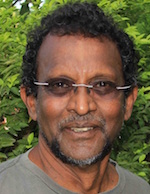
Dr Ranil Senanayake
 In the current tussle for political credibility, borrowing money for ‘development’
is equated with success. All politicians laud ‘development’ without any
idea of what it means. The question ‘what is development’ was asked as
early as February 1978, but our ‘leaders’, from that time onwards never
had a answer and are still stuck in the same old rut of blind
consumerism, enriching themselves and their cronies while getting the
population deeper and deeper into debt.
In the current tussle for political credibility, borrowing money for ‘development’
is equated with success. All politicians laud ‘development’ without any
idea of what it means. The question ‘what is development’ was asked as
early as February 1978, but our ‘leaders’, from that time onwards never
had a answer and are still stuck in the same old rut of blind
consumerism, enriching themselves and their cronies while getting the
population deeper and deeper into debt.
Meaning of Development (1978)
Development and progress are words that we are very familiar with and
rightly so. As a nation all our hopes and aspirations are centred around
the promises attendant on these processes. Yet recently there have been
some questions on the values of ‘development’, and as in every
controversial issue, the battle lines have been drawn. the combatants
are, as is usual in these affairs, mostly from developed countries. the
people of developing countries, more often than not, are mere witnesses
to these esoteric exchanges. I do not intend to imply that these
arguments are not valid; rather I would like to draw attention to the
fact that often both points of view have their references deeply rooted in ‘developed’ or Western technological thought.
Development in the context of the current usage of the word certainly
seems wedded firmly to Western technological thought. Whether we use it
to describe an economic order or a social order, the roots are the same.
e word development carries other connotations
in the context of present usage. It suggests that the country to be
‘developed’ is some way inferior to the model to which it aspires to
become. the point here is: inferior by whose standards? To an
industrialist from a Western country, a poor village in the third World
does indeed need to be developed. A view, that will more often than not,
be held by the rulers of the same country. To quote Richard Gott (CDN
1978).
“With the formal ending of colonial rule in all three continents of the
third World, political independence was granted a tiny elite trained not
to question the framework within which the world economy operated.”
It is this elite that laid the foundation for education of people in
those countries, thus the value system operating and transmitted was
certainly not endemic. With this perspective in mind, lets us attempt to
look at ourselves.
We in Sri Lanka are continually talking about development. I believe
that in the end this merely means an increase in industry and
consumerism. It most certainly could not refer to a cultural or a
philosophical development.
A country in which a major part of her population comprehends
philosophical concepts that are addressable only by a minority of
scholars in the West must certainly be, in comparative terms, more
developed. An argument could be made that we also do not need to be more
developed in our agriculture. Does an agricultural system that does not
rely on any form of energy subsidy, other than biological energy, need
to be ‘developed’ so its productivity becomes reliant on subsidized
energy?
In the so-called developed world active research is under way for
systems which are not subsidised by fossil fuel. We have it – and yet
want to disrupt it in favour of energy intensive agricultural practices.
Could this trend be attributed to the fact that most of our scholars
are trained to look at problems in a purely Western technological
perspective? Of course, all of us want to utilize our training for
national good, but we should be careful and try to objectively evaluate
the long-range repercussions of increased energy dependence.
Hartford Tomas (CDN 1978), who is a proponent of third World
development, comments on the help given by developed countries to the
‘to be developed countries’:
“The philosophy of development from the grassroots comes up from the
professionals, in Robert McNamara’s annual speeches and in the work of
Schumacher’s intermediate development group.”
Well now, with all due respect for this illustrious gentlemen, I submit
that the grassroots existed long before Robert McNamara’s discovery of
them, and that if one reads Schumacher’s Small is Beautiful, one
gets the distinct impression that Dr. Schumacher took many beautiful
things from so called ‘underdeveloped’ countries. I do not mean to
belittle the great words of these scholars, but wish to point out that
they are addressing the developed world. So then, what help do we need
from the professionals? To tell us what we already know about ourselves
in ‘developed jargon’?
So we are still confronted with the dubiousness of the meaning of
development. It would seem bizarre indeed if it transpired that we have
been developing for the past 30 odd years mainly in a Western
technological perspective. Some indication of our development can be
addressed if we look at these questions in terms of the goals identified
by those who describe the path. One of the standard answers to the
development question is: the goal is economic growth. On this point
Prof. Dudley Seers says, “in fact, it looks as if economic growth may
not merely fail to solve social and political difficulties, certain
types of growth can actually cause them”.
An important question is: who accepts responsibility for the results of
this monomania for economic growth? Are we, by changing the value
system, creating an artificial need for goods and services non-
essential to our well-being as measured by any endemic standards? It may
be useful to reflect again on a statement by Prof. Seers: ‘the social
barriers and inhibitions of an unequal society distort the personalities
of those with high incomes no less than those who are poor. Trivial
differences of accent, language, dress, customs etc. acquire an absurd
importance and contempt is engendered for those who lack social graces,
specially country dwellers’.
Now let us take a case-in-point. Last week in the suburbs of Colombo,
five youths were picked up for theft by the police. they each had on
them at least Rs. 1000 worth of apparel (imported shirts, imported
trousers, imported wristwatches, imported socks). their occupation? they
were unemployed. How did they earn the money with which to buy the
goods? they stole produce and other sellable items from the village.
What was their need? they had to maintain their status (tathwaya). Is
this development? How did these values come about? A.M. Hocart, who was
the head of the Ceylon archaeological survey, wrote some poignant words
that bear relevance to these phenomena.
Read More
