Peace for the World World ! Your War Our Lives

The Dalai Lama
A Brief Colonial History Of Ceylon(SriLanka)
Sri Lanka: One Island Two Nations
A Brief Colonial History Of Ceylon(SriLanka)
Sri Lanka: One Island Two Nations
(Full Story)
Back to 500BC.

Friday, June 1, 2018
LTTE bogey to scuttle Constitution making As many countries Governments conduct affairs on old Constitutions, in Sri Lanka, these are viewed as tools to grab power or to sustain grabbed power
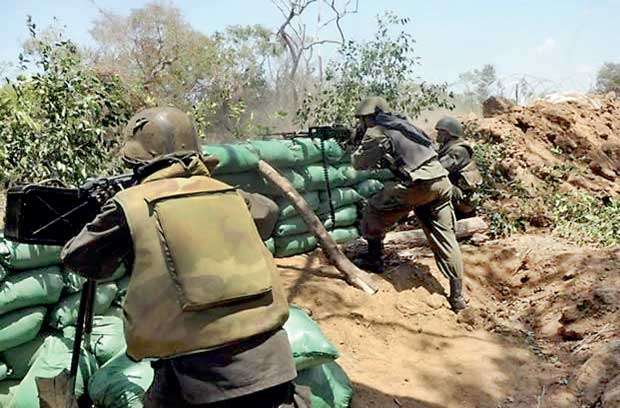
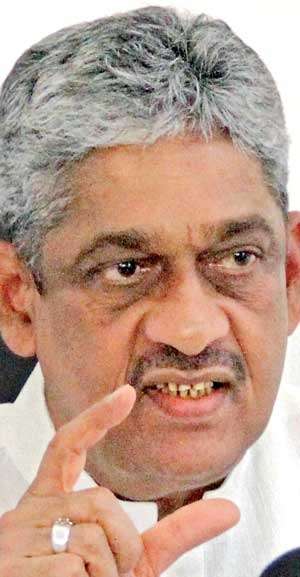
LTTE bogey came to a head when the Rajapaksa loyalists accused Sarath Fonseka, being an LTTE agent when challenged Rajapaksa
Sri
Lankan politicians have a habit to look for a nexus between the ethnic
issue and anything under the sun, in order to convince their community
The
constitutional issues such as the mode of governance are the ones
having far-reaching effects on the future of the country as well as its
people
 2018-06-01
 It
is interesting and in a way puzzling to note that the political parties
and leaders who agitated to scrap the Executive Presidential system of
Governance during the height of the separatist war, are now expressing
fear to do so, on the grounds that the country would be divided.
It
is interesting and in a way puzzling to note that the political parties
and leaders who agitated to scrap the Executive Presidential system of
Governance during the height of the separatist war, are now expressing
fear to do so, on the grounds that the country would be divided.
The Sri Lanka Freedom Party (SLFP) group functioning under former
President Mahinda Rajapaksa, Mahajana Eksath Peramuna (MEP) led by
Dinesh Gunawardane, Wimal Weerawansa and his party men, who were then
members of the Janatha Vimukthi Peramuna (JVP), the group of 16 of the
SLFP and many others who are now aligned with the former President were
agitating to abolish the Executive Presidency some time back.
At the 2005 Presidential Election, these groups supported the candidacy
of Mahinda Rajapaksa, whose main pledge was to do away with the
Executive Presidential form of governance.
It was a time when the entire Vanni, a part of the Jaffna Peninsula and
many parts of the Eastern Province were under the control of the
Liberation Tigers of Tamil Eelam (LTTE) and the United National Front
(UNF) Government of Prime Minister Ranil Wickremesinghe was begging the
Tamil rebel group to return to the negotiating table.
Even Rajapaksa, who went back on his words to abrogate the previous UNP
Government’s Ceasefire Agreement (CFA) and the peace process resumed
talks with the LTTE, despite the organisation having attempted on the
life of his Army Commander the then Lieutenant General Sarath Fonseka.
Yet, his Government stood for the scrapping of the Executive Presidency,
without seeing any danger in doing so. For them, the ethnic issue had
then nothing to do with the form of Governance. Soon after Rajapaksa
assumed power for the second time in 2010, when there was no longer a
separatist war nor a separatist armed group, they tied up the two issues
and even now, they remain the same.
Most Sri Lankan politicians have made it a habit to look for a nexus
between the ethnic issue and anything under the sun, in order to
convince especially their community whatever the point they make and to
justify any crime they have committed or alleged to have committed.
Thus, those soldiers who are accused of harming leading journalists such
as Lasantha Wickramatunga, Keith Noyahr and Upali Tennakoon, are war
heroes as they had fought against the LTTE, whereas the Army Commander
who spearheaded a successful war against the separatists is not.
The northern politicians usually do not touch upon an issue that has
nothing to do with the ethnic problem. Thus they see everything through
the ethnic prism. They criticize their rivals in the region largely for
“betraying the Tamil and their interests to the Sinhalese” and rarely
for corruption or something unrelated to ethnicity.
Their southern counterparts too, especially those in the Opposition, despite they taking up national issues, always attempt to tie them up with the ethnic issue and accuse their rivals of “betraying the Sinhalese and their interests to the Tamils and to the LTTE.
Their southern counterparts too, especially those in the Opposition, despite they taking up national issues, always attempt to tie them up with the ethnic issue and accuse their rivals of “betraying the Sinhalese and their interests to the Tamils and to the LTTE.
Thus, the constitution-making process of the Chandrika Kumaratunga
Government between 1994 and 2000 was seen by the United National Party
(UNP) as a sellout of the country to the LTTE and the UNP members burnt
copies of a draft Constitution within the chamber of the Parliament in
2000.
And the same people who were the members of Kumaratunga’s party then and
under Mahinda Rajapaksa now, want to scuttle the Constitution making
process of the incumbent UNP-led Government, ridiculously on the same
grounds.
Their contention is further preposterous in the light of them having
participated in the various committees appointed to look into various
aspects of the proposed new constitution.
This LTTE bogey came to a head when the Rajapaksa loyalists accused
Sarath Fonseka, the war-winning Army Commander, who was acclaimed by
leaders of the very Rajapaksa regime as the ‘Best Army Commander’ of the
world for “being an LTTE agent,” when he unsuccessfully challenged
Rajapaksa at the 2010 Presidential Election.
Soon after Rajapaksa assumed power for the second time in 2010, when there was no longer a separatist war nor a separatist armed group, they tied up the two issues and even now, they remain the same
They also branded Maithripala Sirisena as an LTTE agent, when he
announced on November 21, 2014, his decision to contest the Presidential
Election in 2015 as the Common Candidate of the Opposition parties.
The then General Secretary of the United Peoples Freedom Alliance (UPFA)
Susil Premajayantha in a hurriedly convened media briefing the
following day said that the candidacy of Maithripala Sirisena was a
result of a conspiracy by foreign powers and separatist forces. One has
to understand the stand taken by the Joint Opposition and the Sri Lanka
Podujana Peramuna (SLPP) on the 20th Amendment to the Constitution that
has been handed over to the Secretary-General of the Parliament by the
JVP last week for the abolition of Executive Presidency, against this
backdrop.
Their argument is that so long as the 13th Amendment to the Constitution
that provided for the devolution of power and the institution of
Provincial Councils is in force, the scrapping of the Executive
Presidency would lead to the division of the country.
Apart from their above-mentioned history, where they had taken a
diametrically different position, the experience of several other
countries stands against their current view.
India has successfully crushed secessionist insurgencies in several of
her ethnically created States such as Kashmir, Punjab, Assam, Tripura
and Mizoram while having a Westminster Style Government in the Centre.
The argument can be applied to the United Kingdom as well, where the
Government had defeated a long drawn separatist rebellion in Northern
Ireland.
Malaysia and Australia are two more countries that have had devolved
power to the periphery, while not having a Presidential rule in the
Centre.
Some of those countries have effectively waged wars as well against other countries. (India against Pakistan and Britain against Argentina).
On the other hand, it must be recalled that the Opposition parties
during the first Executive President J.R. Jayewardene’s tenure - the
SLFP, LSSP, Communist Party, MEP and JVP - accused him for muddling the
ethnic rebellion by way of sending his nephew Brigadier Tissa Weeratunga
to the north, mishandling the first major attack by the LTTE at
Thirunelveli in Jaffna in July 23, 1983, which triggered countrywide
anti-Tamil riots, passage of the Sixth Amendment to the Constitution and
mishandling the Thimpu talks.
The constitutional issues such as the mode of governance, are the ones
having far-reaching effects on the future of the country as well as its
people.
In some countries, the Governments conduct their affairs on a
Constitution brought in hundreds of years ago. But in Sri Lanka, these
issues are viewed as tools to grab power or to sustain the already
grabbed power.
If the Rajapaksa loyalists are to argue that their stance in 2005 or in
2010 on Executive Presidency was taken in the light of the political
situation prevailed then, they had then been able to see only about few
years into the future.
One cannot assure that complete democracy would be heralded once the
executive presidency is done away with. But the experience has it that
it is not an indispensable tool to handle separatist forces.
