Peace for the World World ! Your War Our Lives

The Dalai Lama
A Brief Colonial History Of Ceylon(SriLanka)
Sri Lanka: One Island Two Nations
A Brief Colonial History Of Ceylon(SriLanka)
Sri Lanka: One Island Two Nations
(Full Story)
Back to 500BC.

Thursday, June 7, 2018
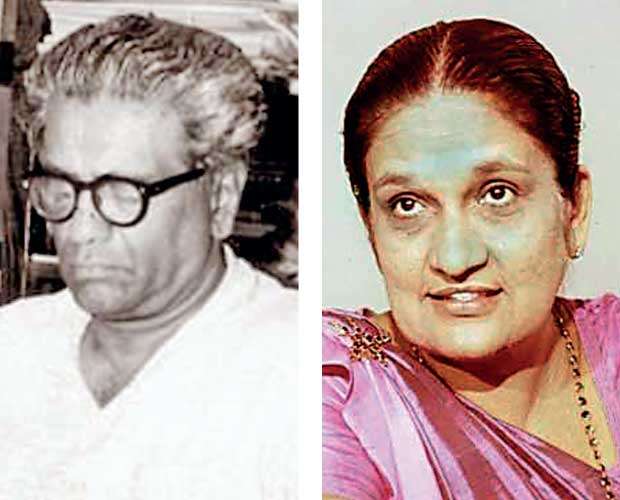
More on ‘Constituting Buddhism in 1972’ Who erred; Sirimavo or Colvin?
2018-06-07
I thank Dr. Nihal Jayawickrama for his educative and comprehensive observations on May 25, in response to my article of May 22 titled, ‘From Dominion Status to Sovereign Sri Lanka’appeared on Republican Day. Dr. Jayawickrama says,
- Sirimavo, not Dr. Colvin who gave “Buddhism the Foremost Place” in the 1972 Constitution
- Sirimavo made no reference whatsoever to the Kandyan Convention
- Considerable demand in the country for Buddhism as a State religion

 “…K.K.S.
Perera’s article headlined “From Dominion Status to Sovereign Sri
Lanka” published on May 22 appears to contain an inaccurate statement
regarding the provision relating to Buddhism in the 1972 Constitution. I
refer in particular to the statement: “In 1972, PM Sirimavo
Bandaranaike being mindful of Article 5 of the 1815 Kandyan Convention,
had directed Dr. Colvin R. de Silva to provide the ‘foremost place’ to
Buddhism.” In all the discussions I had with Sirimavo Bandaranaike on
matters relating to the proposed Constitution, she made no reference
whatsoever to the Kandyan Convention. Nor did she do in the Committee of
the Constituent Assembly that considered the issue of Buddhism, which
included among its members both Dr. Colvin R. de Silva and Dudley
Senanayake. The Kandyan Convention was invoked in that committee by the
Mahanayake Theras of the Malwatta and Asgiriya Chapters …Their
submissions were rejected by the committee which incidentally was
chaired by Sirimavo Bandaranaike. …In December 1970, the Premier drew
the attention of the Constitutional Affairs Minister to the summary of
representations received by his ministry from the public which indicated
that there “appears to be considerable demand in the country for
Buddhism as a State religion and for the protection of its institutions
and traditional places of worship.…”
“…K.K.S.
Perera’s article headlined “From Dominion Status to Sovereign Sri
Lanka” published on May 22 appears to contain an inaccurate statement
regarding the provision relating to Buddhism in the 1972 Constitution. I
refer in particular to the statement: “In 1972, PM Sirimavo
Bandaranaike being mindful of Article 5 of the 1815 Kandyan Convention,
had directed Dr. Colvin R. de Silva to provide the ‘foremost place’ to
Buddhism.” In all the discussions I had with Sirimavo Bandaranaike on
matters relating to the proposed Constitution, she made no reference
whatsoever to the Kandyan Convention. Nor did she do in the Committee of
the Constituent Assembly that considered the issue of Buddhism, which
included among its members both Dr. Colvin R. de Silva and Dudley
Senanayake. The Kandyan Convention was invoked in that committee by the
Mahanayake Theras of the Malwatta and Asgiriya Chapters …Their
submissions were rejected by the committee which incidentally was
chaired by Sirimavo Bandaranaike. …In December 1970, the Premier drew
the attention of the Constitutional Affairs Minister to the summary of
representations received by his ministry from the public which indicated
that there “appears to be considerable demand in the country for
Buddhism as a State religion and for the protection of its institutions
and traditional places of worship.…”Buddhism was the State Religion and had been afforded the Foremost Place and the famous Kandyan Convention of 1815 had provided in its Article 5 that the Buddhist religion shall be held inviolableOn March 11, 2011, a Special Correspondent in ‘The Island’ writing under, ‘Who provided”Buddhism the Foremost Place” in Sri Lanka’s Constitution?’, says, I quote,
“…At the well-attended launch of his text on Buddhist Ecclesiastical Law at the PIM on February 15, 2011 …, Dr. Weerasooria said that he had been told and he has so recorded in his text that it was the then Prime Minister Sirimavo Bandaranaike and not Dr. Colvin R. de Silva who gave “Buddhism the Foremost Place” in the 1972 Constitution.
Interestingly, many people wonder why Dr. Colvin, an ardent Marxist, who was responsible for the first 1972 Republican Constitution provided the “Foremost Place” to Buddhism in its Sixth Article: See [29.3]. This Article was followed in the 1978 Constitution. When writing this text, this author was reliably informed of the true background and so records it here.
Dr. Weerasooria said that the Principal Law officers of the State in 1972 were Victor Tennekoon - the Attorney-General and Rajah Wanasundera - Solicitor General. Rajah Wanasundera (later an Attorney General and Supreme Court Judge) had told him that it was Sirimavo Bandaranaike that had wanted a Constitutional provisions giving “Buddhism the Foremost Place” provided in the 1972 Constitution and that Dr. Colvin had no option but to insert it.
He also said that until the cession of the Kandyan Kingdom to the British in 1815, Buddhism was the State Religion and had been afforded the Foremost Place and the famous Kandyan Convention of 1815 had provided in its Article 5 that “the Buddhist religion shall be held inviolable” and that all that Sirimavo Bandaranaike did in the 1972 Constitution was to incorporate that same recognition.
SG Wanasundera was also one of the Guests of Honour at this book launch and was on the podium when Dr. Weerasooria made these submissions to the audience….” Unquote.
‘Buddhist Ecclesiastical Law’, a colossal 850-page text authored by the well-known lawyer, diplomat and legal academic, Dr. Wickrema Weerasooria was launched on February 15, 2011, at the Postgraduate Institute of Management. The text provides a comprehensive coverage of the subject of Buddhist Law in Sri Lanka and as an English text it is considered a ‘global first. The writer recorded the relevant passage 20:23 A from Chapter 29, which reads as….
….Chapter 29 --How the “foremost place” for Buddhism was put in 1972 Constitution
“In 1972, PM Sirimavo Bandaranaike being mindful of Article 5 of the 1815 Kandyan Convention, had directed Dr. Colvin R. de Silva to provide the ‘foremost place’ to Buddhism[20:23 A]--“It was done on the initiative of the then Prime Minister Sirimavo Bandaranaike. When discussing the provisions for the 1972 Constitution with the State’s Principal Law officers, Attorney General Victor Tennekoon and Solicitor General Rajah Wanasundera, the Premier, mindful of Article 5 of the Kandyan Convention, had requested the Law Officers to draft an appropriate clause and had then directed Dr. Colvin to incorporate it in the new Constitution. He had no option but to do so. However, in his inimitable manner, he had quipped “she is thrusting the Kandyan Throne into our Constitution”.-- page: 791
In an authoritative account titled, ‘Reflections on the Making and Content of the 1972 Constitution: An Insider’s Perspective’- Nihal Jayawickrama: Centre for Policy Alternatives - (2012), the author affirms Dr. Weerasooriya’s position on involvement of Attorney General Victor Tennekoon and Solicitor General Rajah Wanasundera on the role they played in convincing the Prime Minister on necessary amendments to draft prepared by Dr. Colvin. [the author himself, a Prime Minister’s confidante who assumed Justice Ministry’s Permanent Secretary position at the age of 32 in1970, was also a member of the committee that drafted it]. The author says, I quote,
“…In late November 1970, I wrote a confidential letter to the Prime Minister expressing my concerns. In it, I stated, inter alia, “The Constitution, unlike any other law, is expected to survive the lifetime of many generations and the vicissitudes of political thought.
It must therefore be a Constitution of the People in which and through which their basic rights which are not delegated to their representatives are protected and preserved. It should be possible for a parliamentarian of today, if he were to find himself a private citizen two years hence, to be able to say that the Constitution affords him the same protection which he received from it in the days when he ruled under it. I am sorry to say that in my view, the Basic Resolutions envisage the creation of a very rigid Constitution of People’s Representatives which will afford them absolute protection while they continue to wield absolute power. To me, this is a frightening prospect.” To this letter I attached my detailed comments on the draft basic resolutions and my suggestions for their amendment. The Prime Minister responded immediately. She asked me to convene a meeting with the Attorney General, Victor Tennekoon Q.C., on the following morning, December 1, 1970, at Temple Trees. At that meeting, which was also attended by Rajah Wanasundera and Noel Tittewela from the Attorney-General’s Department…” unquote.
The Constitution, unlike any other law, is expected to survive the lifetime of many generations and the vicissitudes of political thoughtPM’s letter to Dr. Colvin; dated December 9, 1970
Dr. Jayawickrama further says, “…Finally, she requested the Attorney General and me to prepare a draft letter setting out her views, as made known to us, which she wished to address to the Minister of Constitutional Affairs.”
Extracts from the letter, “…I have glanced through a summary of representations received by your Ministry from the public. I find from these and other sources that there appears to be a considerable demand in the Country for Buddhism as a State Religion, and for the protection of its institutions and traditional places of worship.
Some provision will have to be made in the new Constitution regarding these matters without, at the same time, derogating from the freedom of worship that should be guaranteed to other religions…”
Writer’s experience
In late 1970s, I got an opportunity to attend a panel discussion organized by a Tamil political movement based in Colombo, and held at Ramakrishna Hall, Wellawatte on a topic related to Constitutions of Sri Lanka and minority rights. Apart from the two main panelists, J.R. Jayewardene and Dr. Colvin R. de Silva, there were either Amirthalingam or Sivasittamparam representing the Federal Party and a Muslim Politician from the East. Colvin answering a question from audience on inclusion of special place for Buddhism, spoke about a letter he had received from his PM as head of the committee and Minister of Constitutional Affairs. She had indirectly hinted on the importance of incorporating ‘Foremost place’ in the new draft and Colvin instead of making a formal reply, had either met the PM or phoned her to persuade her on the unsuitability of such a clause in the light of section on equal rights for all citizens guaranteed in it.
Then she had quoted the two Chief Prelates of Siyam Maha Nikaya, who enlightened her through an emissary, how a Colonial Governor on his own included the Article 5 in Kandyan Convention in 1815 giving foremost place for Buddhism. She had even inquired Colvin for the Governor’s name. On being told that it was Robert Brownrigg, the same man who ordered, ‘Slaughter every man, woman, and child’ during Uva-Wellassa uprising three years later, she had responded, “But, Colvin, Brownrigg had no difficulty in granting it; you, being a Sinhala-Buddhist is making an issue of it. [Something to that effect: the writer cannot recollect the exact words the PM had spoken]. Winding up his reply to the audience Colvin said, “she was thrusting the Kandyan Throne into our Constitution”
What exactly they propose, intend to effect or their ‘visions’, the Heads of State in most instances would refrain from using the official channels, Cabinet meetings, exchange of notes and memorandums, instead they usually convey the idea to a minister over a casual chat or through a third party loyal to them and who is within the inner circle [Kitchen Cabinet], which invariably leads to contradictions in official position and the truth.
