Peace for the World World ! Your War Our Lives

The Dalai Lama
A Brief Colonial History Of Ceylon(SriLanka)
Sri Lanka: One Island Two Nations
A Brief Colonial History Of Ceylon(SriLanka)
Sri Lanka: One Island Two Nations
(Full Story)
Back to 500BC.

Monday, June 4, 2018
The Subversion Of Our Democratic Political Spaces & What It Means For Sri Lanka’s Future

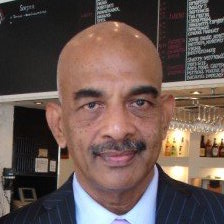
Dayapala Thiranagama
Introduction
 Since
Independence in 1948, Sri Lanka has witnessed three unsuccessful armed
struggles. Two of these (1971 and 1987-89) have been confined mainly to
the Sinhalese South. The last one in the North and East of Sri Lanka
waged an armed campaign for almost 30 years until the Tami Tigers were
defeated in 2009. The manner of the Sri Lanka’s state victory created
acute political wounds and left unresolved the fundamental problems that
gave rise to Tamil militancy. The devastating effects of all three
armed campaigns conducted by the state and non-sate actors have scarred
democratic governance in the country and its commitment to pluralism.
These violent struggles have torn apart Sri Lanka’s social fabric and
hindered economic wellbeing of its citizens. It has damaged the
continuing efforts to create a healthy and pluralistic democracy for our
young and fragile nation.
Since
Independence in 1948, Sri Lanka has witnessed three unsuccessful armed
struggles. Two of these (1971 and 1987-89) have been confined mainly to
the Sinhalese South. The last one in the North and East of Sri Lanka
waged an armed campaign for almost 30 years until the Tami Tigers were
defeated in 2009. The manner of the Sri Lanka’s state victory created
acute political wounds and left unresolved the fundamental problems that
gave rise to Tamil militancy. The devastating effects of all three
armed campaigns conducted by the state and non-sate actors have scarred
democratic governance in the country and its commitment to pluralism.
These violent struggles have torn apart Sri Lanka’s social fabric and
hindered economic wellbeing of its citizens. It has damaged the
continuing efforts to create a healthy and pluralistic democracy for our
young and fragile nation.
When SWRD Bandaranaike first attempted to reach an understanding between
the Tamil and the Sinhalese in 1957, faced stiff opposition. James
Manor observed ‘ this was an important moment in the Island’s political
history. It marked a first cycle in a pattern, which recurred as central
and poisonous feature of the political process at critical junctures.
The party in power strives to foster communal accommodation. The
majority party in opposition manipulates Sinhalese parochialism to wreck
that attempt ‘. [1]This destructive cycle has continued, damaging
fragile ethnic relations and the political unity as a nation.https://www.colombotelegraph.com/index.php/the-subversion-of-our-democratic-political-spaces-what-it-means-for-sri-lankas-future/
The successive armed campaigns and the cumulative damage of the 30-year
civil war has landed massive blows to democratic pluralism and narrowed
our political space. Where democratic activity should have expanded and
deepened people’s understandings of the collective challenges facing all
citizens, it has instead narrowed them. Rather than healing ethnic
frictions, it has exploited them. It has been too easy for the Sinhalese
political leadership to whip up narrow nationalist sentiments to
bolster their voter base. Even 30 years the Manor’s observation pattern
has not changed despite the obvious need for a political settlement
after a long and brutal war.
It has become a severe testing ground of the country’s political leaders
and as well as the leading political parties particularly of their
political honesty and responsibility towards plural democracy. There is a
huge gap between political promises and the willingness of their
leadership to achieve them.
Democratic Political Space and Pluralism
Modern democracy cannot offer meaningful freedom and basic rights
unless it is able to expand and deepen the democratic political space
incorporating diverse needs of the people it serves. If the space is not
dynamic enough to incorporate such needs the potential for political
emancipation becomes a difficult task. ”Pluralism lies at the very core
of modern democracy: if we want a more democratic society, we need to
increase that pluralism and make room for multiplicity of democratically
managed forms of associations and communities’ [2].
However, the introduction of the Westminster model of majoritarian
democratic governance to Sri Lanka in 1948 without any accommodation of
an inclusive multi-ethnic notion meant Sri Lanka was politically ands
constitutionally unprepared for what was to come. The new nation came
into being with democratic and emancipatory aspirations amongst its
ethnically diverse communities –but without the means to meet them.
However, this was a logical extension of British colonial policy that
had begun prior to Independence. Nissan and Stirrat have highlighted a
major paradox at the heart of Sri Lankan polity under colonial rule. “On
the one hand all citizens in Sri Lanka were to be treated equally: the
island was subject to one set of rules and one set of governors; in
terms of citizenship, all should be equal. Yet at the same time, British
rule substantialized heterogeneity, formalizing cultural difference and
making it the basis for political representation. This should not be
interpreted as the manifestation of a wish to ‘divide and rule; it was
done out of misguided ‘liberal’ sentiments which sought to protect
different customs of different races”[3].However, this British policy
and its continuation since Independence thus favored the further growth
of majoritarian Sinhala Buddhist sentiments. Sinhala Buddhist
supremacy occupied as the hegemonic ideology of the post -Independence
political space, marginalizing minority communities and their right to
be equal citizens. This marginalization has continued with utmost vigor
despite some reformist zeal shown by the Sinhala leaders, which has
tended to evaporate overnight when they faced with vociferous Sinhala
Buddhist opposition.
Read More
