Peace for the World World ! Your War Our Lives

The Dalai Lama
A Brief Colonial History Of Ceylon(SriLanka)
Sri Lanka: One Island Two Nations
A Brief Colonial History Of Ceylon(SriLanka)
Sri Lanka: One Island Two Nations
(Full Story)
Back to 500BC.

Tuesday, August 14, 2018
Judges Met Mahinda At Night
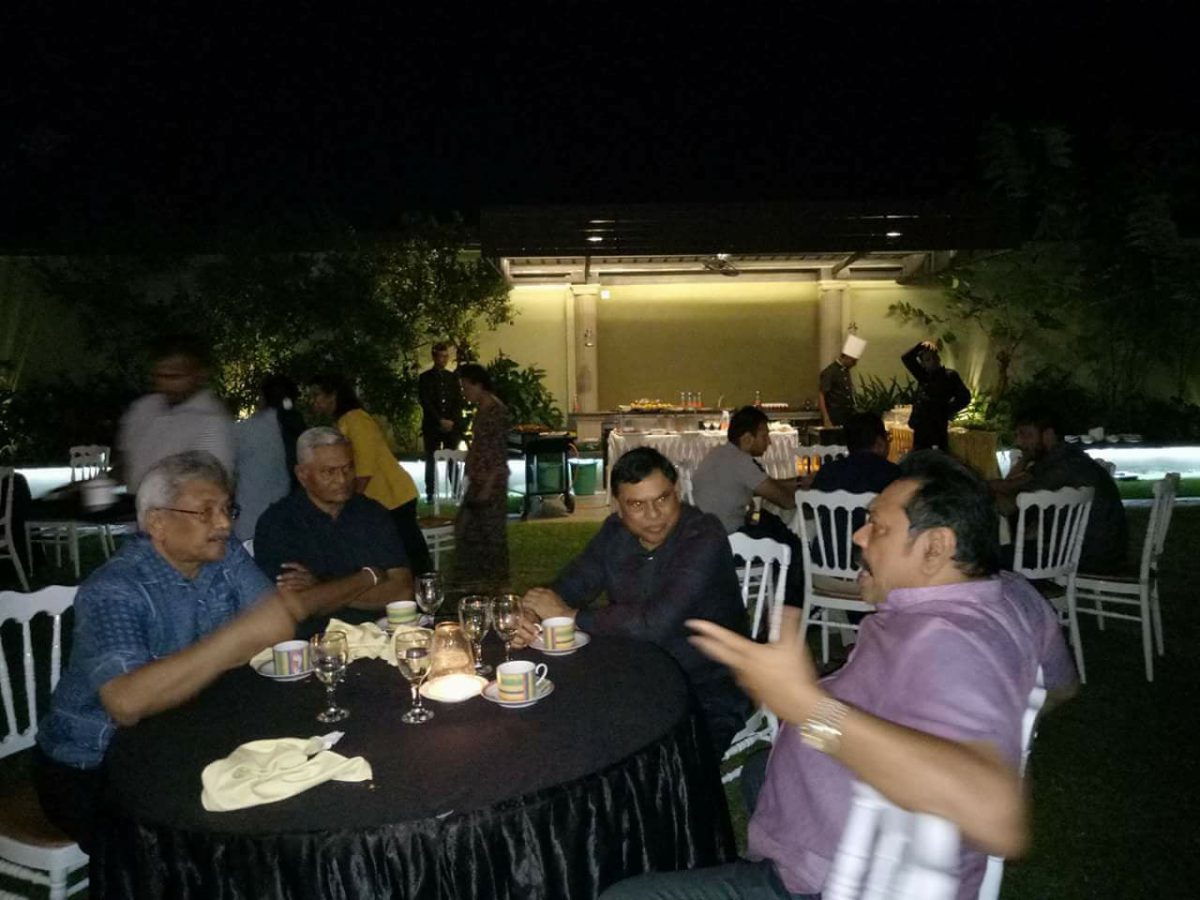
 Former President Mahinda Rajapaksa, speaking at a public function last week was in a sombre mood, as witnessed in the telecast on News First.
He was as usual griping away over the court cases that were to come up
against the family. Mahinda went on to charge that Ministers gathered at
night to decide on cases against him and his family members. He stated
they were forcing the Attorney General to forward indictments to the
Chief Justice. That is rich coming from the former President who treated
the judiciary and the Attorney Generals Department like his domestic
servants. Has he forgotten that high officials of the Judiciary as well
as the Attorney General’s Department were appointed by him during his
Presidency? Has he conveniently omitted to state that Independent
Commissions are in place to appoint such persons after the Yahapalanaya
Government came to office?
Former President Mahinda Rajapaksa, speaking at a public function last week was in a sombre mood, as witnessed in the telecast on News First.
He was as usual griping away over the court cases that were to come up
against the family. Mahinda went on to charge that Ministers gathered at
night to decide on cases against him and his family members. He stated
they were forcing the Attorney General to forward indictments to the
Chief Justice. That is rich coming from the former President who treated
the judiciary and the Attorney Generals Department like his domestic
servants. Has he forgotten that high officials of the Judiciary as well
as the Attorney General’s Department were appointed by him during his
Presidency? Has he conveniently omitted to state that Independent
Commissions are in place to appoint such persons after the Yahapalanaya
Government came to office?
I am reminded of an article that was published in The Colombo Telegraph by it’s Editor Uvindu Kurukulasuriya many moons ago which has relevance. I produce a section of his article,
“I am reminded of my own experience of the then burgeoning signs of
absolute impunity that I saw when I met Sri Lanka’s President Mahinda
Rajapaksa in 2008. I was meeting him as the Convenor of the Free Media
Movement. We were not alone. Other members of his then cabinet were
present. After a cordial conversation the President rose from his chair,
saying, “Have some dinner before you go.
“one more issue” I said.
“What?” asked the President.
“Tissainayagam’s issue”, I said.
“Oh that. I want to free Tissainayagam. His wife had sent a message through Mangala Moonesinghe”, said the President with a smile on his face.
“Then why did you summon the Deputy Solicitors General two weeks ago and order them to file action?” I asked.
The President was visibly angered by this. He glanced at Media Minister
Anura Priyadarshana Yapa and SLFP General Secretary, Minister Maithripala Sirisena, and then looked directly at me. Angrily banging his palm on the table, he said, “We can fix cases and we can free people.”
He then came near me and hit my solar plexus with a bunched fist in friendly way. “You know everything, don’t you?” he asked.
The above conversation took place in mid September 2008, when we met
with him. The president of the Sri Lanka Working Journalists’
Association, Sanath Balasuriya, and it’s secretary, Poddala Jayantha,
accompanied me as the convenor of the Free Media Movement to this
meeting with President Rajapaksa.
You know everything, don’t you?
What was the story President Rajapaksa had tried to cover-up?
This was it. President Mahinda Rajapaksa had summoned the Deputy
Solicitors General from the Attorney General’s Department for a meeting
in third week of August 2008. He was impatient with the Department’s
lack of success in securing convictions of ‘suspects’ detained by the
Police. One was the case of Mawbima journalist Parameswary Munusamy
arrested on suspicion of aiding the LTTE and released for the lack of
evidence.
The President’s first query was directed to the Deputy Solicitor General
in charge of the Tissainayagam case. The DSG said that the grounds for
prosecution were poor. The President ordered him to prosecute
regardless. The DSG in charge of the ACF case (The
gruesome execution-style murders of 17 aid workers with the French
organisation Action Contre La Faim in 2006) was asked about the case.
The DSG replied that there were two strong witnesses in Australia.
Presdient Rajapaksa’s younger brother Senior presidential advisor Basil Rajapaksa who was present then inquired whether people in Australia died in road accidents?
An angry Deputy Solicitor General rang me the following day and asked me
to come to Independence Square – a popular place for walkers. I met him
there. While we were walking he told me the story and asked me to leave
the place. Until now nobody dared write about this issue fearing for
their lives. The international media would not write about it because
they could not get the story from an original source.”
And this from a man who conveniently forgets. Now consider the following,
It was after the defeat of General Sarath Fonseka at
the 2010 Presidential elections, President Mahinda Rajapaksa revealed
his true personality. The manner in which he arrested Fonseka,
incarcerated him and thereafter cobbled up charges to shunt him in jail
were symptomatic of his inner nature which he had camouflaged cleverly
over a long period of time. Remember Mahinda was deemed “King” after the
LTTE was vanquished and Sri Lanka was his country to do as he willed.
Nay, the country belonged to him and his extended family.
The initial charges to hold Fonseka were based on purchases made by the
Army during his tenure as Commander where his son-in-law was named as a
dealer. The public did not react to these charges as expected and the
Rajapaksa juggernaut had to find alternate charges to hang on Fonseka.
This they did with the infamously titled “White Flag” case. “Treason” screamed Gotabaya Rajapaksa to Hard Talk journalist. He went further,” We will hang him”.
Foreign journalists declared the last stages of the so called war
against the LTTE was a war without witnesses. It was not entirely true.
The military did have a few select journalists from the government owned
media in the front lines. In fact they were in the bunkers with the
regular troops and dispatched reports and footage as dictated by the
Army. When Gen. Fonseka was coerced to contest the 2010 Presidency as
the common candidate some of these journalists joined him. Gen. Fonseka
therefore was privy to all which took place in the front lines through
these journalists. It was in fact one such story that he spoke of which
led to the White Flag case. That is part of the known history. Now the
unknown.
Read More
