Peace for the World World ! Your War Our Lives

The Dalai Lama
A Brief Colonial History Of Ceylon(SriLanka)
Sri Lanka: One Island Two Nations
A Brief Colonial History Of Ceylon(SriLanka)
Sri Lanka: One Island Two Nations
(Full Story)
Back to 500BC.

Friday, August 3, 2018
Micro-Financed Suicides

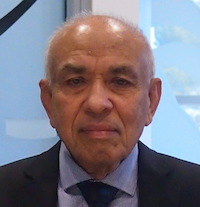
Dr. Ameer Ali
 In
2014, a report by the World Health Organization (WHO) revealed that Sri
Lanka ranked fourth highest in suicide rate among a total of 172
countries. On October 2017, according to Tamil Guardian, a
young mother with three children in the North, unable to cope with
heavy debts, had committed suicide. A month before that her husband also
took his life because of the same problem. On 16 may 2018, the same
source noted seventeen suicides in the East, because of pressure from
microfinance companies. Even
though the reported incidents were from the north and east the plague
of micro-finance-driven suicides is not endemic but threatening to
become pandemic in the wake of increasing financialization of the
economy. Already we see protest marches against the rapacity of
microfinance companies. Perhaps, in realisation of this tragic
development, in January this year, the Governor of Central Bank
announced his plan to carry out an island wide household debt survey.
How many more lives will be lost through suicide before this survey is
completed and remedies implemented is anyone’s guess. While the country
is sinking in national debt individuals are committing suicide and
welfare of future generations is mortgaged to service debts incurred by
short sighted economic policies drafted by corrupt politicians.
In
2014, a report by the World Health Organization (WHO) revealed that Sri
Lanka ranked fourth highest in suicide rate among a total of 172
countries. On October 2017, according to Tamil Guardian, a
young mother with three children in the North, unable to cope with
heavy debts, had committed suicide. A month before that her husband also
took his life because of the same problem. On 16 may 2018, the same
source noted seventeen suicides in the East, because of pressure from
microfinance companies. Even
though the reported incidents were from the north and east the plague
of micro-finance-driven suicides is not endemic but threatening to
become pandemic in the wake of increasing financialization of the
economy. Already we see protest marches against the rapacity of
microfinance companies. Perhaps, in realisation of this tragic
development, in January this year, the Governor of Central Bank
announced his plan to carry out an island wide household debt survey.
How many more lives will be lost through suicide before this survey is
completed and remedies implemented is anyone’s guess. While the country
is sinking in national debt individuals are committing suicide and
welfare of future generations is mortgaged to service debts incurred by
short sighted economic policies drafted by corrupt politicians.
Suicide is not something new and the causes of suicide are also complex.
However, widespread debt driven suicides are relatively new and a
product of financialized economies. This is an inconvenient truth that
promoters of globalization and free market economics are not willing to
concede. Yet, it is an ugly fact arising from the failure of the much
touted trickle down benefits of free market competition, which in the
name of economic rationalism is allowed to operate without any ethical
and moral constraints. Sri Lanka after decades of welfarism and market
regulation was dragged with vengeance into the free market swirl in
1977, and with frequent environmental disasters and a costly civil war,
has now become a victim of free market capitalism. Rising
suicide rate is one of the negative sides of market propelled economic
growth. Unregulated markets breed widening inequality, inequality breeds
poverty, and poverty causes suicides. They are all systemic.
One of the most momentous transformations witnessed globally since the
1980s is the increasing financialization of economies. Aided by
revolutionary changes in transport and communication technologies, which
broke down geographical barriers and squeezed the world into a global
village, the financial sector, which until then played a subsidiary role
as facilitator to the real economy overturned the structural hierarchy
and usurped the role of the leading sector. The wealthy and their
institutional financial care takers saw in this new world attractive and
novel opportunities to earn higher rates of return by investing in
financial products rather than in the real economy. Without getting into
any extended explanation of this transformation one consequence of it
should be pointed out that is relevant to Sri Lanka, i.e., the growth of
finance companies that deal in financial products. According to one
study an estimated 14,000 finance companies are providing microcredit in
the country. Globally, microfinance is a growth industry that lends
small amounts of credit to an estimated world population of nearly 2.5
billion who have no access to or the literacy required to deal with
conventional banking. The Grameen Bank in Bangladesh founded by the
Nobel laureate, Professor Yunus, was a microfinance and community
development institution which greatly helped women in that country by
providing an opportunity to get out of grinding poverty. No doubt, the idea of microfinancing is an applaudable invention but the way it operates in many places is utterly deplorable.
Desperate
families are enticed with charming offers and soothing words to fall
into a debt trap, which instead of ameliorating their poverty often
worsens it and becomes lethal. One needs only to fail one instalment of
repayment to the company to realise how viciously the debt burden
mounts. Incidents of suicide is an open manifestation of this insidious
financing mechanism. The cure for this problem lies not in fine tuning
regulations that govern lending institutions, which are the products of
the financialised economic system, but to attack the system itself that
creates poverty on one side while providing a remedy on the other which
kills the patient. This is not to argue that Sri Lanka should give up
the market and revert to dirigisme. There are economic areas where the
markets can perform better and areas where the state can deliver a
better and cheaper product or service. Ultimately however, even the
market must be shaped to operate with a human face. In the context of Sri Lanka, we may call for a Buddhist compassionate face.
Read More
