Peace for the World World ! Your War Our Lives

The Dalai Lama
A Brief Colonial History Of Ceylon(SriLanka)
Sri Lanka: One Island Two Nations
A Brief Colonial History Of Ceylon(SriLanka)
Sri Lanka: One Island Two Nations
(Full Story)
Back to 500BC.

Wednesday, August 8, 2018
Ministerial Response To Micro-Financed Suicides


 Minister Mangala Samaraweera’s “inherent moral responsibility” to assist struggling debtors,
who are principally women, though commendable yet does not go far
enough to tackle the main cause of indebtedness. His official
observations need be elaborated to emphasise the gravity of the problem.
Among the 75,000 women across 12 districts the vast majority are Tamils
in the North and East. This is clear evidence that post war rebuilding
of these districts has not really rehabilitated war affected families
and tackled the underlying poverty and distress of war widows. It is
almost a decade since the war ended and a victorious president proudly
declared in 2009 that there would be no more Sinhalese or Tamils in the
future but only Sri Lankans. Why
then are these victimised Sri Lankan women left to become victims
again, but this time in the hands of the microfinance companies, and
driven to commit suicide? Will the write off of debts to the value of
Rs. 100,000 or less solve the fundamental problem of poverty, which of
course is not confined to Tamils only? The minister’s is a one off band
aid solution and does not guarantee recurrence of debt-driven suicides.
Minister Mangala Samaraweera’s “inherent moral responsibility” to assist struggling debtors,
who are principally women, though commendable yet does not go far
enough to tackle the main cause of indebtedness. His official
observations need be elaborated to emphasise the gravity of the problem.
Among the 75,000 women across 12 districts the vast majority are Tamils
in the North and East. This is clear evidence that post war rebuilding
of these districts has not really rehabilitated war affected families
and tackled the underlying poverty and distress of war widows. It is
almost a decade since the war ended and a victorious president proudly
declared in 2009 that there would be no more Sinhalese or Tamils in the
future but only Sri Lankans. Why
then are these victimised Sri Lankan women left to become victims
again, but this time in the hands of the microfinance companies, and
driven to commit suicide? Will the write off of debts to the value of
Rs. 100,000 or less solve the fundamental problem of poverty, which of
course is not confined to Tamils only? The minister’s is a one off band
aid solution and does not guarantee recurrence of debt-driven suicides.
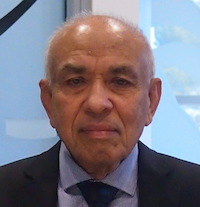
Dr. Ameer Ali
Minister Mangala Samaraweera’s “inherent moral responsibility” to assist struggling debtors,
who are principally women, though commendable yet does not go far
enough to tackle the main cause of indebtedness. His official
observations need be elaborated to emphasise the gravity of the problem.
Among the 75,000 women across 12 districts the vast majority are Tamils
in the North and East. This is clear evidence that post war rebuilding
of these districts has not really rehabilitated war affected families
and tackled the underlying poverty and distress of war widows. It is
almost a decade since the war ended and a victorious president proudly
declared in 2009 that there would be no more Sinhalese or Tamils in the
future but only Sri Lankans. Why
then are these victimised Sri Lankan women left to become victims
again, but this time in the hands of the microfinance companies, and
driven to commit suicide? Will the write off of debts to the value of
Rs. 100,000 or less solve the fundamental problem of poverty, which of
course is not confined to Tamils only? The minister’s is a one off band
aid solution and does not guarantee recurrence of debt-driven suicides.
The government’s resolve to tighten the operation of finance companies
is admirable, but the cap on interest rate at 35% needs serious
reconsideration. It is far too high to borrowers of small scale
non-consumption loans. Low fixed term interest over longer period of
repayment for small loans should be the way to go about. Finance
companies already earn huge profits from large scale business and
riskier loans, and they can easily afford to charge low interest on
small loans. These loans also should be part of a wider poverty
alleviation program in which local councils should be induced to get
involved. Small and medium scale income generating projects based on
local resources should be developed by local and provincial councils,
which should be generously funded by the government. If it wants to
attack the systemic poverty resulting from an unrestrained open market
then rural based poverty alleviation programs are a must. Sri Lanka
still has a large rural sector that needs be developed with involvement
of its residents. It is a tragedy that such programs have been neglected
and gone out of government attention in the interest of large scale
private enterprise, foreign investment and mega projects. Urban poverty
is another area that needs a different set of solutions.
Of what use is economic growth if benefits of that growth do not reach
people at the bottom layers of society? Suicides are a symptom of the
failure of such growth. Take care of the people and GDP will take care
of itself. China uplifted hundreds of millions of its citizens above
poverty line not through the so called trickle-down effect of the market
but through active state intervention.
The debt-driven suicides in Tamil areas is also the reason why at least
one Tamil state minster got frustrated at her impotency to do anything
while in government and burst out with a politically unpalatable
statement of returning to the rebel days. There
is nothing to get alarmed and angry about such outburst because it
happens everywhere when governments neglect the welfare of its citizens.
When for example, Mikhail Gorbachev renounced communism and embraced
the Chicago model of capitalism he ended up creating a kleptocracy in
Russia, and common people there were so frustrated they wished the
return of Joseph Stalin. Also,
without no end to the continuing oppression by Israel aren’t some
Palestinians wishing for the return of Hitler? These are natural human
qualities that need be understood within the relevant context.
Read More
