Peace for the World World ! Your War Our Lives

The Dalai Lama
A Brief Colonial History Of Ceylon(SriLanka)
Sri Lanka: One Island Two Nations
A Brief Colonial History Of Ceylon(SriLanka)
Sri Lanka: One Island Two Nations
(Full Story)
Back to 500BC.

Monday, September 24, 2018
N.M’S ROAD TO NON-CAPTALIST PATH OF DEVELOPMENT:

 2018-09-22
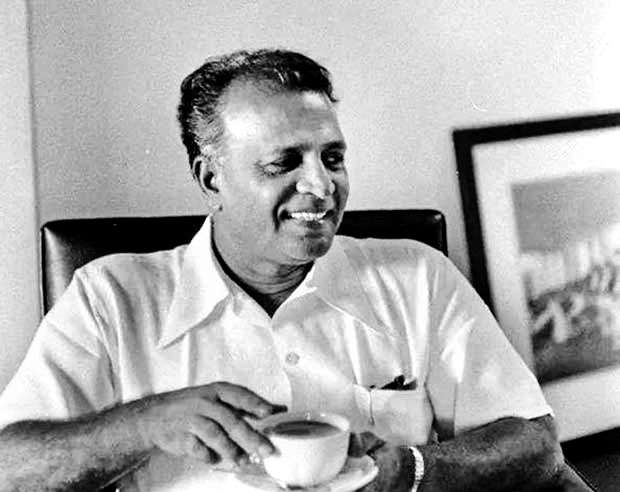
Dr N.M. Perera (Phd. Dsc.-London) who spearheaded the left movement in
this country with the energetic and gigantic support of Dr
S.A.Wickremasinghe and Philip Gunawardena with the aim of getting rid of
the British Raj and colonial rule had two primary objectives as his
political and economic vision. His immediate political vision was to end
the British rule from the soil of our motherland at the earliest and
paving the way for a democratic form of government based on the British
model -- a Westminister type of government. The second aim was to carry
on a struggle within and outside the parliament for a non-capitalist
path of development with the aim of establishing a socialist society at
the far end.
To accomplish these noble and patriotic objectives he manipulated the
the parliament as a forum to highlight the inherent weakness of
capitalist development depended on colonialism and at the same time
waging mass struggles outside the parliament to collaborate with the
inner struggle. In the field of mass struggles outside the parliament
the culmination was the 1953 Hartal ably coordinated and launched by the
LSSP, Communist Party and VLSSP led by Philip Gunawardena.
NM held the portfolio of finance twice in his unique parliamentary career. First, was when he was serving a coalition government with the Sri Lanka Freedom Party in 1964
The Hartal of 12th August 1953, exclusively laid the foundation stone for the defeat of the UNP in 1956.
NM held the portfolio of finance twice in his unique parliamentary
career. First, was when he was serving a coalition government with the
Sri Lanka Freedom Party in 1964. Then again in 1970 with the formation
of another coalition with the SLFP and Communist Party. NM represented
the LSSP in this coalition government, with its general secretary,
Leslie Gunawardena, in charge of the ministry of transport. He refused
to adhere to the dictates of the International Monetary Fund and World
Bank, the two watch dogs of world capitalism.
As a master of economic affairs, he understood the enormous difficulties
an emerging economy just out from the colonial shackles was
undergoing.
The obstacles and impediments were (a) Facing the same as his immediate
predecessors, NM as the Minister of Finance of the newly formed 1970
government , inherited a deep, crisis situation in the field of balance
of balance of payments, grossly aggravated through financial imprudence
practised by the previous rulers. Year by year the earnings from exports
had dropped, although there was an increase in their volume. (b) The
demand for imports of consumer and intermediate goods further aggravated
due to the rise in unit prices. This situation arose mainly due to the
continuous inflationary pressure occurring in the supplying markets. (c)
The strategy of the previous government to devalue the rupee, never
helped to ease the economic situation. In spite of these mad tactics,
the situation worsened. (d) The drawing of foreign exchange reserves of
the national economy for this purpose was another blunder committed by
the governments that were in power before 1970. (e) With the exhaustion
of reserves, the government was forced to borrow from external sources.
Thus, high-cost borrowing from high cost foreign commercial banks was
the order of the day. All these unscientific steps taken together,
caused the share of short term loans to account for more than nearly 50%
of the external debt of the country.
The economic situation of the island-economy ripened from bad to worse.
NM was compelled to implement patriotic & drastic actions. Although,
the very patriotic and drastic actions, turned the economy towards
progress and stability, certainly these actions had a negative effect on
the political electorate.
(a) Tirelessly, he worked for a balanced budget from the beginning to
the end of the term as the key solution to the evils created by the
dependent economy. A deficit in the budget highlighted the fact that the
state apparatus and the country as a whole were living beyond their
means. This was the financial scenario before 1970.
(b) To counter these negative aspects in the economy, he introduced
several fiscal measure’s including the ‘pay as you (PAYE)earn scheme and
raising of tax rates on luxury and semi essential goods.
(c) De-monetization was another successful & sharp weapon introduced
by NM to drive the tax evaders to the national tax net. In economic
terms, wealth hoarding is sterile as it DOES NOT generate the multiplier
effect. This innovative, bold and radical measure taken by NM
strengthened the coffers of the Treasury immensely. Further, this
exercise disclosed the existence of a large amount of untapped
money(resources) in rural areas.
(d) To induce and encourage institutional institutes to enhance savings, immediate steps were taken to take over the assets and liabilities of the Post Office Savings Bank, the Ceylon Savings Bank and the Savings Certificate Branch of the Post Master General. All these independent entities came under the newly formed NATIONAL SAVINGS BANK. This enabled the National Savings Bank to mobilize assets on a large scale.
(d) To induce and encourage institutional institutes to enhance savings, immediate steps were taken to take over the assets and liabilities of the Post Office Savings Bank, the Ceylon Savings Bank and the Savings Certificate Branch of the Post Master General. All these independent entities came under the newly formed NATIONAL SAVINGS BANK. This enabled the National Savings Bank to mobilize assets on a large scale.
(e) Income -Ceiling was also brought forward as a means of containing
consumption. It was also used as a tool to effect compulsory savings.
Both methods were intended to stimulate investment for national growth.
(f) Establishment of the State Distillery Corporation was also a new
device, designed to tap a new untapped resource for the greater interest
of the nation.
(g) Setting-up of Workers’ Councils in the public sector organizations to erase wastage, nepotism and beaucratic blunders.
(h) NM inherited a thorough knowledge of the gem industry from the state
council days. The records of the state council reveal that he was
instrumental in setting up a select committee of the state council to
inquire into the parameters of the gem industry. As far back as 1937, he
functioned as member of this preliminary committee. He made use of this
first-hand knowledge acquired in mid-1930’s to set up the State Gem
Corporation in 1970-71 period. A senior staff officer of the central
bank, Mr T.G. Punchi Appuhamy was appointed as the first chairman of
this money spinner of foreign exchange. Gem exports rose sharply from a
mere Rs.3.4 million in 1971 to Rs.152.8 million in 1973 and thereafter
to the record height of Rs.234 million in 1974. The gem trade rose to
the third largest income earner during a very short period and by far
the upcoming leader among non-traditional products. The rising in income
and generation of foreign exchange through this innovative mechanism
helped Sri Lanka to preserve much needed foreign reserves to achieve the
targets of a balanced budget.
Reduction of land value (land price) was one of the significant outcomes of NM’s economic policies.
He consulted Dr Gamini Corea, the Head of the UNCTAD on matters relevant
to the world economy, and pressed immensely for a fair policy in global
trade in the long-term interest of emerging countries.
However, all his initiatives for economic independence came to an
immediate end with the exit of the LSSP from the coalition government in
1976 and the country entered into a sad era of financial mismanagement
with the opened economy. However, the present Minister of Finance, has a
lot to learn from NM and we hope that he would rise up to the occasion,
as the heat is blowing up.
