Peace for the World World ! Your War Our Lives

The Dalai Lama
A Brief Colonial History Of Ceylon(SriLanka)
Sri Lanka: One Island Two Nations
A Brief Colonial History Of Ceylon(SriLanka)
Sri Lanka: One Island Two Nations
(Full Story)
Back to 500BC.

Friday, September 7, 2018
Probe On People’s Bank General Manager’s Increment Package

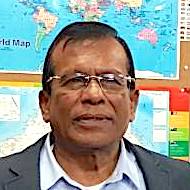
Rusiripala Tennakoon
 These days there is spot light focus on the performance of S.O.Es in general and few such institutions in particular. Business editions of National Newspapers have narrowed their focus to the area. Hence
the readers have got the opportunity of sharing authentic and
responsible versions of certain facts that remained so far as gossipy
allegations. This
Sunday a leading newspaper carried the subject headline in their
Business edition along with another news article published side by side
titled “SOE losses to increase further”. These disclosures, although
they do not fall into the category of any new revelations due to
expositions made earlier, are receiving the public attention as never
before.
These days there is spot light focus on the performance of S.O.Es in general and few such institutions in particular. Business editions of National Newspapers have narrowed their focus to the area. Hence
the readers have got the opportunity of sharing authentic and
responsible versions of certain facts that remained so far as gossipy
allegations. This
Sunday a leading newspaper carried the subject headline in their
Business edition along with another news article published side by side
titled “SOE losses to increase further”. These disclosures, although
they do not fall into the category of any new revelations due to
expositions made earlier, are receiving the public attention as never
before.
SOEs in this country have become public liabilities unlimited. So much so the politicians who created them with much pomp and fan-fare have started branding them as virtual white-elephants. The
irony of the matter is that these so called white-elephants from the
time of their creation have been under the purview control, surveillance
and counseling of these political god-fathers. Barring a negligible few the majority of the SOEs are either in the red, bankrupt, delinquent or in dire straits.
In a careful examination of these institutions, one will not fail to
notice the nexus leading their connections to the State Banks and in
particular the Peoples Bank, for the survival support extended to them,
in some cases as the last oxygenate.
State Banks are managed and controlled by the politically appointed
directorates with Chairmen functioning as virtual CEOs, unlike in the
olden days where they were meeting on a regular basis for the approvals
and authentication, of operational activities and to decide on policy
matters. The
involvements of the political appointees in the day to day affairs of
the Banks have become more ramified proliferating into several areas in
the administration.
Some of the political green-horns, who have entered the arena after the
precipitation of this complex situation, take up a defense by stating
that the Boards are conducting their affairs under autonomy granted to
them for which they only are responsible. This however is an obstinate
excuse to shirk the responsibility. Do
they expect the public to accept that under this autonomy the Boards of
SOEs have powers to take unilateral decisions affecting the golden
shareholder disregarding any governing regulations, treasury directives,
supervisory controls, procurement guidelines and good-governance ethics?
Can the politicos dissociate themselves from their accountability to the
public, Ministerial or otherwise, in the event of any violation,
mismanagement or misconduct taking place in the SOEs? The truth of the
matter is, this autonomy cannot override the controls by the Treasury
and the Ministries under whose purview the SOEs fall.
In such a situation “Probe on Peoples Bank GM’s Increment Package” becomes
a totally futile exercise leading nowhere. There are several other
issues that need to be investigated into. The remuneration package is
just one insignificant appendage of the calamity the Peoples Bank is in.
There are a number of contract employees other than the GM holding high
and strategic positions in the PB enjoying extravagant remuneration
packages inclusive of fringe benefits that cost the state enormously.
According to reports, amounts exceeding Rs. 38 Billion have been granted
as facilities to SOEs such as Mihin Air, SriLankan, Sathosa and Paddy
Marketing Board. Most of these facilities are not granted on any
commercial considerations. From
this it appears that the banks have acted on some directives from the
political authorities regardless of the commercial viability of such
lending.
It is now established due to revelations made at the Bond Commission inquiry that the then Minister of Finance, Ravi Karunanayake had persuaded State Banks including PB (to GM himself) to bid low at the Central Bank Treasury Bond Auctions to be held on 29th and 31st March, 2016.
This direction was carried out by the State banks paving the way to the acquisition of major share of these Bonds, by Perpetual Treasuries as was intended.
The autonomy of the banks, which the politicians often refer to, is only a scapegoat to shun their own accountability. Therefore
the norm is not the autonomy but a hybrid management culture with
political influence plus. What the SOEs are experiencing today is a
combined ill effect of those factors.
If a Probe is to be carried out it should cover the following areas:
1. Who made the decision to recruit contract employees to the PB and when?
2. What were the underlying reasons?
3. Were they given any targets at the time of enlistment? Have they fulfilled those?
4. Were these engagements for any specific periods or were they taken in for indefinite periods?
5. Did the contract employees possess any special or extra ordinary qualifications or experience?
6. Who decided their emolument package and were the amounts paid commensurate with the degree of expected performance?
7. How were they recruited? This applies to all heavily paid contract executives?
8. What were their contracts? Were they subject to any form of specific contractual obligations towards the Bank?
9. If they were recruited through an outside agency was the process
transparent to the extent that the best could be chosen for the specific
areas?
10. How were their emoluments paid? Direct or to the recruitment agency?
11. Is there a difference between the amounts they actually received and
the amounts paid on their behalf to the recruitment agency by the Bank?
12. Were they entitled to prolonged employment in the bank and to be
absorbed subsequently to the permanent cadre of the Bank according to
these contracts?
13. Has there been an independent assessment of their performance during their tenure of office?
14. Did the Bank pursue any action or procedure to replace them with employees in the permanent cadre under a succession plan?
15. When these contract employees were subsequently promoted or placed
in positions of the permanent cadre, did they compete with the other
members of the staff vying for these positions?
16. What was the procedure followed by the Bank when granting
increments, salary revisions and offering special perks to these
contract employees?
17.1. Several large loans granted during the tenure of office of these
contract Employees are now transferred to Non-Performing category.
Recovery of some is extremely doubtful. Who is responsible for those lending activities? According to an exposure by a whistle blower the Position is reported to be as follows;
According to the leaked report 22 advances with amounts exceeding Rs.100
Million are transferred recently as non performing (NP Section) in the
Corporate Banking Division. Some of these carry outstanding balances exceeding the amount originally granted indicating that no repayments have been made!
These 22 advances are classified into;
10 with outstanding balances over 100 Million
5 advances with O/S balances of over 200 Million
3 over 3oo Million
1 over 400 Million
1 over 700 Million
Read More
