Peace for the World World ! Your War Our Lives

The Dalai Lama
A Brief Colonial History Of Ceylon(SriLanka)
Sri Lanka: One Island Two Nations
A Brief Colonial History Of Ceylon(SriLanka)
Sri Lanka: One Island Two Nations
(Full Story)
Back to 500BC.

Thursday, September 20, 2018
Rohingya refugees Crisis : The Tale of Cox’s Bazaar home to the world’s largest refugee camp
 2018-09-13
 Following
the Ethnic conflict in the Rakhine state in Myanmar,Rohingya refugees
have found Cox’s Bazaar in Bangaladesh a safe haven. According to the UN
Office for the Coordination of Humanitarian Affairs, the refugee camps
around Cox’s Bazaar homes the world’s largest refugee camp.The influx is
said to be the world’s fastest growing refugee crisis with the UN
describing the situation in Rakhine, as a “textbook example of ethnic
cleansing.
Following
the Ethnic conflict in the Rakhine state in Myanmar,Rohingya refugees
have found Cox’s Bazaar in Bangaladesh a safe haven. According to the UN
Office for the Coordination of Humanitarian Affairs, the refugee camps
around Cox’s Bazaar homes the world’s largest refugee camp.The influx is
said to be the world’s fastest growing refugee crisis with the UN
describing the situation in Rakhine, as a “textbook example of ethnic
cleansing.
”
Various health issues have inevitably cropped up in Cox’s Bazaar owing
to the conditions in the camps and the heavy monsoon. Against this
backdrop Dr. Padmini Perera from the World Health Organization (WHO)
Country Office in Sri Lanka assisted in providing the technical
expertise required for providing health services.
She
has worked in the area of emergency preparedness since 2010, initially
at the Ministry of Health, Sri Lanka and now at the WHO Country Office.
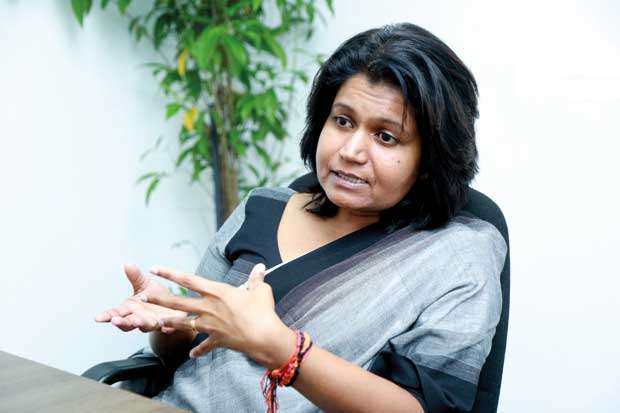
In an interview with the Daily Mirror, Dr.Perera shared her
experience of working in Cox’s Bazaar during a recent three week visit
there. She gave an insight into the health issues prevalent and how the
WHO contributed in maximizing the health services provided. She said
that the refugee influx in Cox’s Bazaar was a Grade 3 emergency that
required a massive response.
Excerpts of the interview:
Q To start off- what were your initial observations of the situation in Cox’s Bazaar?
I had to lead the health operation team in the Cox’s Bazaar field
office. We had around 11 people working in the health operations team
and we worked along with the Epidemiology, Admin and logistics teams in
the WHO field office. WHO has an Operations Plan for the response and my
task was to streamline the work in line with the Operations Plan.
This was all a continuation of the services that have been provided by
the WHO since the start of the influx in 2017. This time the conditions
were far more settled than last time when I went there in December last
year. Last time when I was there, there was an outbreak of diphtheria.
The WHO has a way of classifying the emergencies as ungraded, Grade 1,
Grade 2 and Grade 3. This is a Grade 3 emergency where a massive
response is required. It’s not easy to provide health services to 1
million refugees. There are many barriers including language barriers.
They speak a different language which is neither Bengali nor the
language spoken in Cox’s Bazaar.
I was anticipating most of the problems. It’s the same kind of things
that crop up at any emergency. The context is different, but it’s the
same issues that come out.
Sri Lanka has a very strong healthcare delivery network. The public health network is very much in place to make sure that any person in the country can be reached
Q What were the main health issues that arose?
One main issue was the spread of communicable diseases. Then there were
issues related to water, sanitation and hygiene. There were quite a few
camps and they were cramped up. There were a lot of partners working in
the field trying to improve the situation.
Q There was limited funding and the circumstances were obviously dire. How challenging was it to treat refugees?
WHO is the cluster lead for health emergencies globally. We provide the
technical lead. We support the development of plans, protocols, and
provide guidance to partners. We are also involved in monitoring and the
evaluation of health services in the field along with the other health
partners. WHO doesn’t directly provide patient care in the field. There
are almost 100 other health partners like MSF, UNICEF, UNFPA, Brac which
is a local NGO, the Red Cross, the Red Crescent etc.
Q Did you interact with the refugees while working there?
My task was to provide technical guidance to the health operations team
coordinating with the other technical teams and also other health
partners. I was not directly involved in interactions with the
refugees.
Q The
press release issued by the WHO states that cholera was prevented this
time and that measles and diphtheria were curtailed. How was the WHO
instrumental in this?
It was through the immunization campaigns. We had around three rounds of
vaccination for cholera. It was the same with diphtheria. We had
several rounds of diphtheria vaccination. So we were able to curtail the
diphtheria outbreak. There were no reported cases of cholera. But due
to the camp conditions there, the cholera vaccine was given. The WHO
planned the immunization programme together with the other health
partners and the Ministry of Health of Bangaladesh.
Q In
terms of emergency preparedness how do you think the Sri Lankan health
sector can improve taking into account the experiences of working in
Bangladesh?
Sri Lanka has a very strong healthcare delivery network. The public
health network is very much in place to make sure that any person in the
country can be reached. Even in disasters and emergencies we use the
same network. Having such a resilient and strong system has been a plus
point. We also have a well-trained health staff. In addition we have the
national disaster management framework and all stakeholders support
each other for any emergency.
Q How did your experiences of working in emergency situations in Sri Lanka assist you during your time in Cox’s Bazaar?
It was easier for me to understand the challenges in the field and also what the needs would be. That helped a lot.
Q Apart
from dealing with disease outbreaks, how has the WHO been able to deal
with the psychological state of the Rohingya refugees?
It was through the mental health and psycho-social support programme. In
Bangladesh it is led by Action Against Hunger (ACF), which is an
international NGO which is the lead for mental health and psycho-social
support. WHO provides the technical leadership to the partners in Cox’s
Bazaar.
Q Seventy
percent of births are taking place outside health facilities. What
measures has the WHO taken to encourage people to access sexual and
reproductive health in Cox’s Bazaar?
UNFPA leads the sexual and reproductive health technical programme. All
partners in that particular group as well as the health sector has been
working towards improving people’s understanding of the services
available. You have over 200 health posts. Not all have labour
facilities, but still, there is a good network. What we want to promote
is for people to access these places, and not just stay at home (camps).
We encourage people mainly through awareness by urging them to come to
maternity clinics etc.
I had to lead the health operation team in the Cox’s Bazaar field office. We had around 11 people working in the health operations team and we worked along with the Epidemiology, Admin and logistics teams
Q Are there adequate sanitary facilities?
You have adequate numbers. You have adequate sources of water. But the
problem is the quality. WHO is working with the partners on water
quality assessment in the field.
Q Do refugee children have access to education?
Now they have schools. There is an education cluster which is working in the field providing education to the children.
Now they have schools. There is an education cluster which is working in the field providing education to the children.
Q What’s the specialty of the early warning alert and response system that’s established there?
WHO has established the Early Warning and Response System (EWARS) in the camp settling. You get alerts from the health posts on communicable diseases.
If there is a communicable disease that is reported with a potential for an outbreak, the WHO along with other partners immediately sends a team to investigate and assure that measures are taken to prevent further spread.
For example, if it’s a watery diarrhea case, we don’t know whether it’s just watery diarrhea or cholera. So you go to the field immediately and investigate, and do some active case finding- to see if there are more cases. Then we take remedial measures and make sure it doesn’t spread beyond that particular point.
WHO has established the Early Warning and Response System (EWARS) in the camp settling. You get alerts from the health posts on communicable diseases.
If there is a communicable disease that is reported with a potential for an outbreak, the WHO along with other partners immediately sends a team to investigate and assure that measures are taken to prevent further spread.
For example, if it’s a watery diarrhea case, we don’t know whether it’s just watery diarrhea or cholera. So you go to the field immediately and investigate, and do some active case finding- to see if there are more cases. Then we take remedial measures and make sure it doesn’t spread beyond that particular point.
Q Do you have any memorable experiences from your time there which you would like to share?
The thing which struck me most was visiting the Cox’s Bazaar laboratory.
The last time I was there we were working towards establishing a field
laboratory.
The second time I went there it was functioning and it is so close to the camps. It contributes much to the health service delivery in the field, especially in the area of communicable diseases. It was really a pleasant experience visiting the functioning lab which we were working towards several months back.
The second time I went there it was functioning and it is so close to the camps. It contributes much to the health service delivery in the field, especially in the area of communicable diseases. It was really a pleasant experience visiting the functioning lab which we were working towards several months back.
Q Any constraints you faced?
Any emergency context has so many challenges and this is a situation
involving refugees and not a situation with internally displaced
individuals. There are many social and political issues involved.
This added that extra layer of complexity to providing health services
in the field which was quite a challenge. The partners are doing a good
job considering the difficult conditions and WHO is providing technical
assistance to ensure that the best possible healthcare is given in the
field.
Pix by - Damith Wickramasinghe
